Runable's $21M Series A Puts AI Muscle Behind Africa's Two-Person Business Dream
Runable raises $21M to give tiny firms big-company AI tools. What it signals for Africa's lean startups.
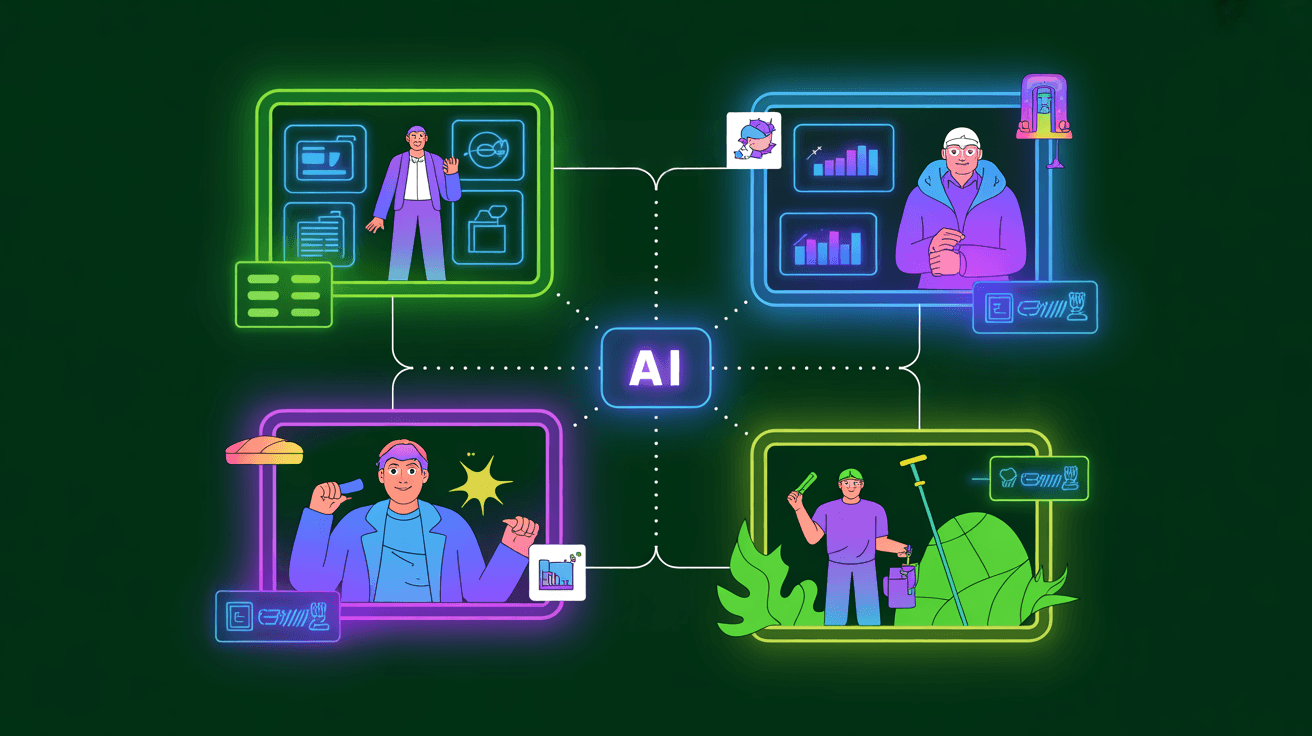
For anyone tracking where African capital is heading, the news out of Bengaluru this week is a quiet earthquake. A startup called Runable — founded barely a year ago, run by just 15 people — just pulled in $21 million in Series A funding led by Susquehanna Venture Capital and Nexus Venture Partners, with existing backers Together Fund and Array VC joining in. The pitch is almost absurdly simple: give a two-person cleaning company in Lagos or a solo consultant in Nairobi the same AI-powered machinery that a 200-person marketing team in London takes for granted. And the market is apparently starving for it — Runable says it hit $2 million in annualised revenue within three weeks of launch and now counts around 1.5 million users.
The platform is not another chatbot wrapper. It builds websites, mobile apps, internal tools and pitch decks from a single prompt, then handles the messy back-end stuff — databases, authentication, payments, deployment — that usually kills a small business's first tech experiment. Once the product is live, Runable sticks around for the unglamorous work: market analysis, prospect generation, social content, customer support, SEO, even competitor monitoring. Its newest push is customer acquisition, running AI-managed campaigns across ChatGPT Ads, Meta, Google, LinkedIn and TikTok, plus cold emails, DMs and voice calls through a real phone number. The company's founders, Umesh Kumar and Saksham Sarda, started out doing AI infrastructure for browser tech and data extraction, but customers kept asking for websites and presentations, so they pivoted to a general-purpose agent.
Here is the local context outsiders usually miss. Runable's target users — agencies, consultancies, cleaning firms in the US, UK, Japan and Brazil, many operating with just two people — are the exact shape of Africa's informal and micro-enterprise economy. Across the continent, the majority of businesses employ fewer than five people and have zero in-house engineering or marketing capacity. They are not short on ideas; they are short on tooling. Kumar's own framing is that small businesses are disadvantaged by tooling rather than weaker ideas — a line that resonates hard from Accra to Johannesburg, where the gap between ambition and execution is almost always a gap in access to expensive software and specialised talent. Runable is effectively trying to collapse that gap into a monthly subscription.
What makes this deal significant for African wealth watchers is not just the cheque size but the model. Runable is currently running negative gross margins because it subsidises AI usage, betting that inference costs will keep falling and that its proprietary multi-model approach will eventually flip the economics. That is a wager many African founders cannot afford to make — yet it is exactly the kind of infrastructure that could unlock their growth. The company has also launched Runable Academy, a free learning module for business owners, which matters in markets where digital literacy is the real bottleneck. More than one trillion tokens have been consumed on the platform in 90 days, with 60–70% of that usage from paying customers — a signal that this is not a free-tier gimmick but a tool people are willing to fund.
For the international reader who follows capital flows, the takeaway is that global venture firms are now betting on AI agents that deliver business outcomes, not just code generation. Runable competes with the likes of Manus and Genspark on the agent side, and with Cursor, Lovable and Replit on the coding side, but its positioning is deliberately broader — it wants to own the entire lifecycle from idea to revenue. Susquehanna and Nexus explicitly cite the gap between AI-generated output and measurable business results, which is precisely the gap that has kept Africa's small businesses from adopting earlier waves of automation. The new money will go into hiring across engineering, machine learning, product, growth and customer support, plus deeper campaign measurement and more marketing channels.
What comes next is the part worth watching from an African perch. If Runable's economics improve as AI costs drop, and if its distribution reaches beyond its current markets into the continent's mobile-first, WhatsApp-native business culture, it could become the default operating system for the next generation of African micro-entrepreneurs. That is a big if — local payment rails, data costs and trust in AI agents are all still evolving. But the direction is unmistakable: the cost of running a sophisticated business is collapsing, and the winners will be those who can harness that collapse without losing the human touch their customers still crave. Runable's $21 million is a bet on that future, and Africa is watching to see if it pays off.