Riding the Rails Through the Anthropocene: Britain's Luxury Trains Brace for a Hotter World
As El Niño intensifies and Britain's rail network buckles under record heat, a new era of climate-adaptive travel dawns—where the most exclusive journeys are those engineered to outsmart the elements. For the discerning traveler, the future of luxury lies not just in plush carriages, but in the resilience of the tracks beneath them.
The 4:15 from Paddington glides out of the station, its brass fixtures gleaming, its windows framing the Cotswolds in a haze of late-summer gold. But beneath the polished veneer of first-class comfort, a quiet revolution is underway. This is not the railway of your grandfather's grand tours. It is a railway facing an adversary more formidable than any timetable or budget: the weather itself. As a punishing El Niño gathers strength in the Pacific—meteorologists whisper it could be the most potent in a century—Britain's most storied rail routes are becoming a testbed for survival, and for the ultra-wealthy, a new lens through which to view the fragility of even the most established luxuries.
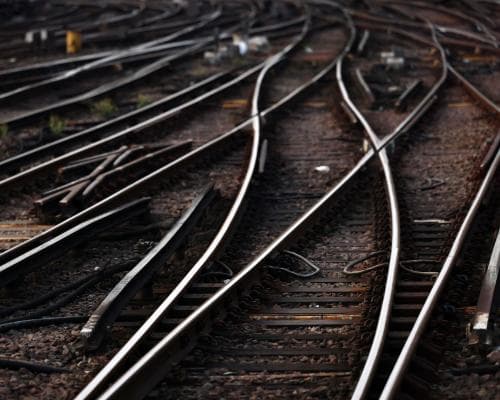
For those who measure a journey by its seamlessness, the past summer has been a jarring revelation. When the mercury soared past 40°C for the fifth time in August, two trains derailed within 24 hours—a stark reminder that the infrastructure built by Victorian engineers was never intended for a climate that now mimics the Sahara. Network Rail, the custodians of this iron legacy, have admitted the heat 'presented exceptional challenges.' For the luxury traveler, this means the romantic notion of the British rail journey—the clink of gin and tonics, the unhurried glide through verdant valleys—is now shadowed by the specter of buckling tracks and sagging overhead lines. The very ground beneath the rails, as University of Warwick professor Xueyu Geng notes, was engineered for a cooler, more predictable island. Now, it is a living, shifting entity that demands respect.
Yet, where others see crisis, the new vanguard of travel sees opportunity. The most discerning explorers are no longer asking merely for a sleeper suite or a Michelin-starred dining car; they are inquiring about the engineering resilience of the route itself. They want to know that the track's pre-stress levels are calibrated for 45-degree heat, as they are in Spain, or even the 55-degree extremes managed in Saudi Arabia. This is the new currency of luxury: not just where you go, but how the journey is protected from the elements. Private rail operators are responding with a quiet, steel-clad confidence, investing in drainage systems that would make a hydraulic engineer weep with joy, and earthworks that hold firm against sudden deluges. The five-fold increase in Network Rail's climate spending since 2019 is, in effect, a five-fold increase in the assurance that your champagne will remain unspilled and your arrival on time.
But this is not merely a story of engineering; it is one of heritage preserved at a premium. The cost of adapting this 19th-century marvel to a 21st-century climate is astronomical, and that cost is quietly woven into the fabric of every premium ticket. For the traveler who books a private carriage on the Caledonian Sleeper or a charter on the Orient Express's British cousin, the price tag now includes a invisible surcharge of resilience. It is the price of watching the Lake District flash by in a blur of green, knowing that the track beneath you was pre-stressed and heat-tested in a lab in Warwickshire. This is the new rarity: not a seat at a sold-out gala, but a seat on a train that has been engineered to outsmart the apocalypse. The true luxury is not the velvet cushion, but the certainty of arrival.
This shift signals a broader evolution in the psyche of the ultra-wealthy traveler. The era of heedless globetrotting is yielding to a more contemplative, climate-literate approach. The question is no longer 'Is it beautiful?' but 'Is it sustainable?'—and not in the vague, eco-brochure sense, but in the hard-nosed, infrastructural sense. The wealthy are now asking about the temperature thresholds of the rail network with the same intensity they once reserved for the vintage of the Château Margaux. They are drawn to journeys that acknowledge the changing planet, not as a distant abstraction, but as a tangible force that shapes the itinerary. A rail journey through Britain in 2027 will be a statement: that you can traverse a landscape in flux, and do so with grace, because the operators have done the unglamorous, heroic work of adaptation.
So where does the discerning traveler go next? Not to escape the heat, but to witness how the world is learning to live with it. Britain's railways, once a symbol of imperial might, are now a symbol of adaptive intelligence. For those who can afford it, the next great journey is not to a new destination, but to an old one, reimagined for a new climate. It is a journey that offers the rarest commodity of all: the confidence that, even as the world warms, the wheels will keep turning, and the champagne will stay cold. And that, perhaps, is the most luxurious promise of all.