Oro Raises $3M to Turn Plain English into DeFi Trades, Backed by Gulf and Global VCs
UAE's Oro secures $3M from MH Ventures and Mapleblock to scale AI-driven DeFi execution, aiming for 10M users.
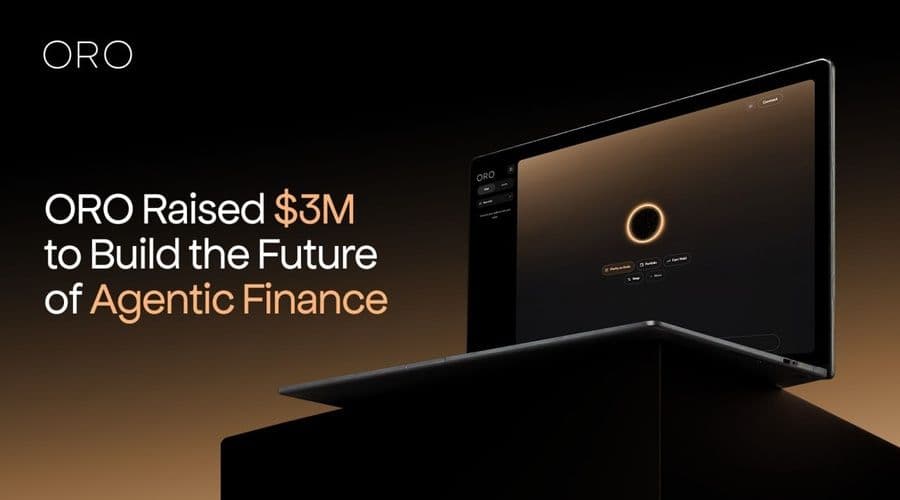
For the Gulf investor who has watched crypto's wild ride from the sidelines, the pitch has always been the same: decentralized finance is the future, but only if you can actually use it. That gap between promise and practice is exactly where Oro, a UAE-born financial AI platform, is planting its flag. This week, the company announced a $3 million strategic round co-led by MH Ventures and Mapleblock Capital, with participation from M2M Capital, Archer Capital, and X21 Digital, plus follow-on backing from Disrupt.com and ZIGLabs. The fresh capital brings Oro's total funding to $4 million, a modest sum that belies the scale of its ambition: to become the default interface between everyday users and the sprawling, often intimidating world of DeFi.
Founded in 2024 by Varun Choudhary, Oro is not another trading app or crypto wallet. It is an AI layer that sits on top of DeFi protocols, letting users type a simple instruction — say, "move my stablecoins into a high-yield pool" — and then executes the multi-step transaction automatically. The system remains non-custodial, meaning users keep control of their funds at all times, and every action requires their explicit authorization. In a sector scarred by hacks and collapses, that design choice is a quiet but critical trust signal. The company says it has already onboarded more than 350,000 active users across over 80 languages, and its recent educational campaign with Amazon Web Services drew 250,000 verified completions, while a live initiative with Ondo Finance hit 50,000 completions in its first day.
For outsiders, the names behind this round may not ring familiar, but they are significant in the Middle East's digital asset ecosystem. MH Ventures, a UAE-based Web3 venture firm, has backed a string of blockchain projects and is known for taking early positions in infrastructure plays. Mapleblock Capital, which co-led the round, is a global investment firm with a strong footprint in the region. Their involvement signals that Gulf money is moving beyond simple crypto trading into the more nuanced territory of AI-driven financial infrastructure. This is not a bet on a token price; it is a bet on a layer that could make DeFi accessible to the next hundred million users, many of whom will come from emerging markets where traditional banking is expensive or inaccessible.
The strategic angle is clear. Oro is positioning itself as a B2B and B2C routing layer, meaning it wants other platforms to plug into its AI engine rather than build their own. That would make it a kind of "intent layer" for finance, where the user's goal matters more than the underlying protocol. The company plans to use the new funds to advance its proprietary Shield Engine and natural-language stack, expand its engineering and business development teams, strengthen regulatory and compliance frameworks, and push into enterprise integrations. Over the next 6 to 12 months, it aims to hit 10 million active users, launch native iOS and Android apps, and add new advisory board members from the AI and DeFi worlds.
What does this tell us about the broader Middle East economy? For one, the region is no longer just a passive holder of digital assets; it is actively building the infrastructure that will define the next phase of finance. The UAE, in particular, has positioned itself as a global hub for crypto and blockchain innovation, with clear regulations and a welcoming stance toward startups. Oro's round is a microcosm of that trend: a local founder, international investors, and a product that speaks to a global audience. It also reflects a maturing of the market, where projects with real utility — as opposed to hype — are the ones attracting capital.
As Oro scales, the real test will be execution. The DeFi space is crowded, and the gap between a demo and a reliable, secure, and user-friendly product is wide. But the company's early traction suggests that the demand for a simpler on-ramp to DeFi is real. For the Gulf investor watching from the sidelines, this is a reminder that the next big thing in finance may not come from New York or London, but from the sand and glass of the UAE, where a small team with a big idea is quietly rewriting the rules of how money moves.