Mallorca’s New Summer Fantasy: Where Wealth, Illness, and Romance Collide
Amazon’s The Last Sunrise turns Mallorca into a sun-drenched stage for a wealthy family’s secrets and a young dancer’s rare disease, offering a glossy, if soapy, escape into the island’s most privileged corners.
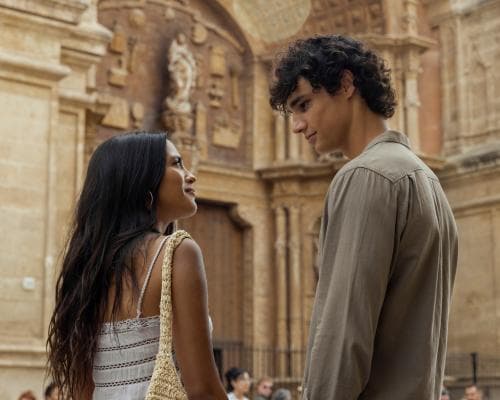
There’s a moment in every great summer escape when the light turns honeyed, the sea breeze carries jasmine, and you forget, just for a beat, that real life has teeth. The Last Sunrise, Amazon’s new romantic drama, wants to bottle that moment and sell it back to you in high definition. But beneath the golden-hour sheen and the yacht-deck silhouettes, this is a story about something far less idyllic: a young woman’s body betraying her, and a family’s fortune doing little to soften the blow. It’s a strange, intoxicating cocktail — tuberous sclerosis, a rare genetic condition, served alongside Mallorca’s most opulent villas and the kind of summer fling that only exists in fiction. And yet, as a portrait of how the ultra-wealthy navigate illness, it’s unexpectedly revealing.
The setting is Mallorca, that Balearic jewel where the Mediterranean’s old-money families have long kept their limestone fincas and hidden coves. For Oriah, a dancer played with luminous fragility by Maia Reficco, the island is not a playground but a refuge — a place to escape the clinical white of hospital rooms and, perhaps, to find a version of herself that isn’t defined by her diagnosis. Her mother, Isolde, played by Eva Longoria with the arched-brow authority she honed on Desperate Housewives, has brought her here to the island of her own youth, where her company, Redwy, looms over the local economy like a benevolent, if watchful, god. The Pera family’s wealth is the kind that doesn’t announce itself — it simply exists, in the form of a sprawling estate with terraced gardens, a private chef who knows your allergies before you do, and a speedboat that hums at the dock like a promise.
What follows is a summer of improbable twists: family secrets that surface with the tide, a love interest with cheekbones sharp enough to cut glass, and at least one slap that echoes across a marble foyer. The soap opera mechanics are unmistakable — this is, after all, an adaptation of Anna Todd’s novel, the same author who turned One Direction fan fiction into a global publishing phenomenon. But for our purposes, the plot matters less than the texture. Director Carlson Young frames Mallorca as a character in its own right — the way the sun bleaches the stone walls to a warm bone-white, the way the sea glitters like spilled champagne, the way every meal seems to happen on a terrace with a view that makes you forget your own worries. It’s a fantasy of access, the kind that travel brochures promise and rarely deliver. Here, it’s delivered with a side of melodrama.
For the luxury traveler, The Last Sunrise offers something more than a passive viewing experience. It’s a vicarious stay in a world where money doesn’t buy health, but it does buy the best possible backdrop for suffering. The Pera compound, with its infinity pool and its staff who move like ghosts, is the kind of place you might find on a curated rental list for $40,000 a week — if you know the right people. And that’s the point. This is not the Mallorca of package holidays or even the chic boutique hotels of Palma’s old town. This is the Mallorca of private estates, where the wealthy come to hide in plain sight, to nurse their wounds (literal or metaphorical) in the company of olive groves and the scent of salt. It’s a reminder that the Mediterranean’s most coveted islands are not just playgrounds — they’re sanatoriums for the soul, dressed in Prada.
The casting of Longoria is a wink to anyone who grew up on prime-time soap operas. Her presence signals that we are in the realm of heightened emotion, where every glance carries a backstory and every inheritance comes with a curse. But it also speaks to a broader trend in luxury travel media: the blurring of fiction and aspiration. We watch these stories not just to be entertained, but to imagine ourselves in those linen dresses, those stone courtyards, those impossible sunsets. The Last Sunrise, for all its narrative clumsiness, taps into that desire with a precision that feels almost cynical. It knows you want to be on that yacht, even if you’d never admit it.
So where does this leave the discerning traveler? Perhaps it’s a reminder that the most alluring destinations are often the ones with shadows. Mallorca has long been a haven for artists, exiles, and the quietly rich — from Robert Graves to Michael Douglas — and its beauty has always been tinged with a certain melancholy. The Last Sunrise leans into that, turning the island into a stage for grief, desire, and the messy business of being alive. For those who want to experience that version of Mallorca, the one that exists beyond the guidebooks, the secret is to go in the shoulder season, when the crowds thin and the light turns amber. Stay in a finca with no sign outside, hire a boat with a captain who knows the hidden calas, and let the island work its slow, strange magic. You might not find a summer fling, but you’ll find something better: a place that reminds you that even the most beautiful places are just backdrops for the stories we carry.
In the end, The Last Sunrise is less a film than a mood board — a vision of Mallorca as the ultra-wealthy wish it to be: sun-drenched, dramatic, and utterly removed from the ordinary. It’s a fantasy, yes, but fantasies have their uses. They show us what we want, and sometimes, they show us what we fear. For the luxury traveler, the takeaway is simple: the island is waiting, and it will be whatever you need it to be — a refuge, a stage, or a mirror. Just don’t expect it to fix what’s broken inside. That, as always, is up to you.