Hike Medical's $22.5M Bet on Fixing the Broken Back Office of Prosthetics
Hike Medical raises $22.5M to digitize orthotics and prosthetics supply chains, cutting waste and wait times across America's device-based care.
For anyone who has watched a relative wait six weeks for a custom knee brace or diabetic insole, the frustration is familiar: the clinical need is urgent, but the paperwork, payer approvals and manufacturing bottlenecks turn a medical necessity into a logistical nightmare. That gap between prescription and delivery is precisely where Hike Medical is planting its flag, and the $22.5 million it has just raised across seed and Series A rounds signals that venture capital is finally paying attention to the unglamorous plumbing of healthcare hardware.
Saga Ventures led the financing through Max Altman, with participation from Indicator Ventures, Fifth Down Capital, RiverPark Ventures and strategic investor Orthofeet, alongside unnamed angels. The San Francisco-based company, founded by CEO Aadi Bhanti, is not a flashy biotech or a consumer wellness app. It is an infrastructure play for the durable medical equipment (DME) sector, which covers everything from prosthetic limbs and wheelchairs to orthotic inserts. Bhanti's family has worked in this industry for three generations, which means he grew up watching the same inefficiencies repeat: patients waiting weeks for devices, clinicians drowning in referral paperwork, and manufacturers churning out ill-fitting products that end up scrapped.
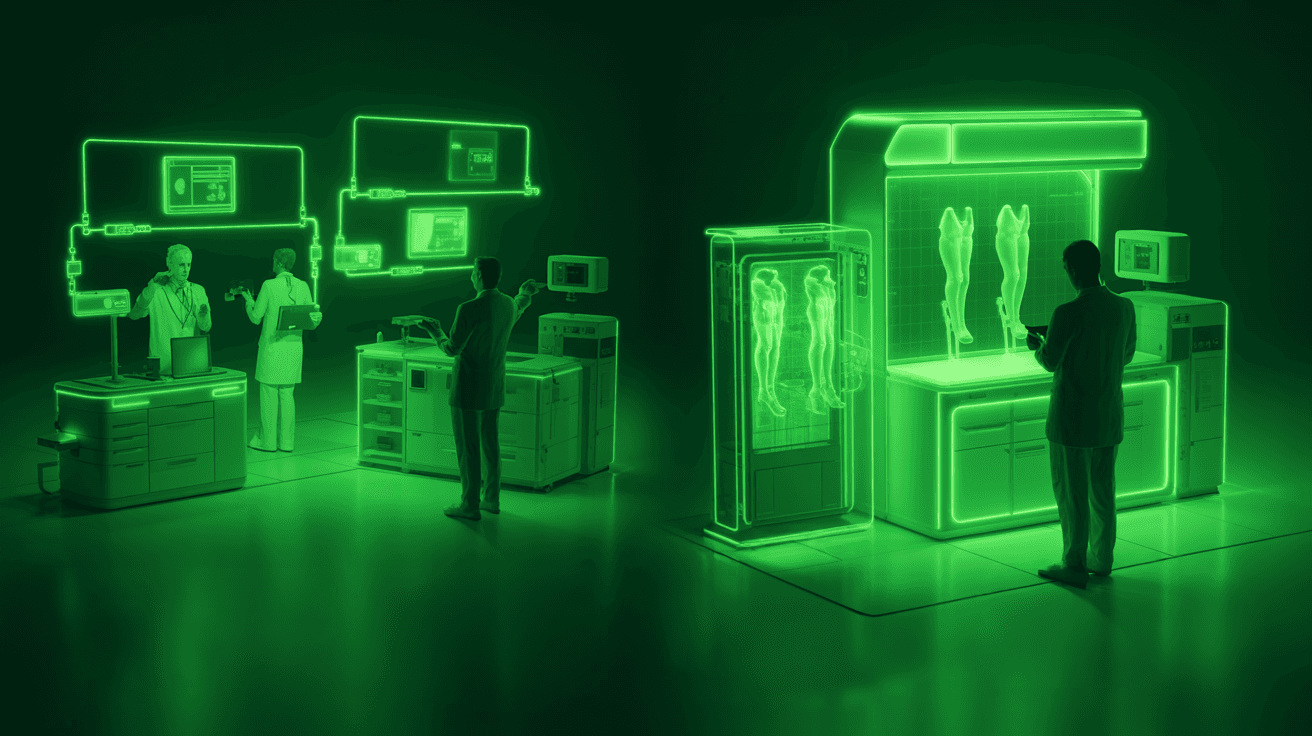
What Hike has built is a vertically integrated platform that connects the entire chain, from the clinician's mobile scan to the 3D printing farm in Peoria, Illinois. The company started by modernizing custom insole production, replacing foam impressions and standalone scanners with a mobile foot-scanning tool and 3D printing. The results are stark: production times shrank from weeks to days, and remake rates fell from one in fifteen to one in four hundred, a staggering improvement in a sector where waste is baked into the business model. Now Hike is pushing further, using its Hike Intelligence platform to deploy AI agents that process referrals, secure approvals and handle payments before a patient even walks into the fitting room.
For outsiders, the scale of the problem may not be obvious. Tens of millions of Americans use medical devices annually, from diabetic inserts to braces and prosthetics, yet the supply chain that delivers them runs on fax machines, legacy software and manual verifications. This is not a niche issue; it is a systemic drag on both patient outcomes and provider economics. Remakes, fraud and administrative delays inflate costs across the system, and clinicians spend hours on tasks that should be automated. Hike's bet is that by owning the manufacturing floor, the software layer and the clinical workflow, it can squeeze out the inefficiencies that have persisted for decades.
The funding will expand Hike's engineering and sales teams across San Francisco and Peoria, and the company recently brought in Jerry Tang as chief operating officer, a veteran of Flexport and dental lab Dandy, both of which scaled by digitizing fragmented physical industries. The choice of Tang is telling: Hike is not positioning itself as a niche orthotics maker, but as a platform that could eventually handle a far broader range of medical devices. Saga Ventures' Max Altman framed the thesis bluntly: category-defining companies must fix broken industry infrastructure directly, not just bolt on a software layer.
What this means for the wider wealth and capital conversation in Africa is indirect but instructive. American healthcare's device supply chain is a cautionary tale of what happens when an industry grows without digital connective tissue, and African health systems, which are often leapfrogging legacy infrastructure, could learn from the model. The same logic that drives Hike, digitizing referrals, automating approvals and decentralizing manufacturing, is already being tested in African markets for diagnostics, pharma distribution and even prosthetics. The capital flowing into Hike is a vote of confidence in the idea that supply chain efficiency is as valuable as clinical innovation, a lesson that resonates far beyond the Bay Area.
Hike's next move is to extend its platform across the broader DME market, which would multiply the number of devices it supports. The company's CEO has said patients should not wait weeks because healthcare systems remain disconnected, and with fresh capital, Hike is now positioned to prove that a vertically integrated, AI-driven approach can make device-based care faster, cheaper and more accurate. For those watching African health tech, the question is not whether this model will work, but who will adapt it first for a continent where the need is even more acute.