Dangote Refinery's ₦2.15 Trillion IPO Goes Cross-Border as United Capital Opens the Offer to Rwandan and Ethiopian Investors
United Capital is bringing the Dangote Refinery IPO to investors in Rwanda and Ethiopia, widening access to Nigeria's landmark public offer.
Nigeria spent decades as one of the world's great crude exporters and one of its most reliable importers of the fuel refined from that same crude. The contradiction was expensive, and it shaped the national balance sheet for a generation. The Dangote Refinery was built to end it — and now the business at the centre of that story is being opened to the public.
The offer is for 4.1 billion shares at ₦525 each, a transaction that could raise roughly ₦2.15 trillion. That figure alone would place it among the largest capital markets events Nigeria has seen. But the detail that matters most for readers outside Lagos is not the headline size. It is who is being invited in. Retail investors sit alongside institutions in the offer, with a minimum subscription of 10 shares and a route for larger positions at 50,000 shares or more. Parents can subscribe on behalf of minors, a small structural choice with long consequences: it puts share ownership into family financial planning from the first generation.
The refinery itself is the anchor. Construction began in 2016 in the Lekki Free Zone, the plant was commissioned in 2023, and its first products rolled out in 2024. For a country whose state-owned refineries at Port Harcourt, Warri and Kaduna ran far below capacity for years, the plant is not just an industrial asset. It is a bet on reversing a trade pattern that has defined Nigeria's economy since the 1980s. Its listing on the Nigerian Exchange would turn that bet into a publicly owned piece of national infrastructure.
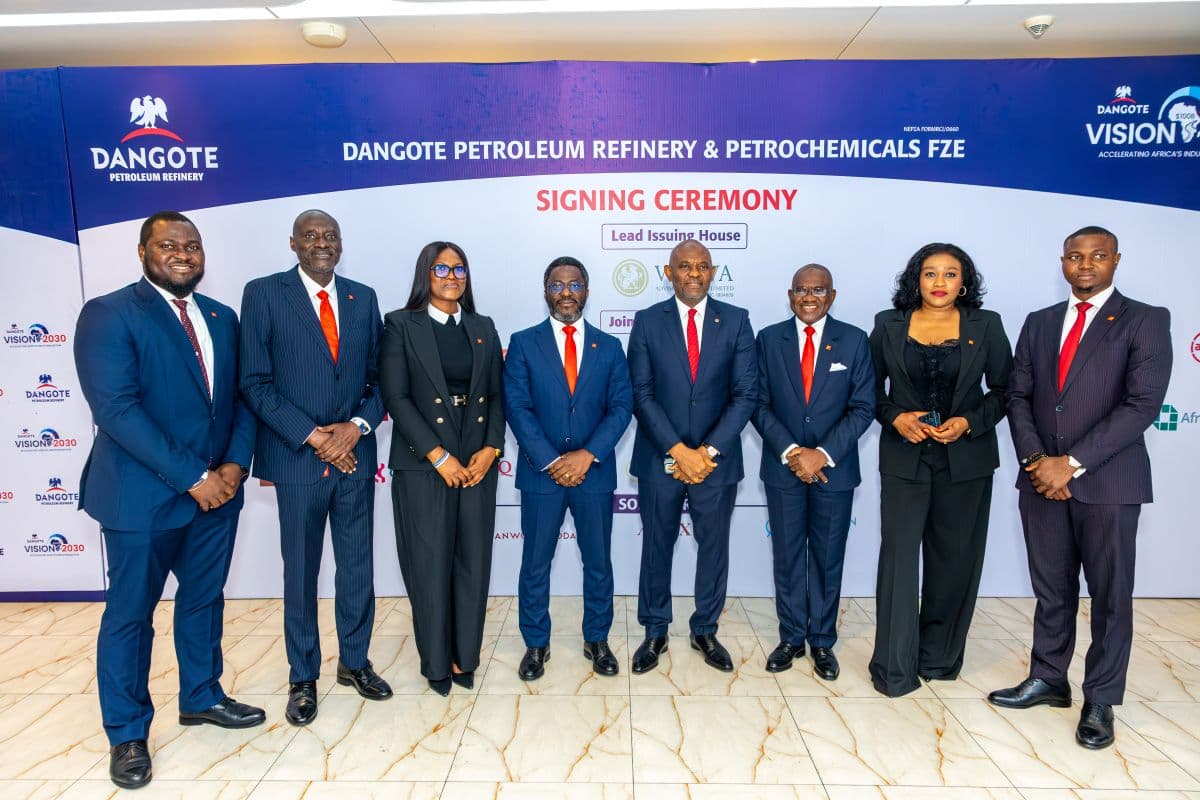
United Capital is doing the work of carrying the offer beyond Nigeria's borders. The group is acting as Joint Issuing House through its investment banking arm and as Official Stockbroker through United Capital Securities. Its expansion across African markets is what makes the cross-border leg practical rather than rhetorical. Rwandan investors have a documented route into the offer, and eligible investors in Ethiopia can participate through the same channel. Bloomberg has reported on Nigerian firms tapping investors across Africa for this IPO, which tells you the ambition is not a domestic retail drive with a foreign footnote. It is an attempt to build a continental shareholder base for a Nigerian industrial asset.
That is the signal worth watching. African capital markets have long been siloed by currency, regulation and the simple difficulty of moving money across borders to buy shares. When a Nigerian offer can be subscribed from Kigali or Addis Ababa through an established institution, the practical barriers start to look less permanent. The refinery already matters to the continent through energy, trade and industrial development. The IPO extends that relevance into ownership — giving eligible investors outside Nigeria a stake in a business listed on the Nigerian Exchange, not just a view of it from a distance.
The offer is structured to widen the conversation. A first-time investor can begin with ten shares. A family can open a position for a child. A pension fund in another African market can take a serious stake through a broker that understands both the local rules and the Nigerian process. Stronger markets are built when more people can see themselves inside them, and this transaction is testing whether that principle travels beyond the country where the shares are listed. If it does, the Dangote Refinery IPO will be remembered less for the ₦2.15 trillion and more for the map it drew of who gets to own Africa's industrial future.