Breedr’s €23M bet: dragging global cattle farming out of the paper age
Breedr raises €23M to digitize cattle tracking, trading and financing across the US, UK and Australia.
For anyone who tracks where Africa’s wealth flows next, the news out of London this week is a quiet but telling signal: Breedr, a livestock technology platform, has just raised €23 million to take its cattle-tracking system global. The round, led by Partech’s impact fund with backing from Latitude, LocalGlobe’s growth-stage vehicle, and the Outsiders Fund, is not about building another flashy fintech app. It is about dragging one of the world’s most stubbornly analogue industries—beef farming—into the data age, and doing it at a moment when the global herd is the smallest it has been in 75 years.
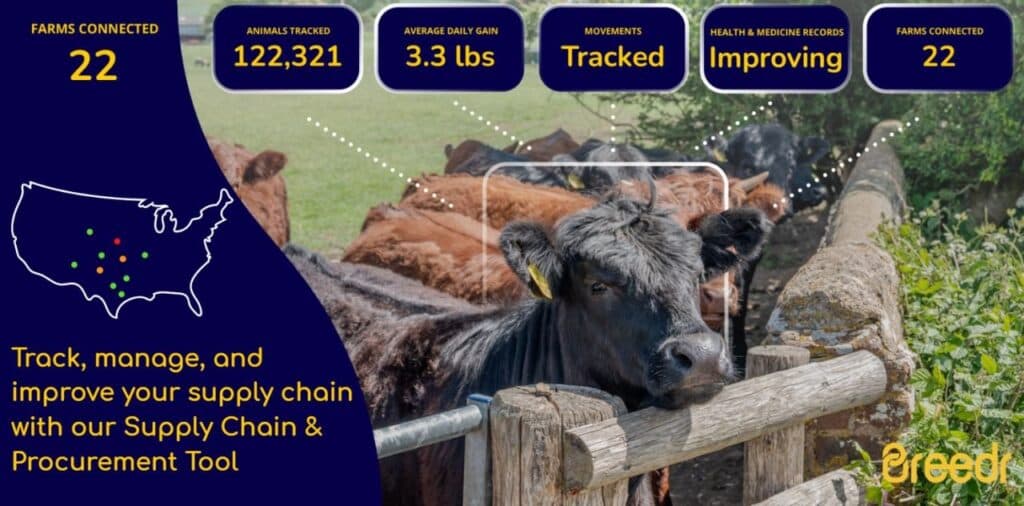
The core facts are straightforward. Breedr replaces paper records with a digital platform that lets farmers log weight, health, genetics, breeding and medicine for every animal. Scan an electronic ear tag and the full history appears instantly. Farmers can buy and sell cattle directly on the platform, with verified data attached so buyers know exactly what they are getting. And because that data proves the value of the herd, farmers can use their animals to access loans—turning livestock into collateral in a way that was previously impossible. The company says it has already helped over 1,100 UK farmers and facilitated millions in cattle trades. The new money will go toward expanding in the US, UK and Australia, and toward adding genomic data—understanding an animal’s DNA to predict health, growth and meat quality even earlier.
To understand why this matters beyond the barn door, you need to know a little about the man behind it. CEO Ian Wheal is not a Silicon Valley outsider parachuting in with a slick pitch deck. He is an insider from the industry itself, which is precisely why Partech’s Arnaud Minvielle says the fund backed him. Minvielle calls beef “one of the most complex decarbonization problems there is,” and notes that Breedr earns revenue every time an animal changes hands—aligning the commercial engine with the environmental outcome. That alignment is rare. Most agritech startups either chase yield or chase sustainability, but rarely both. Breedr’s bet is that data can deliver both at once: healthier animals, higher sale prices, and lower emissions from feeding and health decisions made on evidence rather than guesswork.
For an international reader who follows capital in Africa, this story resonates on two levels. First, it is a reminder that the global beef supply chain is a massive, under-digitized market—and that the companies which build the transaction layer for that market will capture value for decades. Second, and more pointedly, Africa’s own livestock sector is even further behind. Across the Sahel and East Africa, cattle are wealth, status and insurance rolled into one, yet the records are kept in notebooks, if at all. The same problems Breedr solves in the UK—proving value, enabling trade, unlocking finance—are amplified tenfold in places where formal collateral does not exist. The technology is transferable, but the infrastructure, the ear tags, the connectivity, the trust in digital records—those are still missing.
What Breedr’s raise signals is that capital is finally willing to bet on agricultural modernization as a climate solution, not just a productivity play. The impact fund angle is crucial here. Partech’s fund exists specifically to back companies where the commercial engine and the environmental outcome are the same thing. Breedr cuts emissions by helping farmers grow healthier animals with less waste, and it makes farmers more profitable at the same time. That is a rare double win, and it is why the round attracted heavyweight backers despite the broader tech downturn. The fact that beef demand is climbing while the herd shrinks means the industry has no choice but to extract more value from every animal—and you cannot do that on paper, as Wheal puts it bluntly.
Looking ahead, the genomic data push is the real game-changer. If Breedr can predict an animal’s future weight, optimal sale time and meat quality from its DNA, it changes the economics of farming entirely. Lenders will have better risk models, buyers will pay premiums for verified genetics, and farmers will stop guessing. For Africa, the lesson is not that Breedr is coming to Nairobi tomorrow. It is that the global race to digitize agriculture is on, and the winners will be those who build trust in data at the farm level. That is a message for African agritech founders, too: the next big opportunity is not another mobile wallet, but the layer that makes every animal, every acre and every harvest verifiable. Breedr just proved the money is there for the taking.