Boxing's Newest Unicorn: The Moses Itauma Wealth Play
As Moses Itauma bids to become the second-youngest heavyweight champion in history, the fight game's smartest money is already placing its bets on a generational talent whose market value could dwarf the traditional purse. This is the venture capital logic of boxing, where early stakes in phenoms like Itauma offer outsized returns to those who can spot the next Mike Tyson before the world catches on.
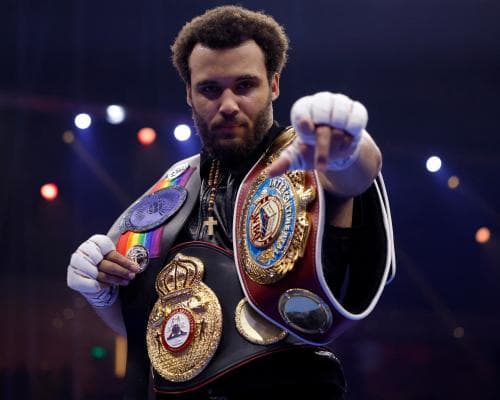
Forget the SPACs and the crypto winter for a moment. The most intriguing venture capital story this weekend isn't happening in Silicon Valley; it's happening in a boxing ring at the O2 Arena in London. On Saturday night, a 21-year-old named Moses Itauma steps in against Croatia's Filip Hrgovic for the IBF heavyweight title, aiming to become the second-youngest world heavyweight champion in history—a feat only Mike Tyson has achieved. For the money-and-markets crowd, this isn't just a sporting event. It's the IPO of a once-in-a-generation asset, and the smart capital has already been positioning for years.
The deal here is simple, brutal, and staggeringly lucrative. A heavyweight champion is the most bankable athlete in the world, a walking, punching revenue stream that commands pay-per-view splits, global sponsorship, and stadium-filling gate receipts. Itauma is attempting to reach that summit in just his 15th professional fight. To put that in perspective, most contenders take twice as long to even earn a title shot. This isn't a slow-burn index fund; this is a high-growth, high-risk venture bet, and the early investors—the promoters, the sparring partners who vouched for him, the insiders who whispered his name years ago—are about to see their paper valuations turn into hard currency.
The mechanics of this particular wealth event are worth examining. Barry Jones, a former WBO super-featherweight champion and now the sharpest pundit in British boxing, recounts the early whispers: 'I'd heard lots of stories about Moses Itauma when he was sparring with really good fighters as a 15-year-old. The word was that heavyweights needed to avoid this teenager.' That's the equivalent of a hot tip on a pre-seed round. Jones notes that Itauma's movement 'immediately set him apart'—a cognitive speed that allows him to find angles and avoid punishment. In capital terms, this is a moat. Most heavyweights rely on raw power, which depreciates with age and wear. Itauma's edge is intellectual, a durable competitive advantage that protects his most valuable asset: his body. Andy Lee, the elite trainer, echoes this, suggesting that Itauma's brain is the real alpha generator here, not just his fists.
But every venture has its risk factors, and Hrgovic is a serious stress test. He is a legitimate, hard-hitting contender, not a tune-up. This is the moment where the market discovers whether Itauma's pre-IPO valuation—the hype, the stories, the potential—is justified by actual performance. The rarity angle is what makes this so compelling. Tyson did it at 20. Itauma is doing it at 21. The heavyweight division has been unpredictable and shallow for years, desperately seeking a dominant force. If Itauma wins, he doesn't just take a belt; he takes a monopoly position in the most storied weight class in sports. That's pricing power. That's the kind of asset that makes Saudi Arabian sovereign wealth funds and broadcasters open their checkbooks without a second thought.
What does this signal for the wealthy? It's a reminder that the biggest returns often come from illiquid, overlooked assets where the public hasn't yet caught on. The billionaires who own sports teams and the hedge funds that dabble in athlete IPOs understand that a generational talent like Itauma is a compound interest machine. The purse for this fight is one thing; the lifetime earnings potential—the endorsements, the legacy fights, the promotional company equity—is the real prize. For the smart capital that backed him early, this fight is the moment their patience pays off, turning a speculative stake into a blue-chip holding.
Looking forward, the market will be watching Saturday night with more than just sporting interest. A win for Itauma doesn't just change the boxing landscape; it changes the financial landscape of the sport for the next decade. He becomes the anchor asset around which a new promotional empire can be built. The risk, of course, is that he gets caught early, and the venture collapses. But that's the nature of the game. In both boxing and capital markets, the highest returns are reserved for those willing to take the biggest risks. Moses Itauma is the ultimate growth stock, and the world is about to see if he can deliver the returns his early investors have already banked on.