When the Wild Comes Calling: A Widow’s Unlikely Conspiracy of Birds
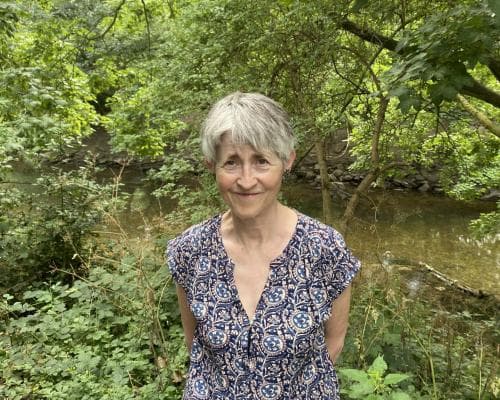
The first time it happened, I nearly laughed out loud — not from joy, but from sheer disbelief. There I was, trudging across the heath in my well-worn walking boots, when a robin landed three feet ahead and started hopping alongside me, like a tiny, feathered butler escorting a guest to dinner. Then another bird joined. Then a magpie, chattering from a low branch. By the time I reached the edge of the woods, I had a full entourage. I’ve walked that heath for twenty years, and never once had a bird so much as glance my way. But in the months after my husband died, they wouldn’t leave me alone. I’m not a fanciful woman. I don’t read tea leaves or consult mediums. But when the natural world starts behaving like a scene from a Disney film, you take notice.
My husband and I had walked that same ground for decades, through every season, in every weather. When his illness confined him to the house, I continued alone — and for six months, the birds ignored me completely. Then he passed, in January 2023, and something shifted. It wasn’t subtle. On my daily walks, they’d come close — startlingly close — hopping at my feet, chirping insistently, as if trying to deliver a message I was too slow to decode. The rational part of my brain said: coincidence. The grieving part said: what if? I knew my husband wouldn’t have chosen a bird as his reincarnated form — he was a man of grand tastes, more likely to return as a red deer stag or a brooding moose. But that didn’t stop me from half-talking to the robin that followed me home one evening. “If it’s you,” I whispered, “follow me.” It flew off in a frantic rush, as if offended by the very suggestion.
The strangest encounter came three months later, in a tiny Alpine village in France. I was climbing the stone staircase to my room when a young magpie materialized on the railing, less than two feet from my face. He squawked, flapped, bounced — clearly beside himself with some urgent, unknowable concern. I froze, heart pounding. It was absurd, and yet it felt profound. That moment cracked something open in me. I started noticing things I’d walked past for years: the geometry of a mushroom, the clicking of gorse pods in the sun, the way light filtered through pine needles. I wasn’t suddenly skipping through meadows — grief doesn’t work that way. But my daily walks, which had always been a habit, became a ritual. A kind of moving meditation. The birds weren’t delivering a message from my husband; they were delivering a message to me: pay attention.
What does this have to do with luxury? Everything. The truest luxury isn’t a yacht or a private jet — it’s the ability to slow down enough to notice. To have the time to walk the same heath for decades, to let your mind empty and your senses sharpen. The ultra-wealthy spend fortunes on wellness retreats and mindfulness gurus, but the most exclusive experience on earth is free: a quiet path, a curious robin, and the willingness to be surprised. In a world of constant notifications and status markers, the rarest commodity is presence. My birds taught me that. They didn’t care about my bank account or my grief; they simply registered that I was there, and they responded.
As I write this, a year and a half later, the birds still find me. Not every day, but often enough that I’ve stopped questioning it. I’ve learned to read their language — the way a robin’s tilt of the head means ‘keep going,’ the way a magpie’s chatter sounds like gossip. I don’t know why they chose me, and I’ve stopped trying to explain it. Some mysteries are better left unsolved. What I do know is this: the most profound transformations come from the most unexpected messengers. My husband may not have believed in an afterlife, but he believed in the power of a good walk. And in a way, he was right — the walk itself is the message. The birds just helped me hear it.
The Experience
To cultivate your own practice of attention, book a private walking retreat in the French Alps or the English heathland, where naturalists guide you through silent, bird-filled trails. Or simply step outside tomorrow morning — the robins may already be waiting.