Vice City Redux: Inside the Return of Grand Theft Auto VI
Rockstar Games finally unveils its long-awaited return to Vice City, blending hyper-realistic detail with the sun-soaked decadence of Florida's Gold Coast. For collectors of cultural moments, this is the rarest of commodities: a sequel 13 years in the making, promising a new benchmark in digital luxury.
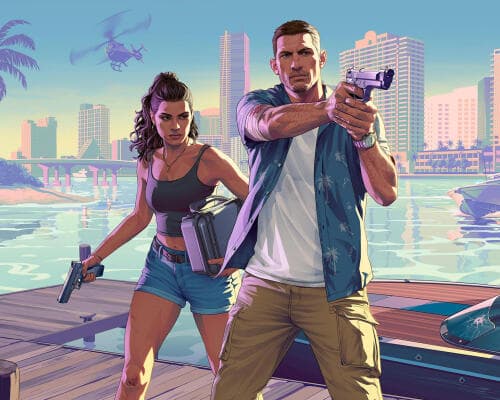
There is a moment in every great unveiling when the room goes quiet—not from politeness, but from sheer, unadulterated awe. That moment arrived this week for the millions who tuned in to the first extended look at Grand Theft Auto VI. After 13 years of silence, Rockstar Games finally pulled back the curtain on its return to Vice City, and the result is less a video game trailer than a love letter to the art of the escape. The neon-soaked boulevards, the chrome-finned classics, the slow burn of a Florida sunset over the Intracoastal—this is not just a game; it is a curated fantasy of wealth, danger, and freedom, rendered with the kind of obsessive detail that makes the rest of the industry look like it's sketching with crayons.
The reveal, which aired with a brief Netflix exclusivity window before landing on Rockstar's YouTube channel, is a masterclass in controlled anticipation. The gameplay footage—leaked in fragments earlier this week and now officially assembled—shows a Vice City that is both familiar and radically evolved. The city itself is the star: a sprawling, sun-baked metropolis that hums with life, from the beachfront weightlifters to the pool halls and kayak launches along the mangroves. For those of us who remember the original Vice City as a pixelated fever dream of Miami Vice excess, this iteration is a revelation. It is not merely a map; it is a destination. The kind of place you book a first-class ticket to, even if only in your imagination.
But the true craftsmanship here lies in the details—the ones that separate a product from a passion. Rockstar has built a world where you can lift weights on the sand, shoot pool in a dimly lit bar, or hunt in the Everglades, all while the radio plays a soundtrack curated with the precision of a private DJ. The narrative centers on Lucia and Jason, a Bonnie-and-Clyde duo whose story promises to pull you through the chaos. Yet, as one seasoned observer noted, the real draw has always been the world itself. The game offers a kind of vehicular tourism that rivals the best of Forza Horizon, but with a layer of grit and glamour that only Rockstar can conjure. It is, in the truest sense, a collector's item—not just for gamers, but for anyone who appreciates the art of the escape.
The market context is as dramatic as the game's own plot. This is the first major GTA release since 2013, and the anticipation has reached a fever pitch that rivals the launch of a new Bugatti or a limited-edition Patek. The leaks earlier this week—which revealed more than the trailer itself—sent Rockstar's legal team into overdrive, scrubbing the internet with the urgency of a dealer protecting a rare vintage. Yet, even with the damage, the official reveal has only sharpened the appetite. Pre-orders are expected to be astronomical, and the game's release on November 19 is already being circled on calendars like a Baselworld unveiling. For collectors of cultural moments, this is the rarest of commodities: a sequel that promises to redefine its genre, much as the original did two decades ago.
What does this signal about luxury taste in 2025? It suggests that the ultra-wealthy—and the aspirational—are no longer satisfied with passive consumption. They want worlds they can inhabit, even if only digitally. The demand for hyper-realistic, meticulously crafted environments mirrors a broader shift in luxury: from owning things to owning experiences. Grand Theft Auto VI is not just a game; it is a private island, a custom superyacht, a penthouse with a view—all rolled into one. It is the ultimate status symbol for the digital age, a place where you can drive a black Ferrari Daytona Spyder along an endless highway, In the Air Tonight swelling on the radio, and feel, for a moment, like you've arrived.
Looking ahead, the game's release will be more than a commercial event; it will be a cultural benchmark. For those of us who grew up on the original, it is a chance to revisit a fantasy that has only grown richer with time. And for a new generation, it will be the first taste of a Vice City that feels as real as any city you could fly to. The question is no longer whether the game will deliver, but how it will reshape our expectations of what digital luxury can be. Roll on November 19—and bring your sunglasses.