Venezuela's Cash Mountain Grows, Yet Buys Less Than Ever
Venezuela's banknote supply surges 40% in seven months, but total cash value drops to $125M—just $4.47 per citizen.
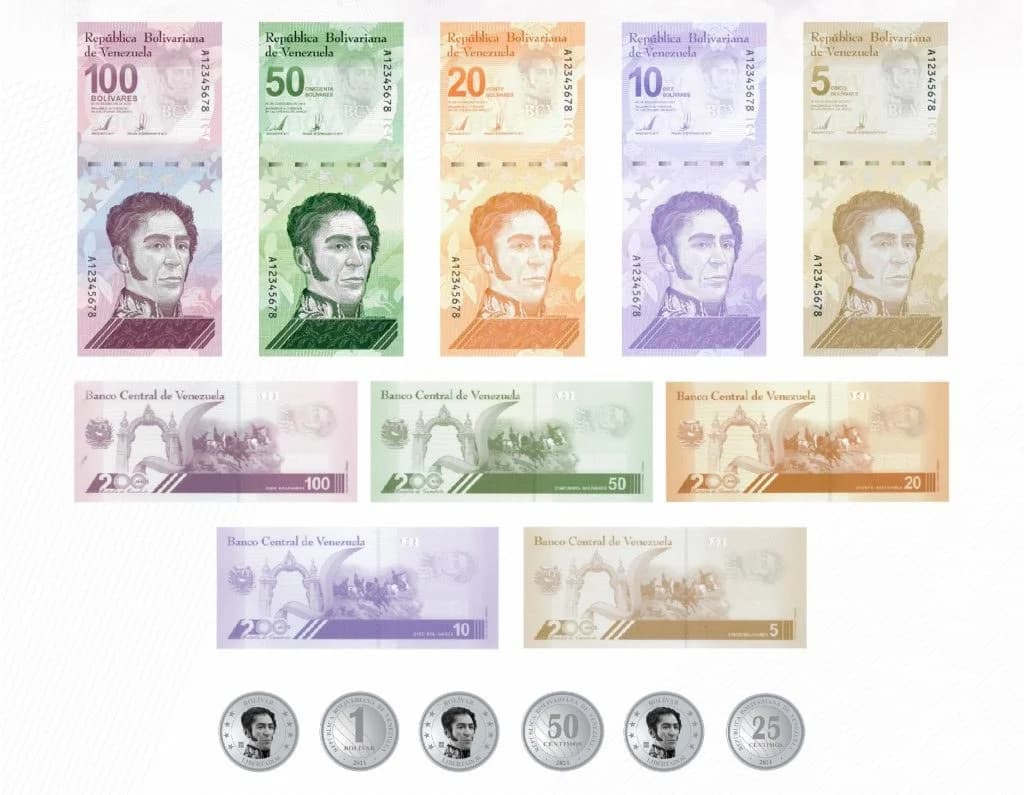
There is a strange arithmetic at work in Venezuela these days, one that would make a central banker in Brasília or Santiago wince. The country’s central bank is pushing banknotes into circulation at the fastest clip of the year — the physical money supply jumped 40.5 percent between January and August. And yet, measured in dollars, the entire stock of cash in the country is worth less today than it was seven months ago. That is the kind of math that only makes sense in an economy where inflation runs faster than the printing press.
According to the Central Bank of Venezuela’s own statistical file, updated in late August, there are now 1.39 billion notes in the current family — the 5 to 500 bolívar pieces that people actually use. In January, that figure stood at 990 million. The expansion was front-loaded: 125 million notes appeared in March alone, followed by 76 million in April and 67 million in July. But the total value of all this paper is just 99.4 billion bolívares, or about $125 million at the official exchange rate of 794.99 per dollar. That is down from $148.7 million in January, when there were 29 percent fewer notes in circulation. Spread across Venezuela’s roughly 28 million inhabitants, the entire cash supply amounts to about $4.47 per person — hardly enough to buy a street arepa, let alone a month of groceries.
The composition of this cash mountain tells an even more telling story. The smallest denominations — the 5 and 10 bolívar notes — have not moved a single unit since at least January. The 5-bolívar note has sat at 80.5 million pieces all year; the 10 at 200 million. At current rates, a 5-bolívar note is worth six-tenths of a US cent. Meanwhile, the largest notes are being printed with abandon: the 100-bolívar note has grown 110 percent, from 152 million to 318.6 million pieces, and the 500 — the highest denomination — has more than doubled to 57.3 million. Together, the top two notes now carry 61 percent of the face value in circulation, on just 27 percent of the notes. This is the classic signature of high inflation: small change becomes worthless, so all the new money is minted at the top of the range.
What makes this situation particularly unusual is that Venezuela’s cash economy has been in a long, slow strangulation. For years, physical money all but disappeared as hyperinflation and dollarization pushed transactions into bank transfers, credit cards, and even barter. The bolívar became a unit of account that few wanted to hold. Now, the central bank is trying to re-monetize the economy, but it is doing so from such a depleted base that even a 40 percent surge in notes translates into a loss in dollar terms. The dead weight of the old cone — 547.9 million notes of 500,000 and 1,000,000 bolívares that are no longer legal tender but still counted in the file — has not moved all year, a reminder of the previous currency reform that left millions of pieces worthless.
For outside observers, this is a window into how Venezuela’s financial system continues to operate on borrowed time. The government of Nicolás Maduro has managed to stabilize the exchange rate and bring inflation down from the catastrophic levels of 2018-2019, but the underlying dynamics remain fragile. The central bank’s own data shows that the cash supply is growing faster than the economy can absorb it, and the dollar value of that supply is shrinking — a sign that the bolívar is still losing credibility as a store of value. The fact that the central bank does not announce its printing plans, and only publishes a monthly spreadsheet buried in its statistics section, speaks to a broader opacity that has long characterized Venezuela’s economic management.
For the region’s wealthy and well-connected, this is a cautionary tale about the limits of monetary engineering. In neighboring countries like Brazil or Chile, central banks use interest rates and reserve requirements to fine-tune liquidity; in Venezuela, the tool of choice is simply printing more paper. But the result is not more money in people’s pockets — it is less. The $4.47 per capita cash supply is a stark reminder that, despite the regime’s rhetoric of recovery, the bolívar remains a currency on life support. As the government heads into an election year, the temptation to print even more will grow, but the arithmetic is unforgiving: more notes, less value, and a population that has long since learned to trust the dollar over its own national currency. The only question is how long the central bank can keep up this illusion of liquidity before the market forces a reckoning.