Sirdab's $10M Series A shows Saudi logistics is no longer just about oil
Sirdab raises $10M from Elm and BECO to expand GCC logistics platform, signaling Saudi supply-chain tech maturity.
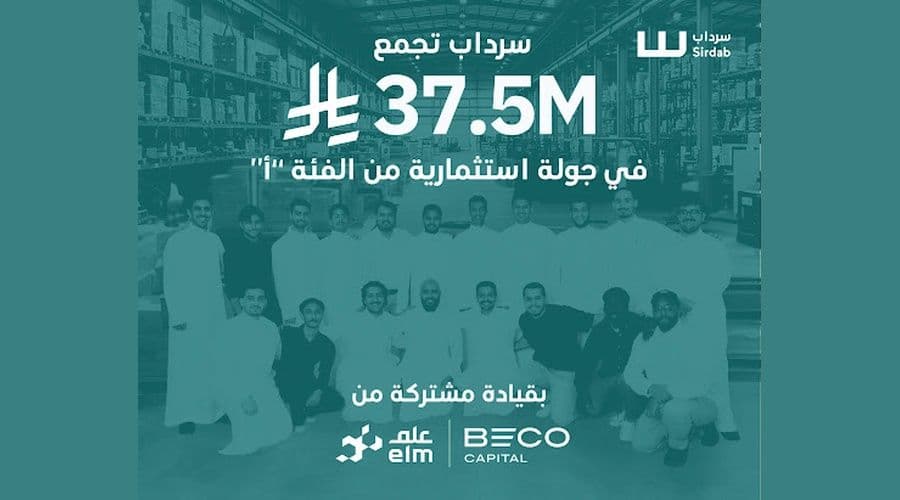
For anyone tracking where Gulf capital actually flows these days, the clue is rarely in the oil tanker. It is in the warehouse. Saudi Arabia is spending billions to turn itself into a trade hub between three continents, and a quiet Riyadh startup just proved that private money — including from a PIF-backed giant — is willing to bet on the software that makes that vision run.
Sirdab, a logistics platform founded in 2022 by Naif Alzahri and Abdulrahman Alnamlah, has closed a $10 million Series A round. The funding was co-led by Elm, the Saudi digital solutions company controlled by the Public Investment Fund, and BECO Capital, an existing backer that knows the regional tech scene well. Y Combinator, COTU Ventures and D Global Ventures also joined. The startup, which helps businesses manage warehousing, transport, inventory and orders across multiple locations through one system, will use the cash to push deeper into Saudi Arabia and the wider GCC.
The numbers behind the round matter less than the trajectory. Sirdab says revenue has grown twenty-fold since its Y Combinator Winter 2023 batch, and it claims profitability. More than 850 businesses use the platform, including government entities and listed companies. Its network spans over 120 warehouses and 60 transport providers, covering dry, ambient, chilled and frozen goods. That is not a side project — that is a critical layer of national infrastructure, built by two founders who saw that Saudi's logistics boom was creating chaos as much as opportunity.
Here is the local context outsiders often miss. Saudi Arabia is not just building megacities and airports; it is trying to make supply chains work across a country the size of Western Europe, with extreme heat, vast distances and a rapidly diversifying economy. Traditionally, a company expanding from Jeddah to Dammam would have to negotiate separate contracts with dozens of warehouse operators, each with its own paperwork, quality standards and billing systems. Sirdab's pitch is to make that distributed network behave like a single, connected machine — asset-light, but with company-operated facilities in key hubs to guarantee quality. That model echoes what Amazon did for e-commerce fulfillment, but applied to the messy B2B world of pallets, cold chains and compliance.
The investor mix is equally telling. Elm's participation is not just a check — it is a stamp of strategic alignment with the state's digital agenda. When a PIF-backed entity co-leads a round in a Y Combinator graduate, it signals that Saudi Arabia wants its most promising tech companies to scale at home before eyeing the region. BECO Capital's return shows that early-stage Gulf venture firms see Sirdab as a winner, not a gamble. The presence of Y Combinator keeps the startup plugged into Silicon Valley's playbook, while D Global Ventures and COTU add regional and international reach.
What does this say about Middle East wealth? Simply that the smartest capital here is moving from consumer apps and fintech into what investors call 'picks and shovels' — the unglamorous but essential layers of the real economy. Logistics in the GCC is expected to grow for years, driven by e-commerce, neom-style giga-projects and the push to make the region a re-export hub between Asia, Europe and Africa. Sirdab is betting that whoever controls the coordination layer — the AI that matches a shipment to the right warehouse, the software that automates a carrier's pickup — will own a piece of every transaction that moves through the Gulf.
Alzahri, the CEO, frames it simply: Saudi Arabia is building one of the world's most dynamic logistics markets, and his job is to give businesses the infrastructure to grow on. The next twelve months will show whether that infrastructure can stretch beyond the Kingdom's borders. With $10 million in fresh capital, a profitable base and state-backed validation, Sirdab has the runway to prove that a Saudi-born logistics platform can become the default operating system for GCC supply chains. For the region's wealth watchers, the lesson is clear: the new oil is not just data — it is the ability to move goods across the desert without a hitch.