Falklands Oil Jitters: Milei's Sanctions Rattle Sea Lion Investors
Rockhopper and Navitas shares dip after Milei threatens sanctions on Falklands oil firms, but developers stand firm on Sea Lion timeline.
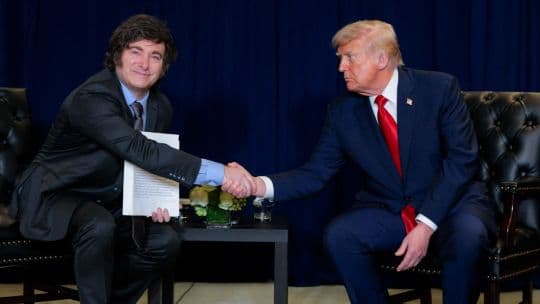
The market's knee-jerk reaction to a politician's speech is often a fleeting tremor, but when that politician is Argentina's Javier Milei and the target is offshore oil near the Falklands, investors in London and Tel Aviv felt the ground move. On Friday, shares in Rockhopper Exploration and Navitas Petroleum—the two companies behind the Sea Lion field—took a hit after Milei announced he would tighten sanctions on firms operating around the archipelago without Buenos Aires's blessing. Rockhopper dropped more than 10% in early trading, briefly touching 69 pence before settling around 72.9 pence, still down 6.5%. Navitas, the project's operator, slid about 2.3% on the Tel Aviv exchange. The sell-off was sharp but not panicked, and the companies moved quickly to steady nerves.
The core of the dispute is a familiar one. The Falklands are a self-governing UK Overseas Territory, but Argentina has long claimed sovereignty, and Milei's government is now using economic muscle to press that claim. In a Thursday night address, Milei said Sea Lion "has a date to begin offshore oil production sometime in the coming months" and announced a decree to fast-track sanctions against companies, their shareholders, directors, and suppliers—barring them from operating on Argentine soil. The developers responded with a joint statement, insisting they hold valid licences granted by the Falklands government and have the full backing of the UK. They said recent developments would not materially affect the project's timetable, which officially puts drilling in early 2027 and first oil in 2028.
For outsiders, this might look like a distant spat between a small island and a giant neighbour, but the stakes are substantial. Sea Lion sits some 220 kilometres north of the archipelago, in the North Falkland Basin, in about 450 metres of water, with estimated reserves of 1.7 billion barrels. Navitas holds 65% of the project, Rockhopper 35%, and the pair took a final investment decision in December 2025 worth $1.8 billion for the first phase. That is real money, and the project has already moved beyond paper plans: in August, Navitas exercised a $125 million option to buy the OSX-1 vessel, which will serve as a second floating production, storage, and offloading unit alongside the Aoka Mizu. The infrastructure is taking shape, which is why the political noise matters.
The sanctions threat is not entirely new. Argentina's Energy Secretariat declared Rockhopper's activity clandestine back in 2012 under Resolution 133, and in December 2025 the Foreign Ministry issued formal warnings to individuals, companies, banks, and insurers about the consequences of involvement. This week, environmental lawyers and 1982 war veterans added a legal challenge in Argentine courts, questioning the permits' legality and the project's environmental impact. The escalation is as much about domestic politics as international law, but for investors, it raises the spectre of legal and reputational risk that is hard to price.
The market reaction also spilled over to Borders & Southern Petroleum, a London-listed firm with exploration licences in the South Falkland Basin, even though it has no stake in Sea Lion. That contagion shows how sensitive sentiment is to any hint of political interference in the region's oil potential. For South America's wealth watchers, this is a reminder that the continent's energy map is not drawn solely by geology or market forces—sovereignty disputes can redraw it overnight.
Looking ahead, the Sea Lion partners are betting that legal licences and UK support will trump Argentine decrees, at least in the near term. But with first oil still two years away, there is plenty of time for the political climate to shift—either in Buenos Aires or in the Falklands' favour. For now, the project's backers are holding their course, but the next few months will test whether their confidence is justified or just bravado. In a region where resource nationalism and geopolitical friction often collide, the Sea Lion field has become a litmus test for how far foreign capital can push into contested waters.