The Unseen Superyacht of Sound: Strauss’s Elektra, Performed as a Masterclass in Orchestral Excess
A concert performance of Strauss’s Elektra by the BBC Scottish Symphony Orchestra, led by Karina Canellakis, becomes a study in extreme orchestral engineering and raw emotional power. For connoisseurs of rare sensory experiences, this is the aural equivalent of a bespoke 100-metre yacht: massive, meticulously crafted, and utterly overwhelming.
In the rarefied world of the ultra-wealthy, we chase the extraordinary: the one-off hypercar, the private island, the cellar with a century of Pétrus. But there is a more fleeting, more visceral luxury that no amount of money can buy on demand — the perfect performance. And on a recent evening in Glasgow, the BBC Scottish Symphony Orchestra delivered exactly that, unleashing Richard Strauss’s Elektra with a ferocity that made the goriest scenes of Christopher Nolan’s new Odyssey look like a polite garden party. Forget the film’s CGI monsters; Strauss’s 1909 score is the original mythological horror, and its special effects are not visual but sonic — a 111-piece orchestra that roars, whispers, and shrieks with terrifying precision.
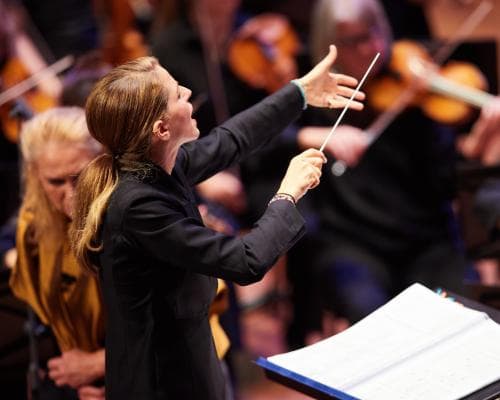
For those who appreciate the engineering of a great vessel, consider this: Elektra is the superyacht of classical music. Strauss demands an arsenal of instruments — heckelphones, basset horns, Wagner tubas — that most orchestras simply don’t own. Staging the opera is logistically insane, which is why it’s the province of only the best-resourced houses. But in concert form, as heard here, the music becomes the entire story. Karina Canellakis, the American conductor with a cult following among the cognoscenti, commanded this oversized band with economical, almost surgical gestures. The brutal climaxes were suitably overwhelming, but what stayed with you was the refined string sound in moments of repose — a silk-upholstered calm amid the storm. The clarity was exceptional: whips crackled, flutes fluttered, trombones groaned, and the balance was, for all intents, perfect.
This is not music for the faint of heart, nor for the casual listener. It’s a demanding, dissonant score that rewards those who have trained their ears — much like a fine Bordeaux rewards a patient palate. The cast was uniformly superb, down to the smallest roles. Lea Shaw and Emma Morwood were standout maidservants, and Lee Bisset, a notable Brünnhilde, shone as their Overseer. The men, when they finally appear (it’s more than an hour before one is heard), are often short-changed by Strauss, but here Günther Groissböck’s resonant bass made Oreste’s nobility obvious from the first bar, even if Elektra takes longer to recognize him. Tenor John Daszak added a note of camp to Aegisthus that was entirely in keeping with the text’s contemptuous depiction.
But the evening belonged to three women. Karen Cargill, as Klytämnestra, charted her character’s breakdown with a snarling, sneering intensity that never compromised vocal beauty — a rare feat of controlled chaos. The title role, sung with electrifying power, and the third female lead, Chrysothemis, completed a triumvirate of psychological depth that is the heart of this work. For collectors of rare experiences, this was the equivalent of witnessing a perfectly restored 1930s yacht cut through a gale: terrifying, beautiful, and utterly unforgettable.
In the market of cultural capital, performances like this are the blue-chip investments. They don’t appreciate in resale value, but they do in memory, in the stories you tell at dinner parties. The BBC SSO, under Canellakis, has set a benchmark that will be hard to beat. It signals a shift in luxury taste: away from mere objects and toward moments of intense, shared emotional power. For the discerning patron, this is the new gold standard — a night that proves the greatest luxury is still the one you feel in your bones. And if you missed it, well, that’s the price of rarity. But the memory of that sound, like the wake of a great yacht, lingers long after it’s gone.