The Unseen Cost of Neglect: Inside the DRC's Fight Against a Silent Killer
As the Democratic Republic of the Congo confronts its deadliest Ebola outbreak, the story is not just one of viral tragedy but of the fragile infrastructure of global health. This is a meditation on what happens when the world's most vulnerable are left to fight alone — and why true luxury lies in the privilege of care.
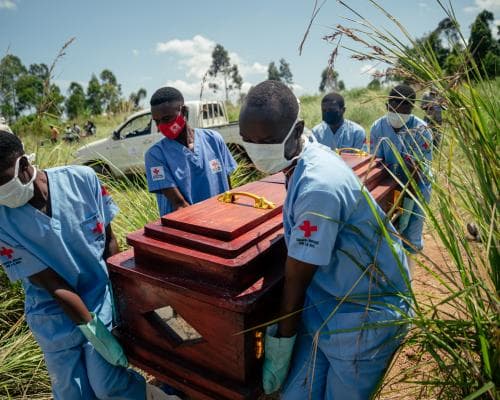
There is a particular kind of silence that settles over a hospital corridor when the world has stopped listening. In the Democratic Republic of the Congo, that silence has become a backdrop to a grim arithmetic: at least 2,325 souls lost to a virus that moves like a whisper through crowded villages and displaced camps. This is not the Ebola of glossy charity galas or Hollywood fundraisers. This is Bundibugyo — a rare, elusive strain that slipped through the spring undetected, masquerading as malaria or typhoid, while the world's attention drifted elsewhere. For those of us who curate lives of comfort, it is a stark reminder that the most precious commodity is not a rare vintage or a first-edition folio, but the quiet assurance of a functioning health system.
The outbreak now gripping the DRC is the deadliest of the country's 17 recorded encounters with the virus, and the fastest-growing in history. The numbers are staggering, but the true horror lies in the details. Armed groups contest the worst-affected regions, turning what should be a medical response into a logistical nightmare. Population displacement means that disease does not respect borders, and chronic insecurity has made contact tracing — the painstaking detective work that halts viral spread — nearly impossible. Ebola treatment centers, once beacons of hope, have been attacked, victims of misinformation and community distrust. This is not a failure of science; it is a failure of trust, and trust, like any fine object, requires careful cultivation.
Consider the craftsmanship of a well-made vaccine, the meticulous training of a local health worker, the delicate choreography of a surveillance network. These are the invisible arts that contain a pandemic. In 2014, when Ebola swept through West Africa, Barack Obama stood before the United Nations and mobilized a global response that turned the tide. The US Agency for International Development led the charge, training local clinicians, pursuing every contact, and eventually rolling out a vaccination program that saved countless lives. That was a masterclass in international cooperation — a lesson in what happens when power and resources align with purpose.
The contrast with today is stark and shaming. The Trump administration dismantled much of that infrastructure, gutting USAID and cutting the very programs that had proven their worth. The now-defunct 'department of government efficiency' — a euphemism for neglect — oversaw the withdrawal of vital human and material resources. The DRC, already besieged by insecurity, was left to fend for itself, armed with little more than courage and a broken supply chain. It is a chilling case study in how the choices made in Washington or London ripple outward, touching lives that will never vote in our elections or dine in our restaurants.
For collectors of rare things, there is a particular irony in this tragedy. We spend fortunes on a single bottle of Burgundy or a vintage watch, yet we treat global health as an optional line item, a charitable afterthought. The market for wellness has exploded — cryotherapy chambers, personalized genomics, retreats in the Swiss Alps — all designed to extend and enhance our own lives. But what does it signal about our taste, our values, when we ignore the basic wellness of an entire nation? The ultra-wealthy understand provenance; they know that a diamond's value lies in its history. The DRC's history is being written now, in blood, and it is a provenance we should all be ashamed to claim.
There is, however, a forward-looking lesson here, one that the world's most discerning minds might heed. The next outbreak is not a question of if, but when. The DRC is a warning, a preview of what happens when we treat health as a privilege rather than a right. The tools exist — vaccines, trained personnel, surveillance systems — but they require sustained investment, not emergency bursts of charity. The true luxury of our time is not a private jet or a penthouse view; it is the ability to sleep soundly, knowing that the systems that protect us are strong enough to protect everyone. As the world turns its gaze toward the next crisis, let us remember that the cost of neglect is always greater than the price of care. And for those who curate lives of meaning, there is no finer acquisition than the knowledge that we have done our part to end this silent suffering.