The Unlikely Icon: How Raygun’s Kangaroo Hop Became the Ultimate Collectible of Cultural Chaos
Rachael ‘Raygun’ Gunn’s infamous Paris 2024 breakdancing debut has been rewatched, re-litigated, and now reframed in a new Netflix documentary. For the ultra-wealthy, her story is a masterclass in radical acceptance—and a reminder that the most coveted status symbol is often the courage to be misunderstood.
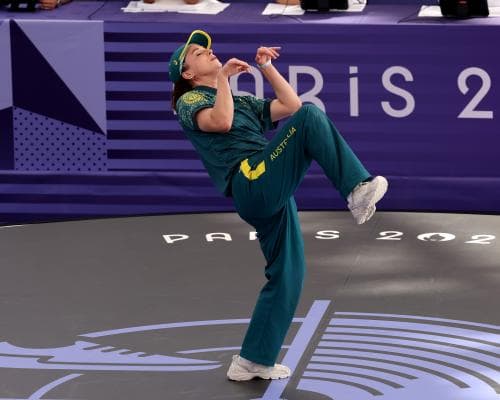
There is a moment in every cultural phenomenon when the object of ridicule becomes the object of desire. For Rachael ‘Raygun’ Gunn, that moment arrived not on the Olympic stage in Paris, but in the quiet, unglamorous act of pressing play on a laptop. The Sydney academic, who became the internet’s favourite punchline after her zero-point breakdancing routine at the 2024 Games, has finally watched the performance in full. Her verdict? ‘Oh, it’s not as bad as I thought!’ It is a sentence that could double as a thesis on the psychology of modern fame—and, for those who collect cultural artefacts, a rare glimpse into the making of an accidental icon.
The performance itself was a study in unvarnished authenticity. There was the kangaroo hop, the snake slither, the frantic arm-waving that looked less like breaking and more like a possessed windmill. Critics called it amateurish. Meme lords called it gold. But Gunn, who was Australia’s first Olympic breaker, sees something else now: a woman who, in the glare of 10,000 spotlights, chose to be herself. ‘Paris is now just a part of my story,’ she told CNN. ‘It’s more about radical acceptance of everything that’s happened.’ That acceptance, it turns out, is the rarest luxury of all—more scarce than a limited-edition Patek Philippe, more exclusive than a private viewing at Art Basel.
For the discerning collector, Gunn’s story is a masterclass in provenance. Unlike a vintage Ferrari or a first-edition Hemingway, her notoriety was not manufactured in a boardroom. It erupted organically, a viral detonation that left her ‘feeling sick in the stomach’ and ‘this sense of dread’ as her face circled the globe. She described the experience as a ‘weird, egotistical dream’—a phrase that will resonate with anyone who has ever seen their private life become public property. The forthcoming Netflix documentary, *Untold: Raygun: Breaking Badly*, promises to be the definitive archival piece, a time capsule of a moment when the world collectively decided that authenticity was funnier than perfection.
But here is where the story gets interesting for those who track cultural capital. Gunn’s performance did not merely fail; it failed spectacularly, on the world’s biggest stage, with zero points and a global audience. In the art world, that kind of failure is often the precursor to a skyrocketing market. Think of Basquiat’s early graffiti, or the ‘bad’ paintings that now hang in MoMA. The market for ‘outsider’ culture has never been hotter, and Gunn is its newest darling. Her routine, once mocked, is now a reference point for a generation of dancers who see in her a raw, unpolished energy that the competitive circuit has ironed out. The kangaroo hop may not have won Olympic gold, but it has won something more enduring: a place in the canon of unforgettable performances.
For the ultra-wealthy, the lesson is not about breakdancing. It is about the courage to be misunderstood. In a world where every move is curated, every purchase vetted, and every public appearance rehearsed, Gunn’s radical acceptance offers a counterpoint. She has refused to apologise for her performance, refused to retreat into obscurity, and refused to let the online mob define her. ‘I get absolutely rubbished online, but I get a very different reaction in the real world,’ she noted. That distinction—between the digital echo chamber and the tangible, human realm—is precisely what separates the merely rich from the truly tasteful. The former chase likes; the latter chase meaning.
As the documentary prepares to drop, Gunn is already looking ahead. ‘Just one foot in front of the other, trying to move ahead,’ she says. For collectors, the takeaway is to acquire what others dismiss, to see value in the awkward, the unpolished, and the defiantly personal. In a decade, when the Paris 2024 Olympics is a footnote, Raygun’s kangaroo hop will still be replayed, dissected, and perhaps even celebrated as a turning point in how we define athletic artistry. The market for that kind of story? Priceless. And unlike a Bugatti or a penthouse, it cannot be replicated—only appreciated.