The Uninsurable Frontier: How Climate Risk Is Redrawing the Map of Wealth
The disappearance of Australian disability worker Renee at Gyirong Port after a flash flood is a stark reminder that climate disasters are now a balance-sheet event for global capital. For wealthy investors, the rising frequency of such catastrophes is repricing everything from insurance premiums to infrastructure bonds.
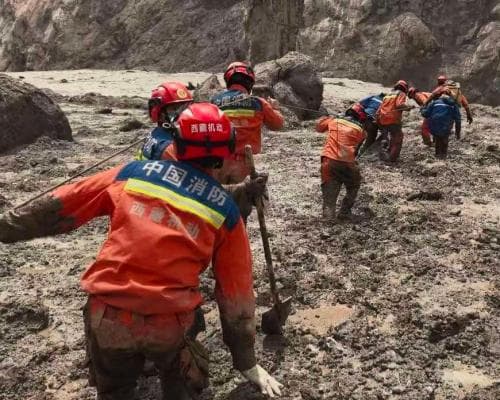
Ten minutes. That's all it took. Renee arrived at Gyirong Port on the Nepal-China border, and ten minutes later, the flood came. The images from Chinese rescue teams show the area completely flattened — huge buildings, power lines, everything wiped away. Renee is one of the missing Australians, a disability support worker from the Sunshine Coast, a partner of 30 years, a mother of two daughters in their twenties. Her sister Clair Spry is now trying to raise funds to fly the family from Australia to Nepal, so they can search for any sign of her. But this isn't just a human tragedy. It's a market signal.
For anyone who manages serious capital, what happened at Gyirong Port is a case study in what actuaries now call 'tail risk' — the low-probability, high-impact events that used to be written off as once-in-a-century anomalies. They're not anomalies anymore. The flood that erased a border town in minutes is the same kind of event that has been wiping out supply chains, sinking coastal real estate values, and forcing reinsurers to pull out of entire regions. The wealthy are not immune. In fact, they're often the most exposed, because their portfolios are globally diversified into infrastructure, agriculture, and logistics — all of which sit directly in the path of a changing climate.
Let's get to the numbers. The global reinsurance market has been repricing climate risk for years, but the pace has accelerated. In 2023, global insured losses from natural catastrophes exceeded $100 billion for the third consecutive year, according to Swiss Re. That's not a rounding error. Premium rates for property in high-risk zones have jumped 20–30% annually in places like Florida and California, and now we're seeing the same dynamics emerge in Asia. The flood at Gyirong Port is a microcosm of what happens when the physical world fails — and the financial world has to foot the bill. For investors, the question isn't whether climate risk is priced in. It's whether it's priced in correctly.
The mechanics are brutal. When a disaster like this hits, the immediate response is humanitarian — search and rescue, aid, rebuilding. But the secondary response is financial. Insurance claims, government relief packages, and infrastructure repair costs all flow through the system. For the families of the missing, like Renee's, the cost is personal. For the market, it's a line item. But here's the thing: the line items are getting bigger. The Asian Development Bank estimates that climate change could shave 7% off the region's GDP by 2100 if left unchecked. That's not a distant scenario. That's a present-day valuation problem for every pension fund and sovereign wealth fund with exposure to emerging markets.
And then there's the rarity angle. The wealthy have always sought refuge in hard assets — gold, real estate, art. But climate risk is making some of those assets less rare and more volatile. A property in a flood zone isn't a store of value; it's a liability. A gold bar, on the other hand, remains a hedge against chaos, and we've seen gold prices hold steady even as equities wobble. The broader point is that the definition of 'safe' is shifting. What was once considered a safe investment — a port, a power plant, a coastal resort — is now a potential write-off. The smartest capital is moving toward resilience: water infrastructure, renewable energy, climate-resilient agriculture. That's where the returns are going to be, not in rebuilding what's already been washed away.
What does this signal for the wealthy? First, it's a warning to diversify beyond geography. If you have all your assets in one region, you're one flood away from a portfolio disaster. Second, it's a call to pay attention to the physical supply chain. The flood at Gyirong Port didn't just kill people; it disrupted trade routes between Nepal and China. That kind of disruption ripples through commodity prices, freight costs, and ultimately, consumer prices. Third, it's a reminder that the poorest are always hit hardest — as Renee's sister Clair said, 'It's not the New Yorkers, it's the people who are in these parts of the world.' But the wealthy have a choice: to be reactive or proactive. The ones who are proactive are already shifting capital into climate adaptation and disaster-resilient infrastructure. The ones who aren't are waiting for the next ten-minute warning.
For Renee's family, the search continues. They've set up a GoFundMe to get Shaun and the daughters to Nepal, to try to find any sign of her. They know the odds are slim. But their determination is a reminder that behind every market statistic, there's a human story. And for the investors reading this, the lesson is clear: climate risk isn't a niche concern. It's a core component of every asset allocation decision you make. The next time you look at your portfolio, ask yourself: how would it survive a flood? Because the markets are starting to ask that question too — and they're pricing it in, minute by minute.