Aleppo's Alo Hakeem Raises $165,000 to Build Syria's Home Healthcare Backbone
Syrian healthtech Alo Hakeem raised $165,000 pre-seed led by EBLA Ventures to scale home healthcare from Aleppo to Damascus, Hama and beyond.
For anyone tracking where Middle East capital goes next, the most interesting deals are rarely the nine-figure ones. They are the small cheques written into markets everyone else has written off. This week, that cheque went to Aleppo.
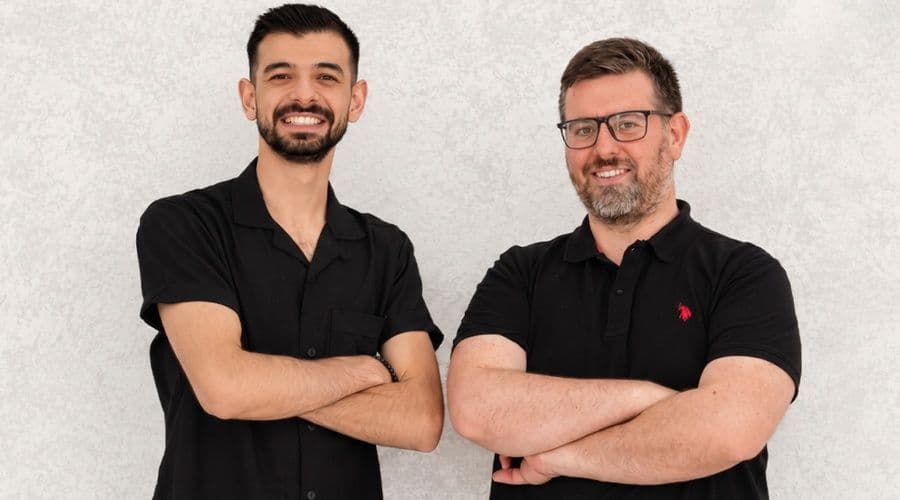
Alo Hakeem, a Syrian healthtech startup founded in 2025 by Abdullatif Al-Baroudi and Albaraa Abdulsalam, has closed a $165,000 pre-seed round led by EBLA Ventures, with other investors participating on an undisclosed basis. The company did not reveal its valuation. The platform connects patients and families with licensed healthcare professionals who deliver care at home — medical consultations, nursing, physiotherapy, elderly care, laboratory testing and diagnostic imaging — coordinated through its website and customer support operation, with a mobile application slated for public launch in November 2026. It currently serves Aleppo, Damascus and Hama, and intends to enter four more Syrian governorates by the end of 2027.
To understand why this matters, you need the local picture. Syria's health system has been hollowed out by more than a decade of conflict: hospitals damaged or shuttered, medical staff scattered abroad, and families in cities like Aleppo accustomed to arranging care through personal networks rather than institutions. Into that gap steps a generation of founders who grew up navigating scarcity and are now building companies around it. Alo Hakeem is one of them — a startup that treats the home, not the hospital, as the default setting for care. The company bootstrapped its early operations, built a minimum viable product, and tested its model directly with patients and clinicians before taking outside money. Along the way it passed through ScaleUp 2025 and received mentorship via ChangeMakers, run by Maynger Ventures, and Thimar, an initiative that prepares Syrian startups for investment.
EBLA Ventures is the key institutional name here. The firm exists specifically to back Syrian entrepreneurs, and its role in Alo Hakeem goes beyond the cheque: it worked with the founders through their early development and investment preparation. That hands-on model is becoming the norm in frontier markets, where the first institutional investor often functions as part accelerator, part validator. For a startup in a country where formal venture infrastructure is thin, having a dedicated Syria-focused fund lead the round sends a signal to the diaspora and to regional angels that the pipeline is real.
The broader context is a Middle East venture map that has quietly widened. Gulf funds dominate headlines and mega-rounds, but a parallel layer of small, thesis-driven investors is forming around Levantine and Iraqi founders — people building for markets that large regional funds still consider too complicated. Healthcare is a natural entry point. Demand is structural, not cyclical; payment models are messy but improvable; and technology that coordinates providers can create value even where physical infrastructure lags. Alo Hakeem's plan for the new capital is telling: strengthen technology infrastructure, expand the network of licensed providers, grow the team, and move from MVP to a full product. No flashy growth targets. Just the unglamorous work of making a service reliable across geographies.
The road ahead is long. Expanding into four additional governorates by 2027 means operating across areas with different security conditions, regulatory realities and purchasing power. The November 2026 app launch will test whether a platform built through direct patient engagement can scale without losing the trust that got it this far. And $165,000, by regional standards, is seed capital for a single city, not a country. Yet that is precisely the point. In markets like Syria, the first dollars are the hardest to raise and the most consequential. If Alo Hakeem converts this round into a functioning national network, it will not just be a startup story — it will be a template for how capital re-enters a country the region's investors spent a decade avoiding.