Dangote Refinery's $1.6bn IPO draws last-minute retail stampede in Nigeria
Nigeria's Dangote Refinery closes Africa's largest-ever IPO, targeting $1.6bn from retail investors at N525 a share before Tuesday's deadline.
LAGOS — By Monday morning, the queues were digital, not physical. Across Nigeria, retail investors were hammering banking apps and brokerage platforms in a final scramble to buy shares in the Dangote Petroleum Refinery before the offer window slams shut on Tuesday, October 13. For a country whose capital market has long been the preserve of institutions and high-net-worth insiders, the sight of ordinary Nigerians fighting for allocation in a $50 billion asset is something close to a cultural shift.
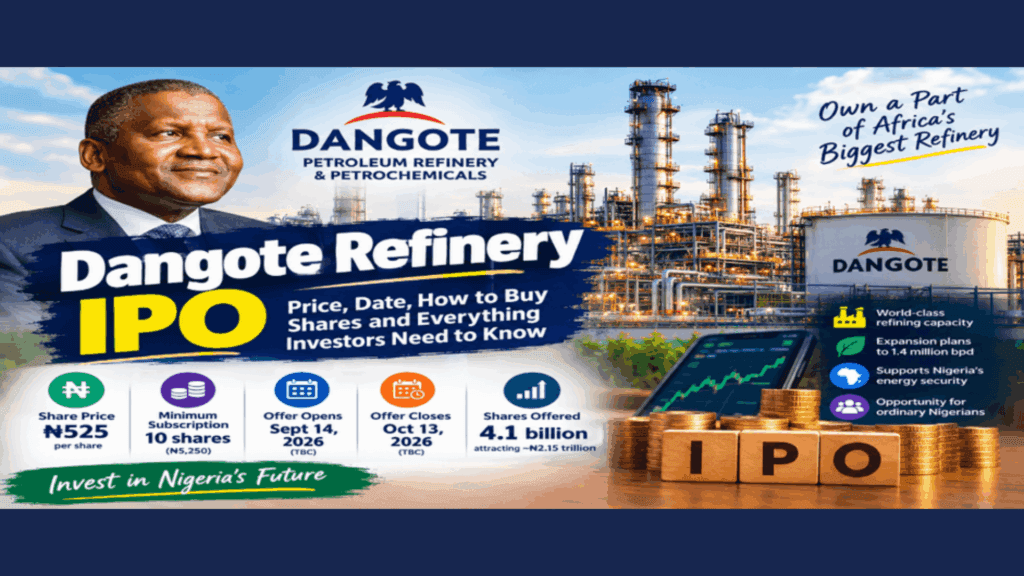
The numbers behind the frenzy are as large as the refinery itself. The offer is priced at N525 per share, with a minimum bundle of 10 shares costing N5,250 — roughly $4 — a deliberately low entry point designed to pull in first-time investors. The base offer is valued at N2.15 trillion, with a target raise of approximately $1.6 billion, making it Africa's largest-ever public offering. The company aims to reach 10 million investors, a figure that would dwarf Nigeria's current active investor base of fewer than six million. Shares are expected to list on the Nigerian Exchange Limited shortly after the close, with allotments credited to CSCS accounts within 15 business days of approval.
To understand why this matters, you need to know what Dangote Refinery is. Built by Aliko Dangote — Africa's richest man and the founder of a conglomerate that spans cement, sugar, fertiliser and now energy — the facility is the world's largest single-train refinery, a 650,000 barrel-per-day complex on the outskirts of Lagos. It was designed to end Nigeria's humiliating reliance on imported refined fuel, a paradox that has haunted the continent's largest oil producer for decades. The refinery has already begun reshaping regional fuel markets, and its revenue has reportedly climbed sharply as output and exports ramped up. This IPO is the moment that private empire invites the public in.
The rush has had immediate side effects. Analysts say investors have been liquidating blue-chip holdings and banking stocks to free up cash for the primary subscription — money actively migrating out of the secondary market and into the offer. Digital platforms reported traffic spikes through the weekend. Financial institutions, meanwhile, have issued security alerts, warning first-time subscribers to use only authorised banking apps, accredited stockbrokers and verified receiving agents, as fraudsters try to exploit the stampede.
What does this signal about capital and wealth in Africa? For years, the continent's biggest assets — mines, ports, telecoms towers — have been financed offshore, with local savers largely locked out of the upside. A domestic IPO of this scale tests whether Nigeria's capital market can convert a savings culture into an ownership culture. Sadiq Tijani of Coronation Research framed the stakes well: the IPO's success will be measured not just by subscriptions, but by whether the market that emerges is deeper, better informed and capable of financing the next company of comparable ambition.
The immediate focus now shifts to allotment and listing. If the offer is heavily oversubscribed, as the last-minute dash suggests, allocation will be tight, and the secondary market debut will be scrutinised for signs of durable retail participation rather than a one-off spectacle. Nigeria's exchange has been handed a rare chance to prove it can handle scale, scrutiny and millions of small shareholders at once. Tuesday's close is not the finish line. It is the starting gun.