The Trainer Throne Is Cooling: What JD Sports' Latest Warning Says About the New Rules of Sneaker Wealth
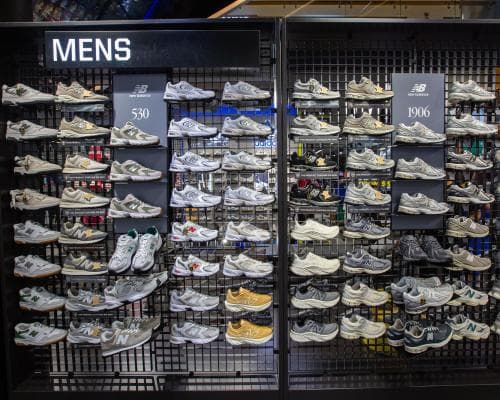
There is a particular kind of silence that falls over a boardroom when the product that built the empire stops whispering. JD Sports, the self-styled king of trainers, just told the world that its crown is feeling a little loose. The culprit? Not a heatwave, not a supply chain hiccup, but something far more unsettling for anyone with a stake in the global sneaker economy: the big brands have run out of heat. Nike and Adidas, who together account for more than half of JD's sales, are in a creative drought. And when the gods of the swoosh and the three stripes go quiet, the entire temple feels the chill.
Let's talk numbers, because in this world, numbers are the only poetry that matters. JD now expects underlying pre-tax profit of £700m to £800m for the year—down from a previous £750m to £850m. That's the third downgrade since early 2024, and the market responded with a 14% share price slump. To put that in perspective, the stock is back to 2019 levels, which is a long way from the glory days of the 2010s when JD was the unstoppable force of the high street and the mall. Even a men's football World Cup year—traditionally a guaranteed shot of adrenaline for anything sporty—couldn't lift the mood. Nike's shares are down a third this year alone, and Adidas has admitted its own World Cup marketing gamble didn't pay off. The signal is clear: the sneaker boom that Covid supercharged is not coming back, at least not in the form we knew it.
The deeper story here is about taste, and taste is the most fickle asset class of all. The athleisure wave that made trainers the new dress shoes—the one that had billionaires queuing for limited-edition drops and teenagers flipping Yeezys like penny stocks—has crested. What's left is a market flooded with product that nobody is desperate to own. JD's own language tells the tale: 'high-heat footwear product' is slow, and the dreaded phrase 'promotional market' keeps appearing, which is corporate code for 'we're discounting because nobody wants to pay full price.' The question is whether this is a cyclical dip or a permanent shift. The answer, as with most things in luxury, is a little of both. Nike and Adidas may have pushed prices too far, but they've also been outflanked by the new kids on the block—Hoka and On—who've captured the affluent runner and the fashion-forward walker alike with a different kind of cool. The old guard's loss is the new guard's gain, and JD is caught in the middle, like a department store that stocked up on bell-bottoms just as flares came back.
For the ultra-wealthy, the sneaker market has always been a curious blend of asset and identity. The days of paying $10,000 for a pair of limited-edition Dunks may not be over, but the secondary market has cooled, and the arbitrage between 'what's hyped' and 'what's actually rare' has narrowed. The real value now lies in craftsmanship, heritage, and scarcity—not in whatever the algorithm decides to push. JD's troubles are a reminder that even the most powerful retailers are merely conduits for the brands' creative energy. When the brands stall, the entire ecosystem stalls. And for the collector who owns a pair of original Air Jordans or a pristine pair of Adidas Superstars from the '80s, the lesson is simple: the true heat was never in the drop calendar. It was in the story, the material, the provenance. That's what survives a promotional market.
What does this mean for the luxury market at large? It signals a shift from hype to heritage, from volume to value. The consumer who once chased the latest collab is now asking a more discerning question: what will this look like in ten years? The answer, for most mass-produced sneakers, is 'dated.' But for the few pairs that were made with genuine obsessiveness—limited runs, hand-finished leather, collaborations with artists who actually have something to say—the future is bright. JD's struggle is not the death knell of the trainer; it's a clearing of the noise. The brands that will thrive are those that understand that heat cannot be manufactured. It has to be earned.
As for JD, the company is doing what any sensible operator does in a downturn: counting cash, buying back shares, and tightening controls. But the boardroom drama—the sudden exit of chair Andrew Higginson—suggests that patience is wearing thin. The Pentland Group, which owns 55% of the company, can afford to wait. The other shareholders, the ones without a golden parachute, are feeling the pinch. The next few quarters will tell us whether JD can reinvent itself as a curator of rare and desirable product, or whether it will remain a high-volume distributor in a low-heat world. For the rest of us, the takeaway is this: in a market where everything is on sale, the only thing that's truly priceless is the thing that can't be discounted.
The Experience
For a front-row seat to the future of sneaker culture, book a private consultation with a leading sneaker curator in London or Tokyo, where you can explore investment-grade pairs and limited-edition releases before they hit the market.