Inside Billionaire Weenietown: When South Park's Creators Became the 1% They Love to Mock
Imagine a city where the ultra-rich are tiny, sentient penises with high-pitched voices, addicted to podcasting their every thought. That's Billionaire Weenietown, the latest creation from South Park's Trey Parker and Matt Stone. But here's the twist: Parker and Stone are now billionaires themselves, thanks to a $1.5 billion deal with Paramount. So when they skewer the wealthy, they're doing it from inside the gilded gates. That's a deliciously awkward position for two guys who built a career on outsider rage.
The deal, inked a little over a year ago after a contentious negotiation that delayed the 2025 season, made Parker and Stone very, very rich. Between that renewal and their co-ownership of the South Park intellectual property, each is now worth an estimated $1 billion. The agreement also raised eyebrows: Paramount, newly under the control of David Ellison, promised creative freedom. But in an era when billionaires increasingly own the media, was this just another case of the wealthy tightening their grip on culture? The show's 29th season dives headfirst into that question, with the second episode examining life on both sides of the billionaire/regular-people divide.
On one side, Parker and Stone are merciless. They depict billionaires as miniature, high-voiced penises who obsess over sharing their stupid opinions on social media. It's crude, hilarious, and unmistakably South Park. On the other side, Parker and Stone aren't exactly throwing stones from outside the castle. They may have been famous before, but they were never billionaires. Now they are. And that changes things. Being a billionaire is its own kind of outsider status, no matter how much dumber Elon Musk might be than you. So when Parker and Stone shrug off the existence of billionaires as no big deal, keep that in mind.
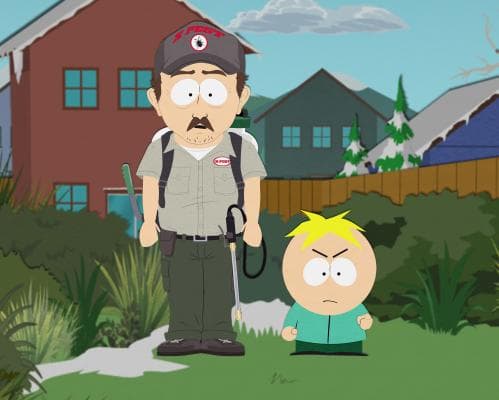
The episode itself is a masterclass in mixed-media mayhem. It opens with Butters using a school presentation on 'My Happy Place' to rant about the datacentre that has sprung up in his back yard, sapping electricity and interrupting his true happy place: watching Dr Pimple Popper videos online. Butters isn't just speaking metaphorically. Billionaire Weenietown has literally sprung up behind his house, and his parents are too busy using billionaire-backed AI to redesign their home to care. They fret that Butters has been 'libtarded' by the measles vaccination he got as a child. 'Nobody's pissed off except for me!' Butters roars. Relatable, honestly. The other South Park kids are largely absent, and even Butters flits in and out of his own episode. Many scenes are devoted to the billionaire weenies themselves, rendered with horrifying live-action puppetry and animation—a callback to Parker and Stone's fondness for crude, mixed-media mayhem.
The weenies' leader insists the problem isn't the preponderance of billionaires, who have supposedly been around for ages. Technically true, though misleading. The billionaire class is growing, and for much of the past century there were as few as a dozen, compared to thousands now. The real problem, he says, is something else. But the satire cuts deeper than that. It's not just about the absurdity of the ultra-rich; it's about how their wealth insulates them from the consequences of their own actions. The datacentre in Butters' back yard is a perfect metaphor: the billionaires' AI obsession literally sucks power from the little guy, while they sit in their miniature city, podcasting their dumb opinions. It's a sharp critique of how the wealthy shape the world in their image, often at the expense of everyone else.
So what does this mean for the luxury market and the ultra-wealthy? It signals that even the most irreverent voices can be co-opted by the very system they mock. Parker and Stone are now part of the billionaire class, and their satire comes with a side of irony. But it also shows that wealth doesn't necessarily buy taste or self-awareness. The show's willingness to bite the hand that feeds it—while cashing the check—is a reminder that in the world of the ultra-rich, everything is a negotiation. And sometimes, the best way to critique the game is to play it from the inside.
Looking ahead, the line between satire and reality will only blur further. As more creators become billionaires, their work will inevitably reflect their new status. Will they still be able to skewer the rich with the same venom? Or will they pull their punches? Parker and Stone seem determined to have it both ways: laughing all the way to the bank while pointing out just how absurd the bank really is. For those of us watching from outside Billionaire Weenietown, it's a fascinating spectacle. And for the ultra-wealthy, it's a mirror they might not want to look into.
The Experience
To truly understand the billionaire mindset, you'd need a private tour of their world—think bespoke art collections, invitation-only tech summits, and a seat at the table where deals like this get done.