The Forgotten Genius Behind Morris & Co: Kate Faulkner Steps Into the Spotlight
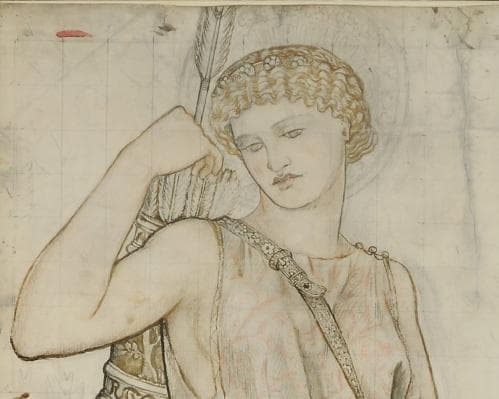
Imagine a name that has been buried under the weight of a legend for over a century. That name is Kate Faulkner. While William Morris became a household name, Faulkner was the quiet force designing some of the very wallpapers and fabrics that built his empire. Now, the Fitzwilliam Museum in Cambridge is pulling her out of the shadows with a landmark exhibition, A Call to Art: William Morris and the pre-Raphaelites, opening on 23 October. It's the first show to celebrate Faulkner as a designer, maker, and workshop supervisor in her own right—and it's about time.
Faulkner was the first person after Morris to design wallpapers and fabrics for Morris & Co., and one of only four designers he ever trusted with that task. In the 1870s and 1880s, she created patterns under her own name that are still sold today. Her 1879 Mallow wallpaper remains a Morris & Co. staple, and other manufacturers snapped up her designs, earning her an international reputation. Yet when she died in 1898, her legacy was eclipsed by Morris's towering fame. The exhibition aims to correct that, displaying for the first time a monumental 6.3-metre-wide oak and silvered-gesso altarpiece she was commissioned to make for Morris & Co. in 1886. Alongside it, you'll find her textile designs, wallpaper patterns, a tile depicting Penelope based on a design by Edward Burne-Jones, and painted ceramics sold in the Morris & Co. shop. "Kate Faulkner was not simply working in William Morris's shadow – she was a key artist in her own right," says Karen Livingstone, senior curatorial adviser to the exhibition. "Her skill and creative contribution were fundamental to Morris & Co., and this exhibition and its new research reveal just how central her artistic voice was to the commercial success of William Morris."
For collectors and connoisseurs, Faulkner's story is a reminder that true craftsmanship often hides in plain sight. Her work—whether a delicate wallpaper or a grand altarpiece—embodies the Arts and Crafts ethos of handcrafted beauty and meticulous detail. The altarpiece alone, with its oak frame and silvered gesso, is a testament to her mastery of materials. Pieces like her Penelope tile and painted plates were not just decorative; they were part of the commercial engine that made Morris & Co. a byword for taste. Today, her patterns continue to adorn elite interiors, a quiet nod to the woman who helped define an era's aesthetic. The exhibition, running until 3 May 2027, also re-examines Morris's inner circle, including Edward Burne-Jones, Dante Gabriel Rossetti, Elizabeth Siddal, and May Morris, but Faulkner's emergence as a central figure is the real revelation.
What does Faulkner's rediscovery signal about wealth and taste today? It speaks to a growing appetite for the untold stories behind luxury brands—the artisans and designers whose names never made the marquee but whose hands shaped the legend. In a market saturated with logos, there's a new prestige in owning pieces with depth, with history, with a narrative that goes beyond the surface. Faulkner's work offers exactly that: a chance to own a piece of design history that is both rare and intellectually satisfying. For the ultra-wealthy, it's not just about what you own, but the story you can tell. And Faulkner's story is one of talent overshadowed, now finally getting its due. This shift toward provenance and authenticity is redefining luxury, making the forgotten makers as valuable as the famous ones.
Looking ahead, the Fitzwilliam's exhibition is more than a retrospective; it's a call to action. Livingstone is appealing to the public to trace Faulkner's descendants—specifically the family of her sister, Lucy Orrinsmith—in hopes of finding a photograph or portrait of Faulkner, as none is known to exist. "I've tried really hard to trace her family and to find an image of her, and I have drawn a blank at every turn," Livingstone admits. "I would love to know where her family are so her legacy could be more expanded and revealed." That search underscores how much of Faulkner's life remains a mystery, and how much more there is to uncover. For those who value the stories behind the objects, this exhibition is a rare opportunity to witness a legacy being rebuilt in real time. It's a reminder that in the world of luxury, the most valuable names are sometimes the ones we've yet to learn.
The Experience
To immerse yourself in the world of Kate Faulkner and the Arts and Crafts movement, plan a private visit to the Fitzwilliam Museum's exhibition, or commission a bespoke piece inspired by her designs through Morris & Co.'s heritage collections.