Airtel Money's £7 Billion Listing: London's Quiet Victory in the Global Fintech Race
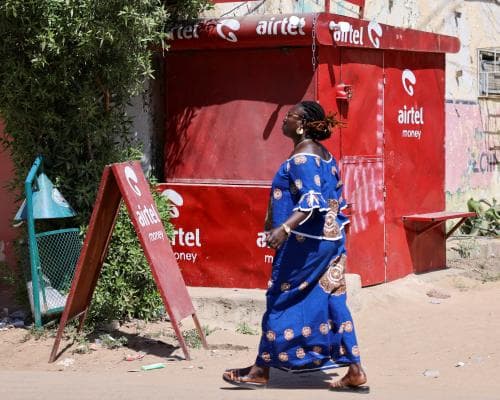
London's financial district just got a much-needed shot in the arm. Airtel Money, the payments processor with operations in 13 African countries, is set to list on the London Stock Exchange in a deal that values it between £6 billion and £7 billion. It's the biggest flotation in London for five years, and for a market that's been starved of high-profile IPOs, it feels like a tall glass of water in the desert. But before we pop the champagne, let's be clear: this is a home fixture, not a hard-won victory against global rivals.
Here's why. Airtel Money isn't a fresh face. It's a 78%-owned subsidiary of Airtel Africa, a FTSE 100 company already worth £11.3 billion. That parent is ultimately controlled by Bharti Enterprises, the Indian conglomerate led by billionaire Sunil Bharti Mittal, who also holds a 25% stake in BT. So when Airtel Money's CEO, Ian Ferrao, talks about London's deep capital pools and investor enthusiasm for fintech, he's not wrong—but the decision to list here was always the path of least resistance. Spinning off a subsidiary on a market where the parent is already a top performer? That's not a coup; that's common sense. The Airtel/Bharti team did look at the Middle East, the US, and Europe, but London was the heavy favourite from the start.
What makes Airtel Money interesting isn't just its size—it's the story. The business grew out of Airtel Africa's telecom operations, and its key growth opportunity is converting more of those telephony customers into payments users. There are 75 million potential recruits on top of the 53 million monthly active users already on board. That's a compelling narrative. Add in the fact that it's capital-light, throws off a chunky proportion of earnings as cash, and is growing at about 20% a year, and you have a fintech that ticks all the right boxes. No new equity is being raised, so this is really a chance for existing shareholders—including TPG, Mastercard, the Qatar Investment Authority, and Chimetech Holding—to cash in some chips. As long as they don't get greedy on price, it's an easy pitch.
For the ultra-wealthy, this listing signals something deeper. It's not just about another stock to trade; it's about access to a high-growth, cash-generative fintech with a foothold in some of the world's most dynamic markets. Africa's mobile money sector is booming, and Airtel Money is positioned at the intersection of telecoms, finance, and technology. For family offices and private investors looking to diversify beyond traditional assets, this is a rare opportunity to own a piece of a business that's already embedded in the daily lives of millions. And let's not forget the prestige factor: being an early backer of a company that could become a FTSE 100 heavyweight carries its own cachet.
But does this mark the end of London's listing drought? Not quite. The real test is whether London can attract companies without a pre-existing footprint in the UK. The big prize remains Norway's Visma, one of Europe's largest software firms, whose listing was delayed earlier this year due to the so-called "Claude crash"—a sell-off in data-related sectors spooked by AI tools. Visma is private equity-backed and has no natural tie to London. Winning it would be a genuine coup. Airtel Money, by contrast, was always going to list here. It's a win, but it's a home win.
Still, don't dismiss it. In a world where capital is global and listings are fiercely contested, London needs every victory it can get. Airtel Money's flotation adds depth to the market, reinforces London's fintech credentials, and gives investors another liquid, high-quality name to trade. For the wealthy, it's a reminder that opportunity often lies where familiarity meets growth. And if the wider market stays calm, this could be the start of a slow thaw—not a flood, but a steady drip of confidence. After all, in the listings game, momentum matters. And right now, London has a little.
The Experience
To access exclusive pre-IPO allocations and private market opportunities like Airtel Money, consider partnering with a wealth management firm or private bank that specialises in emerging market fintech.