The Strait of Hormuz: The World's Most Coveted Waterway
As the US and Iran trade fire over the Strait of Hormuz, the world's most important maritime chokepoint becomes a stage for geopolitical tension and a reminder of the fragile luxury of global movement. For the ultra-wealthy, whose yachts and supply chains depend on these waters, the stakes have never been higher.
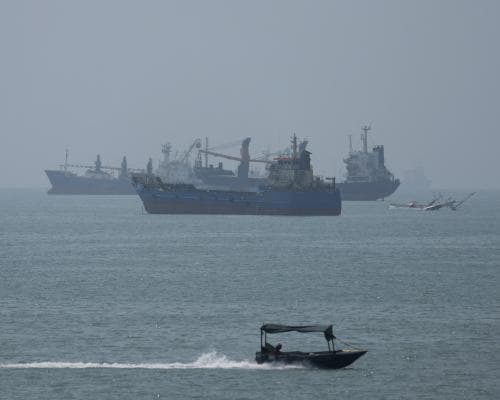
There is a stretch of water between the Arabian Peninsula and Iran that the world's most powerful people have long taken for granted. The Strait of Hormuz, a slender ribbon of sea just 21 miles wide at its narrowest, carries a fifth of the planet's seaborne energy supply. For the owners of superyachts, private islands, and sprawling estates, it is the invisible artery that keeps the lights on, the engines running, and the champagne chilled. This week, it became a flashpoint once again, as US and Iranian forces exchanged fire in a dramatic flare-up that sent ripples through the corridors of power from Washington to Dubai.
The exchange began late Sunday, when US Central Command launched strikes on Iranian rocket launchers on an island in the strait, the first such attack since July. Washington claimed it acted to prevent Tehran from deploying fresh mines in the waterway, a move that would have threatened the free passage of the world's most valuable cargo. Iran responded with ballistic missiles targeting US-operated airbases in Jordan and a drone intercepted over UAE territorial waters. President Trump, never one for understatement, promised a 'hard' response, calling Iran 'a failed nation' and signaling that the economic squeeze would tighten.
For the yachting elite, this is not abstract geopolitics. The strait is the gateway to the Gulf, a playground for the world's most magnificent vessels. From the glittering marinas of Dubai to the secluded coves of Oman, the freedom to cruise these waters is a privilege that money alone cannot secure. The threat of mines, the shadow of missile launches, and the presence of naval fleets turn what should be a leisurely passage into a calculated risk. The true cost of this conflict is not just measured in barrels of oil, but in the altered itineraries of the super-rich, who now weigh the allure of the Arabian Gulf against the prudence of alternative routes.
The craftsmanship of maritime security has never been more visible. The US Navy's recent claim to have cleared the strait of mines—dismissed by Tehran as lies—highlights the delicate dance of deterrence and denial that keeps the sea lanes open. For those who understand the mechanics of power, this is the ultimate luxury: the ability to move freely across the world's most contested waters. The mines, if deployed, would be the antithesis of that freedom—silent, indiscriminate, and devastatingly effective. Their removal is a feat of engineering and bravery that rarely makes the society pages, yet it underpins the very lifestyle that the ultra-wealthy enjoy.
The market for yachts in the region has always been resilient, driven by a clientele that values discretion and access. But this latest escalation adds a new variable to the calculus. Private charter brokers whisper of clients rerouting from the Gulf to the Mediterranean, while others double down on the region's allure, betting that the turmoil will subside and the waters will remain open. The UAE's swift interception of the drone over its waters was a reminder that even the most advanced security systems are tested in times of crisis. For collectors of rare experiences, a cruise through the strait now carries a frisson of danger that no amount of onboard spa treatments can replicate.
This is the new luxury: not just owning a yacht, but commanding the confidence to sail where others fear to tread. The Strait of Hormuz has become a barometer of global stability, and for the ultra-wealthy, it is a reminder that their world is not immune to the tides of history. The ships that glide through these waters are more than vessels—they are statements of intent, floating embassies of personal sovereignty. As the US and Iran trade blows, the question is not just who will blink first, but how the world's most privileged will adapt to a reality where even the most secure passage can be disrupted.
Looking ahead, the strait will remain a focal point of both geopolitical strategy and luxury lifestyle. The superyacht owners who once viewed the Gulf as a serene escape now watch the headlines with a keener eye. The next generation of vessels, with their advanced stabilization systems and extended ranges, offer a semblance of control, but the sea remains the ultimate arbiter. For the editor of a luxury publication, the story is not just about missiles and mines—it is about the fragility of the world we have built, and the resilience of those who navigate it with grace. The strait is not merely a passage; it is a mirror, reflecting the ambitions and anxieties of our age.