The Return of the Long Lunch: Why Test Cricket's Free-to-Air Renaissance Is the Ultimate Luxury
As the ECB prepares to open its 2029 broadcast rights to free-to-air television, the gentleman's game is poised to reclaim its place in the national drawing room. For the ultra-wealthy, this isn't just about sport—it's the revival of a languid, sun-drenched ritual that money alone can't buy.
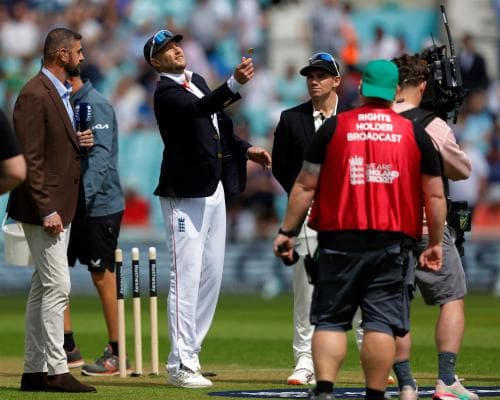
There is a particular kind of English afternoon that exists only in memory now—or so we thought. The smell of cut grass, the crack of leather on willow, the low murmur of a crowd that has nowhere else to be. It was a scene played out in drawing rooms and village greens, on portable televisions at garden parties, and in the minds of those who understood that Test cricket was never merely a game. It was a meditation, a luxury of time itself. And for the past two decades, that luxury has been locked behind a paywall, available only to those who could justify the subscription. Now, the England and Wales Cricket Board is preparing to change all that, and the implications ripple far beyond the boundary rope.
The ECB's plan, revealed to the Guardian, is to offer more rights packages to free-to-air broadcasters in the next television cycle, beginning in 2029. The ambition is not to follow Cricket Australia's model of bespoke free-to-air domestic Test packages, but rather to share the wealth. Sky Sports, the long-term partner, has privately signaled a willingness to share some of its cricket portfolio with ITV—its soon-to-be sibling, following Comcast's £1.6bn takeover. ITV, which last broadcast a Test match in 1968, is open to the idea. The BBC, which held the rights from 1938 until 1998, may also be circling. This is not a radical overhaul; it is a careful, deliberate reopening of the gates.
What makes this so significant for the discerning observer is the object itself: Test cricket, the five-day format that has become the sport's most rarefied and least commercial product. It is the equivalent of a bespoke Savile Row suit in an era of fast fashion—anachronistic, impractical, and utterly irreplaceable. The ECB is also making the Hundred, its shorter, flashier format, available on a non-exclusive basis, alongside a number of England's men's and women's white-ball matches. But it is the Test match that captures the imagination. The last time a home Test was broadcast free-to-air was in 2005, when Channel 4 covered England's historic Ashes victory—a series that turned cricket into a national obsession for six glorious weeks. Since then, the game has retreated into the subscription shadows, accessible only to the initiated.
The craftsmanship of this move lies in its timing and its subtlety. The ECB is not selling off the crown jewels; it is lending them out for a season. The commercial logic is sound—broaden the audience, deepen the passion, and the next generation of fans will eventually find their way to the premium offerings. But for the collector, the connoisseur, the person who appreciates the art of the deal, there is something more poetic at play. This is about heritage. Test cricket is a living artifact, a piece of English culture that has survived wars, recessions, and the relentless march of technology. To return it to the public sphere is to acknowledge that some things are too precious to be owned outright.
In the world of the ultra-wealthy, where everything is curated and collected, this shift signals a broader cultural movement. The same people who buy vintage Patek Philippes and first-edition Hemingway are the ones who lament the commodification of experience. A Test match at Lord's is not just a sporting event; it is a social ritual, a place to see and be seen, a backdrop for deals done in hushed tones over cucumber sandwiches. The free-to-air broadcast does not diminish that exclusivity—it enhances it. It creates a shared cultural moment, a common language that even the most private collector can reference. It is the difference between owning a painting and being part of the conversation about it.
Looking forward, the 2029 cycle could herald a new golden age for cricket broadcasting, one where the sport is no longer a luxury product but a cultural birthright. For the editors of this magazine, it is a reminder that the finest things in life are not always the most expensive—they are the ones that money cannot buy. A summer afternoon, a deckchair, and the sound of applause drifting across the green. That, in the end, is the ultimate luxury. And it is about to become available to everyone.