The New Pilgrimage: Why the Ultra-Wealthy Are Collecting Literary Houses
As the Wordsworth Trust opens Rydal Mount to the public, a quiet shift in luxury travel sees the world’s most discerning collectors trading private islands for the preserved studies of dead poets. These homes offer something no yacht can: the scent of genius, and the weight of a life fully lived.
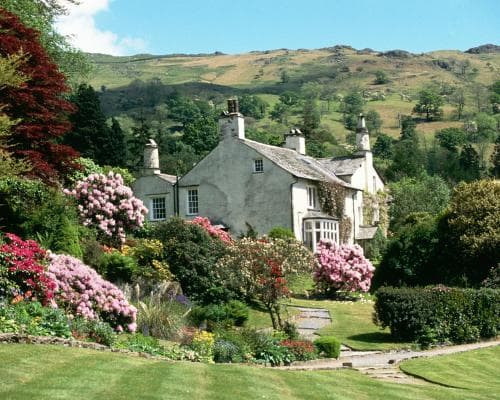
There is a moment, just before the guide begins speaking, when the air in a writer’s house feels almost unbearably thick. You stand in the narrow hallway of Dove Cottage, and you know—with the same certainty that tells you a wine has been decanted too long—that you are standing exactly where William Wordsworth once stood, his coat still damp from the Lake District rain. It is a peculiar kind of possession, not of the house but by it. And for a certain class of traveler, one who has already bought the yacht, the chalet, and the private island, this is the next acquisition: the literary home.
This autumn, the Wordsworth Trust completed its quiet coup, purchasing Rydal Mount, the poet’s later residence just two miles east of Dove Cottage in Cumbria. When the doors reopen, Wordsworth will join the rarefied ranks of Dickens and Hardy—authors with more than one preserved home open to the public. For the ultra-wealthy, who have long collected first editions and folios, these houses represent the ultimate extension of the library: a place where the manuscript of a life is still faintly legible on the walls. The trust’s purchase, reportedly driven by a drop in visitor numbers at Rydal Mount, is a reminder that even the most hallowed ground requires a patron. And patrons, it seems, are increasingly found among those who can afford to commission a private tour of Keats House at dawn.
The appeal is not in the grandeur—these are modest cottages, after all, with low ceilings and uneven floors—but in the precise opposite. In an age of marble lobbies and floor-to-ceiling glass, the cramped study of Coleridge, or the simple parlour of the Brontë sisters, offers a radical form of luxury: authenticity. The ultra-wealthy have become connoisseurs of the real, and nothing is more real than the desk where a writer wrestled with mortality. At Monk’s House in East Sussex, where Virginia Woolf walked to the River Ouse, the silence is not empty but full of what she left behind. At Keats House in Hampstead, the room where the poet coughed into his handkerchief is a memento mori as potent as any vanitas painting. These are not just houses; they are reliquaries.
What marks this moment as distinctly modern is the confluence of media and memory. The BBC’s recent series The Other Bennet Sister, which portrayed a minor Austen character as a Wordsworth devotee, has sent a fresh wave of visitors to Dove Cottage—a phenomenon the trust’s curators have deftly leveraged. Similarly, the Brontë Parsonage mounted an exhibition to coincide with the new Wuthering Heights film, and Anne Hathaway’s cottage in Stratford now offers Hamnet tours, drawing on the grief of Shakespeare’s son. The lesson for the luxury market is clear: cultural capital is the new social currency, and these houses are its most exclusive addresses.
For the collector who has everything, a writer’s house offers something that cannot be shipped or insured: the chance to stand in the exact spot where a mind was unmade and remade. It is a form of pilgrimage that no private jet can shorten, and no concierge can book. The Wordsworth Trust’s stewardship is a model of this new luxury—neither a theme park nor a mausoleum, but a living archive. As the guides—often local, often passionate—bring the rooms to life, they perform a kind of haute couture of storytelling, tailoring each anecdote to the room’s particular shadows.
Looking forward, the trend is clear. The ultra-wealthy are no longer content to own a first edition; they want the desk, the window, the view. And as more literary homes come to market—the Hardy cottage, the Coleridge birthplace—the competition will intensify. The smart money is already on the next acquisition: a quiet house in Sussex, a flat in Bloomsbury, a cottage in the Lakes. The price is not disclosed, but the return is measured in something no bank can quantify. As the Wordsworth Trust has shown, the past is the most exclusive address of all.