The New Gatekeepers of the Schengen: Why the Ultra-Rich Are Rethinking Their European Summers
The EU's new digital border checks are causing chaos for even the most seasoned travelers, turning the once-effortless European summer into a logistical gauntlet. For the luxury set, this is less about queues and more about the erosion of the seamless, borderless lifestyle they once took for granted.
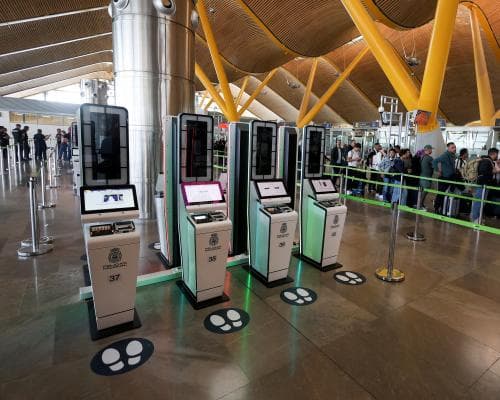
There is a particular art to the European summer — the effortless glide from a private yacht in Portofino to a chalet in Gstaad, the unspoken understanding that one's passport is less a document than a key to a world without friction. But this season, a new, decidedly unglamorous gatekeeper has entered the picture: the EU's Entry/Exit System (EES), a digital border apparatus that is turning the continent's promise of seamlessness into a study in bureaucratic friction. For the ultra-wealthy, who have long treated the Schengen Zone as their private playground, the new reality is a jarring one — and it's prompting a quiet reevaluation of where, and how, they choose to spend their time.
The EES, which requires non-EU citizens to register biometric data — a photograph and fingerprints — on every arrival and departure, was designed to track the 90-day rolling limit that governs how long third-country nationals can stay. It is, in theory, a sensible tool for a digital age. In practice, it has become a source of profound irritation, with reports of three-hour delays at major hubs and even missed connections. Brussels, in its infinite wisdom, has rejected pleas from airports and airlines to suspend the scheme during the peak season, offering only a temporary opt-out for border police when queues become unmanageable. But for those who value time as the ultimate currency, the message is clear: the borderless Europe they once knew is now a bureaucratic labyrinth, and luxury travel is no longer just about the destination — it's about the gauntlet you must run to get there.
Consider the case of Martin Farrall, a retired university professor, who with his wife arrived by ferry at Hoek van Holland in May, their full 90-day residency allowance intact. The Dutch border police enrolled them into EES, but no entry stamp was made on their passports. Fifty-five days later, when they returned to the UK via Dunkerque, the French border police asked where and when they had entered. The system, it seemed, had no record of their exit — a digital ghost that threatened to swallow their compliance with the very rules it was meant to enforce. Farrall had to chase the authorities to correct the record, a process that took days. For a retired academic, this is an inconvenience. For a hedge fund principal with a packed calendar of board meetings in Geneva and art fairs in Basel, it is a catastrophe.
The EES was technically in full force in April, after a soft launch last autumn, but it has been beset by teething problems. The system's core function — tracking overstays — is sound, but its execution is riddled with inconsistencies. Airports and airlines have called for a suspension, but Brussels has held firm, allowing only a temporary relaxation of requirements that expires next month. The result is a patchwork of enforcement that varies from border to border, creating a sense of unpredictability that is anathema to the luxury traveler. One might fly into Nice on a private jet, only to find the biometric kiosks down, the lines snaking through the terminal, and a junior officer with a handheld scanner making unilateral decisions about your compliance. It is, as one exasperated traveler put it, 'pretty shambolic.'
For the collectors and connoisseurs who define our readership, the implications extend beyond mere inconvenience. The EES is forcing a re-evaluation of the second-home portfolio. The Hamptons, the Côte d'Azur, the Greek islands — these are no longer simply about leisure; they are about strategy. Those with multiple properties in the Schengen Zone are now calculating the cumulative days they can spend across their holdings, and some are quietly selling their villas in favor of destinations outside the bloc — the UK, Switzerland, even the Caribbean — where the welcome mat is less digitally surveilled. The luxury market, which has long thrived on the promise of effortless global movement, is feeling the chill. Real estate agents in St. Tropez are whispering about a slowdown in British buyers, while those in the Swiss Alps are seeing a corresponding uptick.
What does this signal about the future of luxury taste? It suggests a shift away from the ostentatious and toward the private, away from the crowded and toward the exclusive. The ultra-wealthy have always sought to buy their way out of friction, but the EES is a reminder that some barriers cannot be vaulted with a mere checkbook. As the system matures — and it will, for all its flaws — the savvy will adapt, hiring immigration lawyers and travel concierges to navigate the new terrain. But for now, the most luxurious thing one can own is not a yacht or a penthouse, but a passport that still feels like a ticket to freedom. The Schengen Zone, once the ultimate symbol of European openness, has become a test of patience. And for those who can afford to choose, the question is no longer where to go, but whether to go at all.