The Midfield Maestro: Marc Guéhi and the Art of Tactical Versatility
Manchester City's decision to deploy Marc Guéhi in midfield redefines the modern footballer's role, blending defensive steel with creative poise. This tactical evolution is a masterclass in how the beautiful game's elite are rewriting the rules of engagement.
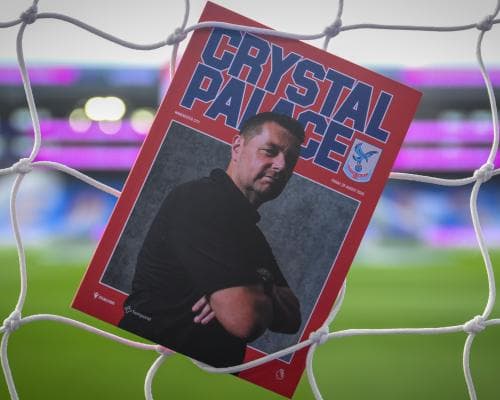
At the hallowed turf of Selhurst Park, where the Holmesdale Fanatics have long turned match days into a cathedral of sound, a quiet revolution is unfolding. It is not in the stands, but in the heart of the pitch, where Manchester City’s manager, Enzo Maresca, has made a decision that whispers of a deeper truth about the modern game. He has taken Marc Guéhi, a defender of considerable repute, and placed him in the engine room of his midfield. It is a move that would have once been seen as a gamble, a square peg in a round hole. Yet, in the rarefied air of elite football, it is a statement of intent, a declaration that the days of rigid positional play are numbered.
The choice is not a whimsical one. Maresca, a man who speaks in the measured tones of a chess grandmaster, sees something others might miss. 'After the Arsenal game, we struggled a bit in the middle of the field,' he confessed, his words carrying the weight of a man who has studied the game’s finest nuances. 'This is a league where you need strong midfielders. Marc can do this job.' It is a simple sentence, yet it speaks volumes. Guéhi, with his on-ball composure and off-ball tenacity, offers a rare alchemy: the defensive solidity of a centre-back combined with the distribution of a playmaker. He gives the team balance, a word that in football is as coveted as a rare vintage Bordeaux. This is not about filling a gap; it is about creating a new paradigm, where versatility is the ultimate luxury.
To understand the significance, one must appreciate the craftsmanship involved. Guéhi is not a converted midfielder in the traditional sense; he is a sculptor of space, a reader of the game’s subtle rhythms. His positional awareness, honed at the back, now allows him to intercept passes that would otherwise split a defence. His physicality, a product of years of duelling with the league’s most potent strikers, gives him an edge in the midfield battleground. And his passing, often understated, is precise and progressive, capable of unlocking a defence with a single, well-weighted delivery. It is a skill set that cannot be taught; it is refined through experience, much like a master watchmaker perfecting a tourbillon. Maresca’s faith in Guéhi is a testament to the player’s intelligence, a quality that transcends the mere physicality of the sport.
Yet, this tactical shift also highlights the delicate ecosystem of a top-tier squad. Maresca’s mention of Ayyoub Bouaddi, an 18-year-old French prodigy, is telling. 'He is unbelievable, but he is young, he needs time,' he said, acknowledging the need for patience in a world that demands instant gratification. The manager’s vision is clear: to have two players for every position, a luxury that allows for such experimentation. The transfer window, with its promise of 'one more in, or two in', is a reminder that the pursuit of perfection is an ongoing, expensive endeavour. For the ultra-wealthy, who collect football clubs as others collect art, this is the ultimate acquisition: not just players, but potential, not just talent, but adaptability.
In the broader context of luxury taste, Guéhi’s role is a metaphor for the modern connoisseur. The days of owning a single, purpose-built asset are fading. The discerning collector now seeks pieces that are versatile, that can adapt to different settings, that serve multiple functions. A penthouse that doubles as a gallery, a hypercar that is as comfortable on a track as it is on a coastal road, a timepiece that transitions from boardroom to beach. Guéhi is that piece for Manchester City. His presence in midfield is not merely a tactical adjustment; it is a philosophical one. It signals that true value lies not in what an object is, but in what it can become. It is a lesson in the art of reinvention, a quality that the world’s most successful individuals have long understood.
As the season unfolds, one cannot help but wonder what other surprises Maresca has in store. The mention of the Holmesdale Fanatics, and their poignant tifos—from the memory of Maxi Jazz to the celebration of Joel Ward’s FA Cup triumph—reminds us that football is as much about emotion as it is about strategy. The beautiful game, like the finest art, is a canvas for human expression. And in this particular masterpiece, Guéhi is the brushstroke that challenges convention. He is the quiet luxury in a world of ostentatious displays, the understated elegance that speaks louder than any shout. For those who watch, and for those who own, the message is clear: the future belongs to those who can adapt, who can find beauty in the unexpected, and who understand that true power lies in versatility.