The Left Side Is a Birthright: Inside the Bedroom Power Struggle of the One Percent
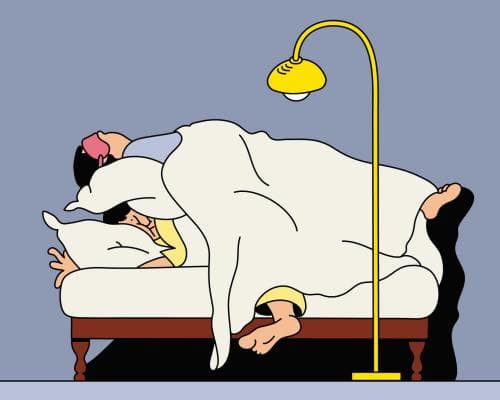
Imagine this: you’ve just closed on a penthouse with panoramic views, a bed the size of a small yacht, and Egyptian cotton sheets with a thread count in the five figures. You should be sleeping like a god. Instead, you’re lying awake at 2 a.m., staring at the ceiling, because you’re on the wrong side of the mattress. For most people, that’s a minor annoyance. For the ultra-wealthy—those who can afford to curate every square inch of their environment—it’s a crisis of existential proportions. Because in the world of serious money, sleep isn’t just rest; it’s a performance metric. And the side of the bed you claim is a declaration of who you are.
Meet Pádraig and Dave, a couple who have everything—except agreement. They’ve just moved into a new flat, and the bedroom’s orientation has shifted. Suddenly, the left side of the bed—Pádraig’s sacred territory for three and a half years—is now Dave’s. Pádraig, a self-described sensitive sleeper, has been reduced to tossing and turning on the right side, a position he deems “unnatural.” Dave, the pragmatist, argues that bed sides are relative, not absolute: you pick based on the door, the window, the flow of the room. But Pádraig sees it as a matter of ownership, not logistics. “The left side is mine, no matter what,” he insists. It’s a classic standoff—but with a distinctly high-stakes twist. These are two grown men who’ve mastered the art of the perfect night’s sleep, complete with individual duvets (a Swedish trick, naturally), and they’re willing to go to war over a few feet of mattress real estate.
This isn’t about comfort, though. It’s about ritual, control, and the psychology of ownership. In the world of bespoke everything—from tailored suits to custom yachts—the bed is the last frontier of personal dominion. You can buy a $50,000 mattress, but you can’t buy the feeling of rightness when you slide into your designated spot. Pádraig’s struggle is a masterclass in the luxury of stubbornness: he’s so committed to his left-side identity that he’s willing to sacrifice sleep—the very thing he’s fighting for—to prove a point. And Dave, ever the negotiator, frames it as a logistical issue: he wants to be furthest from the door, and Pádraig’s early 4 a.m. wake-up calls shouldn’t disturb his own slumber. But deep down, this is about who gets to set the terms of the domestic contract. In a world where every decision is optimized—from investment portfolios to vacation itineraries—the bed becomes a microcosm of power.
The craftsmanship angle here is subtle but crucial. The bed itself is a symbol of status: a king-sized behemoth, likely imported, with a price tag that could fund a small country’s GDP. But the true luxury isn’t the mattress—it’s the ability to demand a specific side, regardless of the room’s layout. That’s the kind of privilege that money can’t buy, but it certainly helps you argue for it. Pádraig and Dave’s battle is a reminder that the ultra-wealthy don’t just buy things; they buy experiences, and the experience of waking up on the “wrong” side is a failure of curation. For Pádraig, the left side is his heritage, his birthright. For Dave, it’s a matter of practical elegance. And so they clash, night after night, in a dance that’s as old as marriage itself—but with better sheets.
What does this say about wealth and taste? It says that the one percent don’t compromise—they delegate. They hire sleep consultants, buy white-noise machines, and install blackout shades that cost more than a used car. But when it comes to the side of the bed, there’s no app for that. It’s a raw, primal battle that no amount of money can resolve. And that’s what makes it so fascinating. The luxury market thrives on the illusion of control, but this is the one area where even billionaires are powerless. Unless, of course, they buy a second bed—or a second bedroom. Which, let’s be honest, is probably the real solution. But that would be admitting defeat.
Looking forward, the question is: what happens when they move again? Pádraig and Dave are currently “in between places,” and the battle is set to repeat. The smart money says they’ll eventually hire a feng shui master or a sleep psychologist to mediate. Or they’ll just buy a house with two master suites—a trend among the ultra-rich that’s already gaining traction. But for now, they’re stuck in a stalemate, two stubborn boys with impeccable taste and a shared love of a great night’s sleep. And in a world where every other aspect of life can be optimized, it’s oddly refreshing to see that the side of the bed remains the last true luxury—a luxury that can’t be bought, only fought for.
The Experience
For those who refuse to compromise on sleep, consider a bespoke sleep consultation with a luxury bedding atelier, or book a suite at a five-star hotel with a bed orientation that suits your preference—just be sure to specify your side.