The Godzilla Effect: How the World's Most Coveted Climate Phenomenon Became a Supercharged Spectacle
A new study reveals that the planet's most dramatic climatic event—the El Niño—is being amplified by human activity, turning a natural rhythm into a record-breaking force of nature. For the ultra-wealthy, this isn't just weather; it's the ultimate recalibration of how we plan, travel, and invest in a warming world.
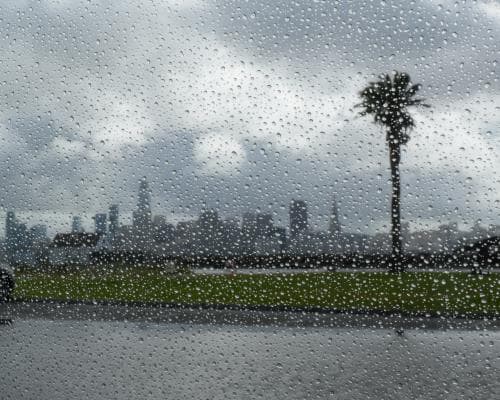
There is a moment, roughly every seven years, when the Pacific Ocean decides to rewrite the global script. The waters off Peru and Ecuador warm by a few degrees, the trade winds falter, and suddenly the world’s most exclusive weather phenomenon—El Niño—takes center stage. This year, however, the script has been torn up. The event brewing now, informally dubbed “Godzilla” by climatologists, is set to be the strongest in living memory. And according to a landmark study published in Science, it is no longer a purely natural act of nature. It is, in part, a product of our own making.
The revelation comes from Julia Cole, a climate researcher at the University of Michigan, who has spent years tracing the fingerprints of fossil fuel combustion on the Pacific's thermal pulse. Her findings are stark: the overheating of the planet is not just making El Niño more frequent in its intensity; it is making the phenomenon itself more violent. “Our findings suggest El Niño can supercharge global warming but also global warming can supercharge El Niño,” Cole told reporters. “We are seeing a shift where El Niño doesn’t look like what it did prior to industrial times.” For the rest of us, this is a headline. For those who own islands, vineyards, and ski chalets, it is a portfolio statement.
The mechanics are deceptively simple. El Niño is a natural oscillation, a pulse of warm water that rises in the eastern tropical Pacific every two to seven years. It disrupts jet streams, dries out the Amazon, floods California, and—crucially—adds a burst of heat to an already warming globe. The new research, however, confirms the feedback loop: as the atmosphere warms from burning coal, oil, and gas, the ocean absorbs more heat, and when that heat is released during an El Niño, it releases with a fury unseen in pre-industrial times. The result is a “super” El Niño, a term once reserved for rare extremes, now becoming a regular feature of our era. Next year, the study predicts, is almost certain to be the hottest on record globally, a title that seems to change hands with alarming frequency.
For the luxury world, this has moved beyond a matter of meteorological curiosity and into the realm of asset management. The Godzilla event currently brewing is not just a weather pattern; it is a force that reshapes entire markets. Private jet schedulers are already rerouting flight paths to avoid intensified storm corridors over the Pacific. Yacht captains are being advised to reposition fleets away from the Coral Sea, where coral bleaching events—exacerbated by El Niño—have already decimated some of the most exclusive dive sites in French Polynesia. Even the wine cellars of Bordeaux are watching nervously, as the phenomenon historically shifts rainfall patterns across Europe, threatening the delicate terroir that underpins a $2,000 bottle of Pétrus.
The collector’s mindset, however, has always been about anticipation. The ultra-wealthy have long understood that the rarest commodities—whether a 1962 Ferrari or a first-growth vintage—appreciate in value precisely because they are subject to the whims of time and nature. El Niño, in this context, is the ultimate arbitrage: a natural event that, when supercharged by human activity, creates scarcity in real time. The insurance industry, a favorite barometer of the rich, is already pricing this in. Premiums for coastal properties in the Caribbean and Southeast Asia have risen by double digits in the past year, a direct response to the increased severity of El Niño-driven storms. The message is clear: the climate is no longer a background condition; it is a protagonist in the story of wealth preservation.
What does this signal about luxury taste? It signals a shift from acquisition to adaptation. The discerning buyer is no longer asking, “How do I own this?” but rather, “How do I protect this?” The most forward-thinking collectors are investing in climate-resilient infrastructure—seawalls around private islands in the Maldives, elevated foundations for beachfront villas in Malibu, and geothermal cooling systems for desert estates. The new luxury is not a watch or a car; it is the ability to remain insulated from the very forces we have unleashed. As Cole’s research makes clear, the Godzilla event is not a fluke. It is the new normal, a trend that will only intensify as long as we continue to burn fossil fuels. For the ultra-wealthy, the message is both a warning and an invitation: the future belongs to those who can weather the storm, literally and figuratively.
Looking ahead, the next decade will define what it means to live well in a supercharged world. The wine will still be poured, the yachts will still sail, and the private jets will still fly—but their routes, their timing, and their provenance will be dictated by a force we can no longer ignore. The Godzilla El Niño is not just a headline; it is a herald. It tells us that the era of passive consumption is over. The era of active, intelligent, climate-aware luxury has begun. And for those who pay attention, the rewards—both financial and experiential—will be as profound as the phenomenon itself.