The Gloves Are Off: 50 Cent’s Fightland Puts the Brutal Beauty of Boxing on Screen
In Fightland, Curtis '50 Cent' Jackson steps into the ring as executive producer of a drama that fuses the raw elegance of pugilism with the dark glamour of organised crime. It’s a visceral, unapologetic spectacle that reminds us why boxing remains the sport of kings—and gangsters.
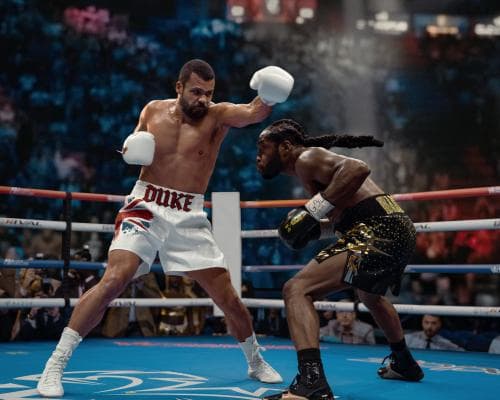
There is a moment in Fightland when Nicholas Pinnock’s crime kingpin, Kingsley Marshall, leans into the camera and declares, 'Boxing is a criminal enterprise. Always has been, always will be.' It is a line delivered with the kind of velvet menace that makes you want to pour a scotch, even at nine in the morning. And it sets the tone for a series that is less interested in the sweet science than in the sweet corruption that surrounds it. Executive-produced by Curtis '50 Cent' Jackson—a man who knows a thing or two about both the boardroom and the street—Fightland is a bruising, beautiful, and gloriously excessive drama that treats the boxing ring as a stage for the oldest human dramas: revenge, honour, and the pursuit of a crown that never quite sits straight.
The story centres on Duke Kilroy, played with coiled intensity by Howard Charles, a champion boxer whose brother’s murder pulls him back into a world he thought he had left behind. The plot is as straightforward as a left hook to the jaw—revenge, blood, more revenge—but that is precisely the point. Fightland is not a meditation on the sport’s finer points; it is a pulpy, operatic celebration of its brutal romance. The fight scenes are choreographed with a balletic ferocity that would make a Ringside ticket holder wince, and the production design—all neon-lit gyms, smoked-filled backrooms, and bespoke suits—evokes a world where every shadow hides a deal and every handshake comes with a price.
What elevates Fightland beyond its B-movie bones is the craftsmanship. The show’s creators have clearly studied the visual language of classic boxing cinema—from Raging Bull’s monochrome brutality to Creed’s slick contemporary sheen—and they wear those influences like a tailored overcoat. The sound design deserves particular note: each punch lands with a crack that feels almost tactile, a reminder that in this world, violence is not just a tool but a language. And then there is 50 Cent himself, whose presence looms over the series like a ghost at the banquet. His own journey from Queens to the Forbes billionaire list gives the show an authenticity that no amount of method acting could replicate. This is not a rapper slumming it in a producer’s chair; this is a man who has lived the intersection of hustle and heritage, and he knows exactly how to frame it for maximum drama.
For the collector’s mindset—the same impulse that drives someone to acquire a Patek Philippe or a first-edition Hemingway—Fightland offers a different kind of rarity: a story that unapologetically embraces its own excess. It is the sort of television that does not beg for your approval; it demands your attention. The series arrives at a moment when prestige TV has become increasingly sanitised, obsessed with moral ambiguity and grey-shaded antiheroes. Fightland is a corrective, a throwback to the days when a villain could be a villain and a hero could bleed. It is not subtle, but subtlety is overrated when the alternative is this much fun.
In the world of high-end entertainment, where every streaming service is chasing the next Succession or The Bear, Fightland stands out because it refuses to apologise for its pulp instincts. It is the equivalent of a limited-edition sneaker drop—hype, exclusivity, and a certain unapologetic swagger. The show’s setting at the nexus of pugilism and gangsterism is not just a plot device; it is a metaphor for the luxury market itself, where power and beauty are always in a delicate, often violent, dance. The series understands that the most coveted things in life—whether a vintage Rolex or a championship belt—are rarely acquired cleanly. They are earned, stolen, or inherited through a fog of blood and ambition.
Looking ahead, Fightland feels like a harbinger. As the ultra-wealthy increasingly seek experiences that are raw, authentic, and unmediated, the show’s celebration of visceral drama speaks to a cultural shift. The same audience that pays six figures for a safari in Botswana or a private viewing of a Basquiat will find something familiar in the show’s unflinching gaze at the primal forces that drive us. It is not a documentary, and it does not pretend to be. But in its own way, Fightland is a mirror held up to the world of the one percent—a world where every victory is pyrrhic, every crown is heavy, and the only rule is that there are no rules. And that, perhaps, is the most luxurious thing of all.