The Farmer Who Planted 40,000 Trees to Bring the Birds Back
Henry Astor, a Cotswolds farmer, has spent a decade restoring biodiversity on his land, planting tens of thousands of trees, reviving heritage wheat, and co-founding a farmer cluster that has brought red-listed birds like barn owls and yellowhammers back to the fields. His work is a quiet revolution in nature-friendly farming, proving that agriculture and wildlife can thrive together.
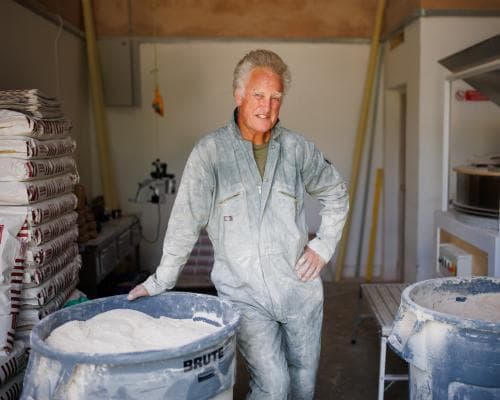
The earliest harvest Henry Astor can remember is also the most alive. Walking through the scorched wheatfields of his Cotswolds farm, the air hums with insects, wildflower meadows blaze in kaleidoscope colors, and hedgerows stretch several meters wide. A yellowhammer perches on a nearby tree — one of 19 red-listed bird species now calling this land home. This year alone, Astor ringed 23 barn owls, three kestrels, two little owls, and goshawk chicks. Last winter, he watched clouds of goldfinch, chaffinch, and greenfinch sweep across his fields. In a country that has lost 73 million birds since 1970, Bruern Farms is a small but unmistakable reversal.
Astor is not a professional conservationist. He is a farmer — a landlord, yes, but one who has chosen to use his land as a canvas for restoration. Over the past decade, he has planted between 30,000 and 40,000 trees, many as part of a flood-mitigation scheme, others in a 17-hectare agroforestry section where heritage apples like Cox’s pippin and Blenheim orange now grow alongside wheat. The wildflower meadows are rebuilding soil fertility, and a plot is left for bird feeding, boosting populations of linnets and goldfinch. This is not a side project; it is a reimagining of what a farm can be.
Astor’s vision extends beyond his own boundaries. He co-founded the North East Cotswold Farmer Cluster, a collaborative network of 40 farms covering thousands of hectares. Together, they have restored 800 hectares of floodplain meadow and are managing 3,000 hectares for nature. The cluster’s bird-feeding project has produced flocks of linnets, goldfinch, and chaffinch across all participating farms, and one farm has seen more than 400 teal feeding among watercress in a wetland area. Tim Field, the cluster’s co-chair, calls the results extraordinary — proof that when farmers work together, nature rebounds.
The backdrop to this work is the catastrophic biodiversity loss since the postwar “green revolution,” when heritage grains and mixed populations gave way to vast monocultures of dwarf wheat. Astor’s approach is a deliberate counter-movement, blending modern agroforestry with ancient practices. His wheatfields are interspersed with fruit trees, creating a layered ecosystem that supports insects, birds, and soil health. The heritage apples are not just a nod to the past; they are a bet on a more resilient future, one where food production and wildlife coexist.
What Astor has done is not charity in the traditional sense — no checks written, no gala dinners. But it is philanthropy of the deepest kind: a gift to the land, to the birds, and to the community. His work is a model for the growing movement of nature-friendly farming, showing that private landowners can be powerful stewards of the environment. The scale is impressive, but the spirit is what resonates: a farmer who looked at his fields and saw not just crops, but a living system in need of repair.
For the cause of biodiversity, Astor’s story offers a practical blueprint. The farmer cluster model — collaborative, science-informed, and locally driven — is being watched by conservation groups across Britain. If 40 farms can bring back barn owls and teal, what could 400 do? Astor is quick to share credit, but his leadership is unmistakable. He has shown that the culture of giving need not be measured in pounds alone; it can be measured in the return of a yellowhammer’s song, the flutter of a kestrel’s wings, the quiet satisfaction of knowing that the land is richer than when you found it.