The £330m Man Who Gave Cambridge a School of Government — Then Left Britain
Chris Rokos, the publicity-shy hedge fund billionaire who paid £330m in UK tax last year, has made a record £190m gift to Cambridge before relocating to Greece. His exit highlights the fragile bond between national loyalty and the super-rich's global mobility.
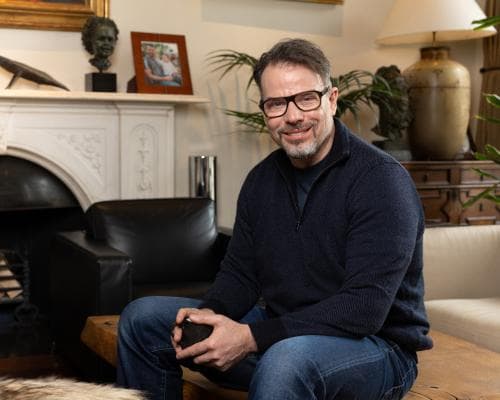
There is a particular kind of quiet that surrounds Chris Rokos. He does not court cameras, does not tweet, does not appear at Davos panels. Yet this year, the 51-year-old hedge fund founder did something that made the entire British philanthropic world sit up: he handed the University of Cambridge £190m — the largest single donation in its 800-year history — to launch the Rokos School of Government. Then, almost in the same breath, he prepared to leave the country that made him rich.
Rokos is the founder of Rokos Capital Management, a macro hedge fund he launched in 2015 after a storied decade at Brevan Howard. He is worth roughly $4bn, according to Bloomberg, and last year paid an estimated £330m in UK tax — ranking him third on the Sunday Times list of the country's top taxpayers. That figure alone tells you something about the scale of his wealth and the scale of his contribution to the exchequer. But it also tells you something about the arithmetic of modern philanthropy: when a man pays that much in tax, his giving is not charity — it's a statement.
The gift to Cambridge is a statement of rare ambition. The Rokos School of Government will be a new faculty dedicated to the study of public policy, governance, and the interplay between technology, economics, and statecraft. It is designed to train the next generation of civil servants, diplomats, and policy leaders — not just for Britain, but for the world. Rokos, who attended a state primary school before winning a scholarship to Eton and later reading maths at Oxford, said at the time that he wanted 'to give something back to Britain.' Those words now carry a bittersweet edge, because his giving back is happening just as he is giving up his British residency.
Rokos is relocating to Greece, where a special tax regime for high-net-worth individuals offers a flat annual levy of €100,000 on foreign income, provided he invests at least €500,000 in Greek real estate, businesses, or shares within three years. It is a sweetheart deal designed to lure the global elite — and it is working. He plans to open an Athens office, and his departure follows a wave of billionaire exits from the UK, many blaming the abolition of the non-dom regime and higher taxes on private equity, inheritance, and capital gains. The chancellor, John Healey, has promised a debut budget that will address these concerns, but for Rokos, the math has already been done.
The Cambridge gift is not just a donation; it is a carefully engineered piece of legacy-building. The university will match his name with a school of government, placing him alongside the Rockefellers and Carnegies of history. But the mechanics of the gift are as telling as the gift itself. Rokos structured it as a single, record-breaking pledge, bypassing the typical drip-feed of annual donations. That kind of immediacy has a catalytic effect: it forces universities to think big, to hire fast, and to build infrastructure that might otherwise take decades. Cambridge has already announced plans for a new building, a new professorial cohort, and partnerships with global policy institutions.
Yet the deeper impact may be on the culture of giving among Britain's ultra-wealthy. Rokos's exit sends a chilling signal: even the most patriotic donors — those who pay £330m in tax and then give £190m to a national institution — can be pushed away by punitive fiscal policy. The irony is not lost on philanthropy watchers. The UK has long prided itself on being a hub for charitable giving, but if the tax environment drives away its most generous citizens, the country risks losing not just their capital, but their civic imagination.
For Rokos, Greece offers a new chapter. He has spent the past decade renovating Tottenham House, a 200-room Wiltshire mansion, into a £175m private estate complete with tennis pavilion and cinema. That project now seems like a farewell gesture — a final, extravagant polish on a life that was always more global than local. His move to Athens, with its sun and its tax haven, is a reminder that philanthropy is not just about money; it is about where you choose to belong. And for Britain, the question is no longer whether Rokos will give, but whether his departure will inspire others to follow — or to stay and give differently.