The Empty Chairs on Parliament Steps: A $36M Gap in Australia's Mental Health Tech
Victoria's failure to fund two cultural healing centres, despite a royal commission's recommendations, underscores a systemic gap in mental health innovation. A $36.2m investment could pioneer a new model of self-determined, community-led care that mainstream services cannot replicate.
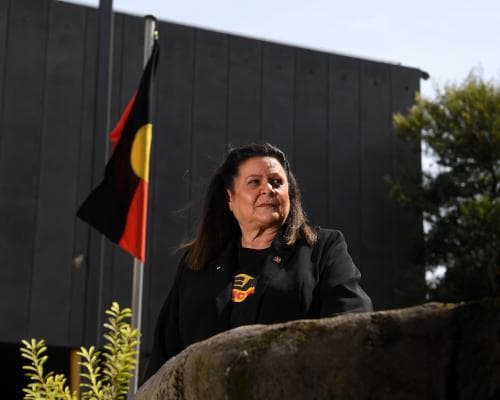
One hundred and twenty-one empty chairs on the steps of Victoria's parliament. Each one a life lost. Each one an Indigenous Australian. The chairs are a stark monument to a five-year crisis that has unfolded since the royal commission into mental health delivered its final report in March 2021. The report was clear: Aboriginal self-determination and culturally safe healing centres are not optional extras—they are the core of effective care. Yet, as of today, not one of those centres has been built. The government accepted all 65 recommendations, but acceptance without action is just another form of neglect.
The silence from the state government is deafening, especially when the data is so brutal. Indigenous Victorians are three times more likely to die by suicide than non-Indigenous Australians. This is not a statistical anomaly; it is a systemic failure. Jill Gallagher, CEO of the Victorian Aboriginal Health Organisation (VACCHO), puts it bluntly: “The government has done nothing.” She is not being hyperbolic. VACCHO has applied twice in five years for funding to establish two cultural healing centres, with a modest price tag of $36.2m over four years. That is less than the cost of a single freeway interchange, and it could save lives.
The mainstream mental health system is not just failing Indigenous communities—it is actively harmful. Nikki Foy, who lost her brother to suicide over 20 years ago, speaks of the “complexities of the trauma that we carry.” She is right. Intergenerational trauma, dispossession, and systemic racism are not conditions that respond to a CBT worksheet or a telehealth check-in. They require a different kind of intervention—one that is community-led, culturally embedded, and grounded in self-determination. The royal commission understood this. It recommended the establishment of two healing centres in Victoria, designed by and for Aboriginal people. They would offer a blend of clinical care, cultural practice, and community support. It is a model that has been proven in places like New Zealand and Canada, where Indigenous-led health services have dramatically improved outcomes.
The technology here is not silicon or software—it is social infrastructure. But it is no less innovative. In fact, it represents a frontier that the deep-tech world often overlooks: the application of cultural knowledge to mental health. The centres would integrate traditional healing practices with evidence-based psychological support, creating a hybrid model that is far more sophisticated than anything a hospital can offer. This is not about adding a cultural awareness module to existing services. It is about building a parallel system, controlled by the community, that can address the root causes of distress.
The market context is grim but clear. Australia spends billions on mental health, yet suicide rates among Indigenous people remain stubbornly high. The gap between policy and practice is a chasm. The government's inaction on the healing centres is not just a moral failure—it is a strategic one. The $36.2m investment would likely save millions in hospital costs, emergency responses, and lost productivity. More importantly, it would signal that the government is serious about self-determination, not just in rhetoric but in budget lines.
What does this signal for the sector? It is a wake-up call for philanthropists, impact investors, and tech innovators. There is a massive opportunity to fund and scale community-led mental health models that are culturally specific. The current system is a one-size-fits-all approach that fails the most vulnerable. The healing centres offer a blueprint for a new kind of care—one that is decentralized, community-owned, and deeply human. The technology exists; the will does not.
The empty chairs are a counting of the dead. But they are also a challenge to the living. Will Victoria wait for another 121 chairs? Or will it finally invest in the infrastructure that could prevent them? The answer lies not in more reports, but in action. And the clock is ticking.