Musk Warns of 'Guppy-Level Death' for AI Neoclouds as Credit Markets Tighten
Elon Musk predicts a wave of consolidation among the 200+ neoclouds—specialist AI cloud providers—as debt markets shut out firms without independent revenue. His warning comes as SpaceX closes a $40 billion GPU-backed debt deal, highlighting a growing divide between AI haves and have-nots.
Elon Musk, the world’s richest person whose fortune stems from Tesla, SpaceX, and a sprawling portfolio of ventures, has a knack for saying the quiet part out loud. On Tuesday night, he took to X to deliver a stark prognosis for the AI cloud industry: a "guppy-level death" is coming for the hundreds of startups that rent out Nvidia chips. The metaphor is apt—small fish in a pond suddenly drained of water.
The trigger? A sudden freeze in debt markets for any company whose revenue depends on AI data centers. "As of the past few weeks, debt markets have almost entirely shut off access to money for any company that doesn’t have substantial revenue independent of AI data centers," Musk posted. He contrasted this with his own SpaceX, which just closed a $40 billion debt deal to fund GPUs for its AI ambitions. SpaceX, he noted, is investment grade and boasts Starlink and launch revenue—a lifeline the neoclouds lack. The message is clear: when capital tightens, scale and diversified cash flow are everything.
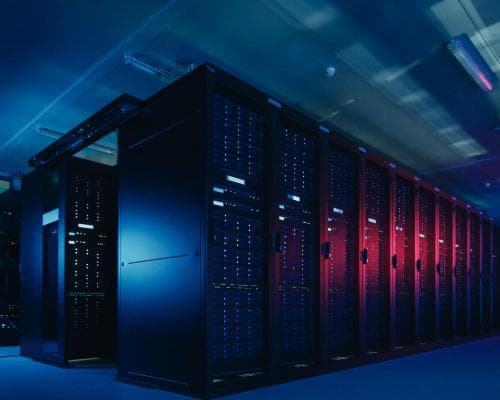
Neoclouds are the specialized cloud providers that have mushroomed over the past two years, offering clusters of high-speed Nvidia GPUs for AI training and inference. They emerged to fill a gap left by hyperscalers like AWS and Microsoft Azure, which couldn’t keep up with insatiable demand. The poster child is CoreWeave, a US firm that rents Nvidia capacity and went public earlier this year. But CoreWeave’s shares have plunged 60% from their peak as investors question whether the massive capital expenditure on AI data centers will ever translate into lucrative cash flows. The cost of insuring CoreWeave’s debt against default has climbed to levels that typically signal credit distress—a red flag Musk’s comments are unlikely to ease.
The timing is brutal. Just as the AI gold rush seemed unstoppable, the financing that fueled it is drying up. Lenders and bond investors are growing skittish, spooked by sky-high valuations, uncertain returns, and the sheer scale of debt being taken on to build GPU farms. Musk’s own $40 billion debt deal for SpaceX is a case in point: it’s one of the largest ever for a private company, but it’s backed by a business with proven, diversified revenue. For neoclouds, which often have few customers and no revenue outside AI, the door is slamming shut. The result, Musk predicts, will be a wave of consolidation and failure. "Some will make it through, but not many," he wrote.
This isn’t just a story about struggling startups. It’s a signal of a broader shakeout in the AI infrastructure market. The neocloud boom was built on cheap money and the promise of exponential AI growth. Now, with interest rates elevated and investors demanding a path to profitability, the easy capital is gone. The hyperscalers—Amazon, Microsoft, Google—are still spending tens of billions on AI, but they can fund it from cash flow. The neoclouds can’t. That divide is likely to accelerate a winner-takes-most dynamic, where the largest players with the strongest balance sheets swallow the rest. CoreWeave, for all its troubles, may end up as an acquisition target rather than an independent survivor.
For the broader AI sector, Musk’s warning is a reality check. The technology’s potential remains enormous, but the financial engineering that has underpinned its rapid build-out is being stress-tested. If debt markets remain closed to AI-centric businesses, we could see a sharp slowdown in new data center construction, which would ripple through the semiconductor supply chain and beyond. Nvidia, the biggest beneficiary of the GPU boom, might feel a chill if its smaller customers start disappearing. Yet the hyperscalers and well-capitalized players like SpaceX will keep spending, potentially widening their lead.
Musk’s own bet is telling. By loading up SpaceX with $40 billion in debt for GPUs, he’s doubling down on AI at a time when others are retreating. It’s a classic Musk move: contrarian, bold, and backed by a belief that vertical integration and scale will win. For the guppies, though, the pond is shrinking fast. The coming months will reveal which neoclouds have the cash flow and customer diversity to survive—and which become cautionary tales in the annals of AI hype.