The Ebor's Blue-Riband Moment: Daiquiri Bay and the Art of the Patient Gamble
On the Knavesmire, Alan King's Daiquiri Bay delivered a masterclass in timing and nerve, taking Europe's richest handicap by a head in a finish that felt more like a private auction than a horse race. For those who collect rare thrills, this was a reminder that the most valuable prizes are often won with a quiet, deliberate hand.
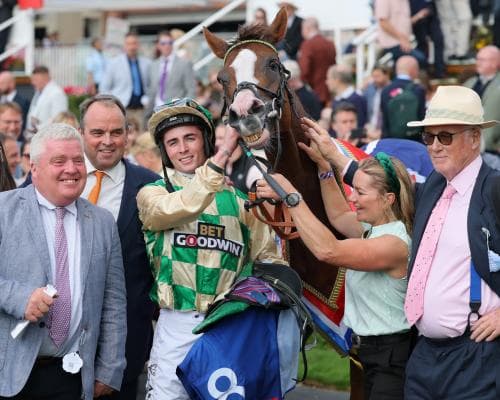
There is a particular pleasure in watching a plan come together with the precision of a Swiss movement, especially when the stakes are measured in seven figures and the margin of error is a horse's nostril. On Saturday, on the lush turf of York's Knavesmire, the Ebor Handicap offered precisely such a spectacle—a four-day crescendo that ended not with a roar, but with a held breath. As the field thundered into the final furlong, a 10-1 shot named Daiquiri Bay, all sinew and patience, threaded along the stands' rail, leaving the gallant Hopewell Rock to rue a lost whip and a head that was simply not quite enough. For those of us who appreciate the finer mechanics of a gamble, it was a masterpiece of restraint.
This was not merely a horse race; it was a study in the architecture of a season. Daiquiri Bay, now unbeaten in three starts this year, has been reborn since a gelding operation over the winter—a quiet, unglamorous intervention that transformed a talented but wayward soul into a creature of singular focus. His jockey, Rossa Ryan, had the foresight to tuck him away at Royal Ascot in June, saving his powder for this very afternoon. When the rain came and the ground softened, trainer Alan King, a man who has spent decades in the sport's upper echelons, admitted he almost thought his horse preferred it that way. There is a lesson here for any collector: sometimes the most coveted objects are not the ones that flash brightest at first glance, but those that reveal their depth under pressure.
The craftsmanship of a racehorse is a curious thing—part breeding, part alchemy, part sheer bloody-mindedness. Daiquiri Bay's pedigree is respectable but not aristocratic, and his price tag would not raise an eyebrow in the sales ring at Keeneland. Yet what he possesses is that ineffable quality trainers call 'heart,' and this season it has been worth more than any stallion's stud fee. The Ebor, Europe's richest handicap, carries a purse that would buy a modest yacht or a very good painting, and its roll of honour reads like a who's who of racing's old money. King, who has been chasing this prize since 2003 when his favourite Salsalino finished third, spoke with the emotion of a man who knows such days are rare. 'When you win these big races, it is always emotional,' he said, and you could hear the decades in his voice.
For the collector's eye, the Ebor is a peculiar market. Unlike the Classics, where blue-blooded colts are bought and sold like Picassos, the handicap is a democratic bazaar—a place where a clever trainer, a patient owner, and a jockey with ice in his veins can outmanoeuvre the billionaires' toys. The favourite, Love Me Tender, from the mighty Willie Mullins stable, was sent off at 7-2 but pulled like a thoroughbred with somewhere to be, fading to tenth. It was a reminder that in this world, as in any auction house, the gavel falls for those who bid at the right moment, not those who wave their paddle at everything. The market, as ever, rewards the discerning.
What does this signal about luxury taste in 2025? It suggests a quiet shift away from the ostentatious—the oversized superyacht, the diamond-encrusted chronograph—toward the understated provenance of a well-run campaign. Daiquiri Bay is not a headline name; he is a story. He is the vintage wine that needed a decade in the cellar, the pre-war villa that required a new roof but revealed original frescoes. Collectors of the truly refined know that rarity is not always noisy, and that the best investments are often those that require a little faith. Alan King's patience, Rossa Ryan's timing, and a horse's stubborn refusal to lose have created a moment that money cannot simply buy—though it certainly helped to have the entry fee.
Looking forward, the question is not whether Daiquiri Bay will win again—the autumn campaigns beckon, and the Melbourne Cup is whispered in such circles—but how this victory will age. In a sport that often feels like a casino with better tailoring, the Ebor proved that the house can still lose to a clever player. For the rest of us, sipping something cold and watching the replay, the takeaway is simpler: the best things in life are not always the most expensive, but they are always the ones that make you hold your breath. And on the Knavesmire, with a head's distance between glory and gallantry, Daiquiri Bay made the entire afternoon feel like a private view.