The Deep Sea's New Frontier: Trump's Pacific Mining Gambit and the Yachting Elite's Quiet Reckoning
As the ultra-wealthy turn their gaze from surface waters to the abyssal plains, Trump's controversial deep-sea mining plan for the Pacific threatens to redraw the map of marine luxury—and international law. A look at what this means for those who call the ocean their playground, and their responsibility as its most visible stewards.
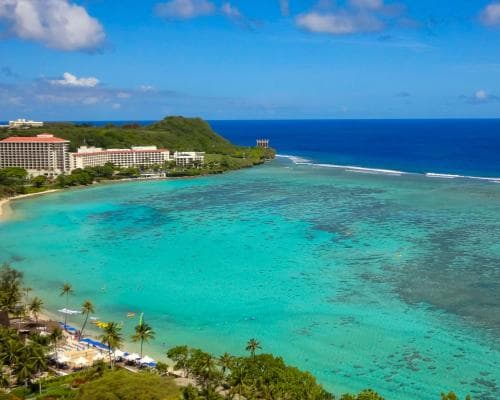
There is a moment, somewhere between the champagne flute and the horizon, when the Pacific looks like infinity—an endless blue that has always promised both escape and ownership. For the yachting class, the sea is the last great private estate, a place where money buys silence, scale, and the illusion of mastery. But now, a new kind of claim is being staked beneath those waves, and it has nothing to do with moorings or marinas. Donald Trump's plan to lease millions of hectares of Pacific seabed for deep-sea mining has sent a quiet tremor through the world of those who actually read the charts. This is not just a policy squabble; it is a fundamental challenge to the very idea of the ocean as a shared, sacred commons—and to the laws that have, until now, kept the deep in a state of dignified mystery.
The proposal, as reported, would open vast tracts of the ocean floor to extraction of polymetallic nodules—those potato-sized lumps of nickel, cobalt, and manganese that sit like forgotten jewels on the abyssal plain. For the collector who has already acquired a vintage Riva and a 60-meter Feadship, this is the ultimate acquisition: the floor of the sea itself. But here is the rub. Under the United Nations Convention on the Law of the Sea—Unclos, ratified by 171 countries and the European Union—no such mining may proceed until an international code on environmental assessments is agreed, and until a mechanism for sharing the economic benefits among all nations is in place. The United States has not ratified Unclos, but since 1982 has pledged to abide by its rules. The Trump administration's plan, as legal scholar Guy Standing argues in a recent letter to The Guardian, flouts that commitment. It is a sovereign act of trespass against the world's collective inheritance.
For the yachting elite, this is not an abstraction. The same waters they cruise—from the Marquesas to the Marshall Islands—are the ones at risk. The deep sea is not a void; it is a living archive of slow-growing corals, bioluminescent creatures, and microbial communities that have never seen sunlight. Disturbing it is not like dredging a harbor. It is like bulldozing a cathedral you didn't know existed. The craftsmanship of nature, honed over millennia, is being weighed against the crude calculus of extraction. And the irony is exquisite: the very people who pay millions for a hand-stitched sail or a custom teak deck are now faced with a plan that treats the ocean as a strip mine. The question is whether they will speak up, or whether they will simply sail on, sipping their Sancerre, while the seabed is carved up like a Sunday roast.
The market context is telling. Deep-sea mining has been a speculative frontier for a decade, with startups and nation-states eyeing the nodules as a hedge against land-based supply chains. But the International Seabed Authority, the body tasked with drafting the rules, has yet to agree on a single binding code. This is not a technicality; it is a moral firewall. Without it, any mining is, in the eyes of most of the world, piracy. The US, by unilaterally proceeding, would be the rogue actor in a theater of consensus. For collectors and investors who pride themselves on discernment, backing such a venture is like buying a fake Rolex—it may glint, but it cannot hold its value in the eyes of those who know better.
What does this signal about luxury taste? The new luxury is not acquisition; it is stewardship. The ultra-wealthy are increasingly measured not by what they own, but by what they protect. A private island is no longer just a retreat; it is a conservation statement. A yacht is no longer just a vessel; it is a platform for ocean research, coral restoration, and plastic cleanup. The Trump plan, by contrast, is a relic of a bygone era—the era of conquest, of taking without asking, of treating the natural world as a resource rather than a relationship. The tastemakers of the yachting world, from the Monaco Yacht Show to the Lürssen shipyards, are quietly shifting their narratives toward sustainability, blue finance, and marine protected areas. The deep-sea mining plan is a test of whether that rhetoric is real or just another veneer.
Looking forward, the pressure is mounting. The UK government, along with 171 other signatories, should protest this plan with the vehemence it deserves. But the real power may lie with the private sector. If the yachting elite—those who host gala dinners for ocean nonprofits and whose hulls bear the names of their foundations—were to publicly condemn this plan, it would send a signal that the ocean is not for sale. Not at any price. The deep sea is the last unexplored frontier, but it is also the last unowned one. Let us keep it that way. For those who have spent their lives chasing the horizon, the horizon is not a boundary; it is a promise. And that promise should not be broken by a drill bit, no matter how gilded the hand that wields it.