The Data of Unequal Justice: Why London's Unsolved Murders Demand a Forensic Tech Revolution
New analysis reveals that 92.9% of unsolved London homicides involve minority ethnic victims, exposing a systemic failure in forensic investigation. This disparity signals a urgent need for advanced DNA, AI-led case prioritization, and community-trust rebuilding technologies.
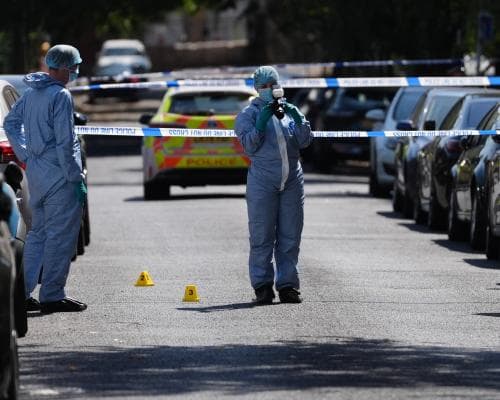
Here’s a number that should stop you cold: in London, between 2019 and 2023, nearly 93% of unsolved murders involved a victim who was Black or from another minority ethnic group. The killers of Black Londoners are vanishing into the city’s cracks at a rate that dwarfs every other demographic. This isn’t just a crime statistic — it’s a diagnostic of a system that is failing its most vulnerable citizens, and a wake-up call for the technologists building the future of public safety.
The study, conducted by Action on Armed Violence (AOAV), looked at every homicide in the capital over five years. It found that Black people were 40% of all murder victims but 73% of all unsolved cases. For shootings, that gap becomes a chasm: 83.7% of unresolved gun deaths were Black victims. Stabbings tell the same story: 73.5% of unsolved knife killings were Black. Meanwhile, the overall solve rate for white victims is dramatically higher. This is not a random statistical wobble. It’s a pattern, and it’s screaming for a different kind of intervention.
The Metropolitan Police’s own commander, Paul Brogden, offers a blunt explanation: trust. “We know serious violence disproportionately affects certain communities, particularly young black men, who have the lowest trust in policing,” he told The Guardian. “This means sadly victims or witnesses are less likely to come forward and trust us.” That’s a profound admission — and it’s the key to why the usual playbook isn’t working. When witnesses don’t talk, the case file goes cold. But that’s not the only problem. The data also shows that shootings are four times more likely to remain unsolved than their share of overall homicides, pointing to the inherent difficulty of investigating crimes where suspects are often masked, fleeting, and embedded in a code of silence.
So where does technology fit into this? The future of criminal justice isn’t just about more CCTV — it’s about making forensic science work for every community, not just the ones that trust the system. Think of rapid DNA sequencing that can run a sample in hours, not weeks, and cross-reference it against familial databases without bias. Think of AI-driven case prioritization that doesn’t just flag high-profile cases but uses predictive analytics to identify which unsolved cases have the highest chance of resolution if given more resources. And think of social media and digital forensics — mapping phone data, geolocation, and encrypted messaging trails — to build a picture of a crime even when no one speaks. These tools exist. They’re just not being deployed equitably.
But the technology is only half the battle. The other half is rebuilding the social contract. The Met’s own data shows that lower trust in policing among Black communities is both a cause and a symptom of this disparity. If you don’t believe the police will solve your friend’s murder, you’re less likely to come forward with that crucial piece of information. That’s not a technology problem — it’s a civic one. Yet technology can help bridge it. Community-based forensic liaisons, who work with victims’ families as partners rather than subjects, are gaining traction in cities like New York and Chicago. They use encrypted apps to let witnesses share anonymous tips, and they publish regular, transparent updates on case progress — turning the investigation process into a two-way street.
The market for this is real, and it’s growing. Public safety tech is a multi-billion-dollar industry, but it’s been heavily skewed toward surveillance — facial recognition, gunshot detection, predictive policing — which often exacerbates distrust. The next wave is about forensic intelligence: tools that solve crimes, not just prevent them. Companies like Othram and Parabon NanoLabs are already using genetic genealogy to crack decades-old cold cases, and they’re doing it with a fraction of the bias that plagues traditional policing. Imagine scaling that to every unsolved murder in London — not just the ones that make the news.
What the AOAV data reveals is a moral imperative for innovation. It’s not enough to build better mousetraps; we need to build fairer ones. That means investing in forensic science that is blind to race, in AI that doesn’t inherit the biases of its trainers, and in community-trust protocols that treat every victim as equally worthy of justice. The technology is ready. The question is whether the political will and the budget will follow. If they do, we could see a future where a murder in Brixton is solved with the same speed and certainty as one in Chelsea. That’s the only future worth building.
The clock is ticking. Every year, more cases go cold, and more families are left without answers. But the data gives us a roadmap. It tells us exactly where the system is failing — and it gives us a target. The next decade will be defined by whether we have the courage to use it.