The Concrete Eden: Why the World’s Most Coveted Wildflowers Now Bloom in Cities
As Britain’s countryside meadows vanish under intensive farming, a remarkable inversion is taking place: urban wastelands, pavements, and roundabouts have become the last great sanctuary for the nation’s rarest wildflowers. This is the story of how the city, long seen as nature’s adversary, has become its most unexpected patron.
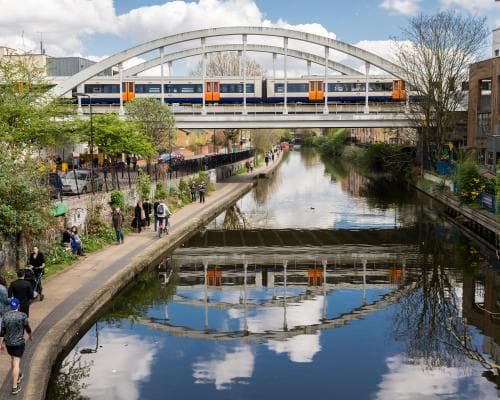
There is a quiet miracle happening in the cracks of a London pavement, on the scruffy bank of a Manchester canal, in the forgotten gravel of a Glasgow roundabout. It is not a new supercar or a private members’ club, but something far rarer and, in its own way, far more luxurious: a wildflower. While the British countryside has been quietly hemorrhaging its floral heritage—97% of its wildflower meadows lost in a century—the city has become an accidental Eden, a refuge for species that have all but vanished from the pastoral idyll we once romanticized.
The irony is delicious. We have spent decades fleeing the city for the country, seeking authenticity in rolling hills and hedgerows, only to find that the real botanical treasures are thriving in the very places we left behind. The reason is a masterclass in ecological inversion. Intensive farming, with its chemical fertilizers, pesticides, and relentless grazing, has turned the countryside into a green desert for wildflowers. But cities, with their poor, compacted soils and their brutal microclimates, are actually perfect for these delicate species. Wildflowers, it turns out, are not demanding divas; they are hardy minimalists. They prefer low-fertility ground, where competition from aggressive grasses is suppressed. A pavement crack, a roadside verge, a derelict industrial lot—these are not wastelands but five-star habitats for a cornflower or a bee orchid.
Consider the craftsmanship of nature in these urban niches. Each gap in the asphalt is a micro-terroir, as distinct as a Burgundy vineyard. The heat radiating from a sun-baked wall mimics a Mediterranean cliff face. The damp shadow of a railway arch replicates a woodland floor. The soil under a street tree, compacted by footfall, is the equivalent of a well-drained alpine scree. These are not accidental accidents; they are the result of millions of years of evolutionary adaptation, now finding their last redoubt in the most unlikely of places. And some of the best havens are where councils have made a deliberate choice—to withhold the herbicide, to mow less, to let the wildness in. It is a form of curation, a deliberate neglect that yields a more beautiful, more authentic result than any manicured garden.
For the collector, this is a revelation. The rarest wildflowers—the spreading bellflower, the Welsh groundsel, the early spider orchid—are not found in the National Trust’s manicured borders but in the unglamorous interstices of urban life. The value of these plants is not measured in pounds or pence, but in their scarcity and the sheer improbability of their survival. A single bee orchid appearing on a roundabout in Birmingham is worth more to a botanist than a case of first-growth Bordeaux is to a wine connoisseur. The market for these living treasures is not transactional but experiential; you cannot buy them, but you can find them, and that discovery is worth more than any price tag.
This shift in where wildflowers thrive signals a profound change in what we consider luxury. For decades, luxury was synonymous with control—the perfect lawn, the clipped hedge, the imported exotic. But the new luxury, the one that the ultra-wealthy are beginning to covet, is authenticity and resilience. A garden that allows for a little wildness, that welcomes the self-seeded poppy and the stubborn dandelion, is not a sign of neglect but of confidence. It is the horticultural equivalent of a perfectly worn-in leather jacket or a patinaed bronze sculpture. The city, with its accidental meadows, is teaching us that true beauty is not imposed but allowed to emerge.
Looking forward, the implications are as exciting as they are unexpected. As climate change and biodiversity loss accelerate, urban areas will become not just refuges but vital corridors for plant migration. The wildflowers of the city are not merely survivors; they are pioneers, adapting to a hotter, more unpredictable world. For the discerning traveler or the curious mind, the next great expedition is not to a distant rainforest but to the neglected corners of our own metropolises. Armed with a hand lens and a field guide, one can discover a rare orchid on a traffic island or a patch of yellow rattle on a derelict railway line. It is the ultimate luxury—a treasure hunt in plain sight, a reminder that the most valuable things in life are often found where we least expect them, and that the city, once the symbol of nature’s defeat, is now its most surprising champion.