The Child Who Found Her Voice: Mary John’s Lifelong Fight for the Power of the Powerless
Developmental psychologist Mary John turned her own childhood trauma into a global crusade for children’s rights and disability equality, co-founding movements that gave the voiceless a seat at the table. From an iron lung in a Wigan hospital to the halls of the European Commission, she reshaped how the world listens to its most vulnerable.
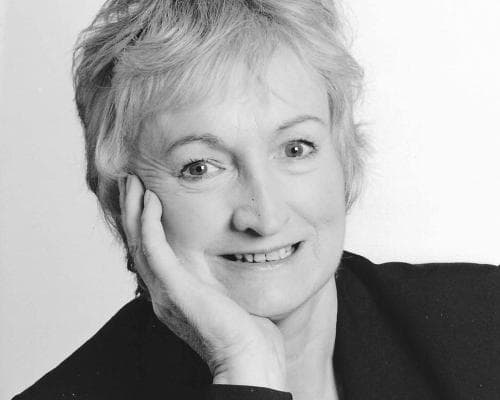
At seven years old, Mary John lay inside an iron lung, her body ravaged by peritonitis and septicaemia, her parents barred from visiting by medical orthodoxy. No one explained the machines, the pain, or the isolation. She later described herself as “a child abandoned, bewildered, drugged, hallucinating and desperately solitary.” That terrifying, lonely childhood became the engine of her life’s work: ensuring no child, no disabled person, no human being would ever again be treated as an object to be managed rather than a voice to be heard.
Mary found her calling in the radical ferment of the 1970s and 1980s, as an academic in the social sciences faculty of the Open University. There, she worked alongside Vic Finkelstein, a towering figure in the disability rights movement, and together they helped shift the conversation from “charity” to “rights.” Mary didn’t just theorize; she rolled up her sleeves. She served on the US Committee on the Employment of the Handicapped under President Jimmy Carter, and later helped establish the European Commission’s Bureau for Action in Favour of Disabled People. She was a bridge builder, connecting activists, policymakers, and academics across the Atlantic and the Channel.
But her most audacious act came in 1992, at the University of Exeter, where she hosted the first global conference on children’s rights that actually included children themselves. Not as props, not as photo opportunities, but as delegates with their own opinions, their own agendas, their own power. It was a radical inversion of the adult-centric world of policy and academia. She followed this with the book series “Children in Charge,” and her own volume, “Children’s Rights and Power: Charging Up for a New Century” (2003), which argued that true empowerment means giving children real agency, not just protecting them from harm.
The mechanics of Mary’s work were as important as the message. She didn’t just write papers; she built institutions. She partnered with disability organizations, children’s advocacy groups, and government bodies to create platforms where the marginalized could speak for themselves. She was a master of the quiet, patient work of convening: bringing together people who would never normally sit at the same table, and making sure the least powerful voices were heard first. Her approach was collaborative, iterative, and deeply respectful of lived experience—a lesson many philanthropists today still struggle to learn.
The impact of her work is hard to overstate. The 1992 Exeter conference set a precedent that has influenced how the UN Convention on the Rights of the Child is implemented, and her advocacy helped embed the principle that children’s participation is not a luxury but a fundamental right. She was awarded the European Woman of Achievement award in 1996, and in 1999 the Open University gave her an honorary doctorate for her lifetime’s work for disadvantaged people. But her true legacy is in the countless children and disabled people who found their voice because she insisted they had one.
Mary’s story is a reminder that philanthropy is not just about money. It’s about attention, empathy, and the stubborn belief that every person deserves to be heard. She turned her own deepest wound into a lifelong gift to others, proving that the most powerful giving often comes from those who have suffered most. In a world of billionaire donors and flashy foundations, Mary John’s quiet, relentless work is a masterclass in what it really means to empower the powerless. Her voice, once silenced by an iron lung, now echoes in every child who dares to speak up.