The Checkout Is Dead: Morrisons Bets on AI Trolleys to Rewrite the Supermarket
Morrisons has launched the UK's first trial of Instacart's AI-powered Caper trolleys in Preston, which automatically scan items as shoppers drop them in, eliminating checkout queues. The move signals a pivotal shift in grocery retail, where autonomous shopping tech is moving from failed experiments to scalable, cost-effective reality.
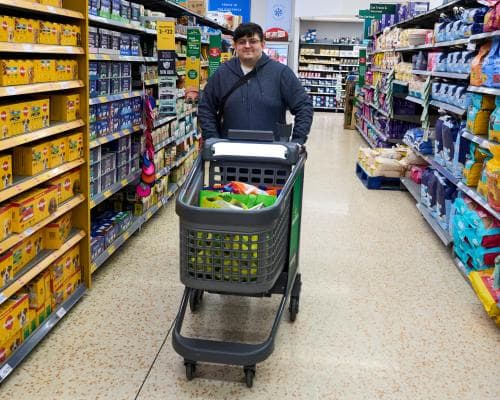
Preston, a city better known for its proud industrial past than for pioneering the future of food retail, has just become the unlikely epicentre of a quiet revolution. Last month, a Morrisons supermarket in Ashton-on-Ribble rolled out a fleet of AI-powered shopping trolleys that can see, weigh, and ring up your groceries as you drop them in — no scanning, no checkout, no friction. It is the kind of technology that feels like it belongs a decade in the future, but it is here now, and it is about to change how Britain shops.
The trolleys, built by San Francisco-based Instacart and branded Caper, are not a gimmick. They are the culmination of years of investment in autonomous retail — the dream of a store where the act of buying is so seamless it becomes invisible. Morrisons, which has struggled in a brutal UK grocery market, is betting that this is the way forward. The company has already signalled it will roll the trolleys out to more stores if the Preston trial succeeds, and given the global track record — Caper carts are already in use in more than 100 cities across the world — this is less a test and more a preview of what is to come.
The technology itself is deceptively simple. Each trolley is equipped with computer vision cameras and weight sensors that identify items the moment they are placed inside, tallying the total in real time on a built-in screen. The trolley also makes suggestions, nudging you towards a jar of pasta sauce when you drop in a packet of spaghetti, or reminding you that the avocados are on offer. When you are done, you pay via the screen and walk out. No queues, no self-checkout machines that beep at you in frustration, no human interaction unless you want it. For the supermarket, it means lower labour costs, more data on shopping habits, and the ability to upsell in the most direct way possible — right at the point of decision.
The timing is no accident. Amazon Fresh, which once promised to do away with checkout queues entirely using ceiling-mounted cameras and a 'just walk out' system, closed its last physical UK store in 2025 after the concept failed to resonate with British shoppers. The technology was expensive, the stores were sterile, and the experience felt more like surveillance than service. But the Caper trolley is different. It is not a whole-store overhaul; it is a simple, tangible upgrade to the humble shopping cart. It keeps the human element of browsing, the tactile pleasure of picking up a product, and adds a layer of digital intelligence that helps shoppers stay on budget and discover new things. For a nation that has a complicated relationship with self-checkout — we use it, but we resent it — this feels like a genuine improvement.
There is also a deeply human story here. Matthew Byrne, a customer in Preston who is autistic, told reporters that the trolleys have 'massively' helped him keep track of his shopping. He has a habit of grabbing things impulsively and losing sight of his plan; the live tally on the screen keeps him anchored, showing him exactly what he has spent and what he has picked up. That is a powerful reminder that this technology is not just about efficiency or profit — it is about making shopping more accessible for people who find the traditional experience overwhelming. The trolleys turn a chaotic, sensorially overloaded task into a calm, structured one. That is a genuine advance in inclusive design, and it is a story that Morrisons should be telling loudly.
But the bigger picture is about the future of grocery retail itself. The UK market is a knife fight, with discounters like Aldi and Lidl squeezing margins, and online delivery giants like Ocado pushing convenience to the doorstep. Supermarkets are desperate for differentiation, and they are increasingly looking to technology to deliver it. The Caper trolley is a Trojan horse for Instacart, which has built its business on grocery delivery but now wants to own the in-store experience too. If the trial succeeds, expect to see these trolleys everywhere — not just in Morrisons, but in other chains desperate to catch up. The trend is unmistakably up, and the direction is clear: the checkout, as we know it, is on its way out.
What comes next is even more ambitious. Once the trolleys are ubiquitous, they become a platform. They can offer personalised promotions based on what you are buying, suggest recipes, and even adjust prices in real time. They can be integrated with loyalty apps and payment systems, turning the trolley into a personal shopping assistant that knows your preferences, your allergies, and your budget. And for the retailer, they provide a treasure trove of data — not just what people buy, but how they shop, what they pause at, what they put back. That is the real prize.
For now, the focus is on Preston, a city that once spun cotton and now spins algorithms. The spinning jenny transformed the world from a small Lancashire town; the AI trolley might just do the same for retail. It is a reminder that the most profound innovations often start at the edges, in places you least expect, with a simple question: why does this have to be so hard? The answer, increasingly, is that it does not. And the trolley is rolling.