The Celebrant Who Lost Faith in the Altar: A 17-Year Confession
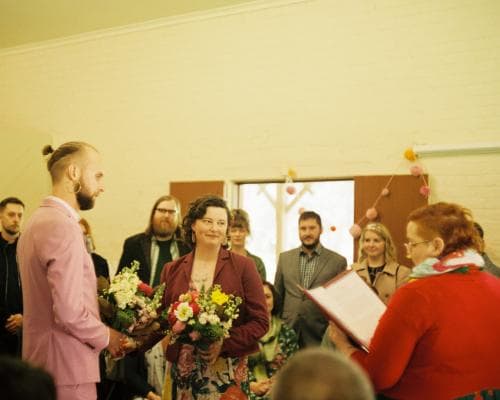
Imagine holding the keys to the most intimate hour of a stranger's life—and then lying awake at night, wondering if you've helped build a gilded cage. That's the confession of a man who spent 17 years as one of Australia's most sought-after civil celebrants, a quiet architect of hundreds of fairy-tale moments. He started in his mid-20s, a self-described 'professional yapper' who'd pivoted from a career in Auslan interpreting after an injury. He wanted to understand love, and he believed marriage ceremonies could teach him. They did—but not in the way he expected.
The path to the altar was rigorous, as befits a role that wields such emotional power. A Certificate III, a federal appointment from the Attorney-General's Department, and a sworn belief in the 'definition of marriage'—a phrase that, for a card-carrying homosexual in the mid-2000s, felt like a dare. He wrote his application with hope, convinced that committed partnerships would soon be recognized. It took a loathsome decade for the law to catch up. Meanwhile, he mastered the craft: the legal minutiae, the stagecraft, the art of making a room of nervous relatives feel like a velvet cocoon. He was the calm eye of the storm, producing lipstick, cufflinks, or a handkerchief from his pocket like a magician. 'Public speaking is most people's nightmare,' he says. 'For me, it was karaoke—but with a paycheck.'
The real magic, though, happened far from the spotlight. His favorite moments were sitting with couples around a kitchen table, asking one simple question: 'Why marriage?' He'd let the silence stretch, letting them surprise themselves with their answers. Their stories became ceremonies that felt less like performance and more like revelation. He absorbed their hope and intention, riding that emotional high for hours. But over time, the question began to haunt him. Too many of the marriages he officiated ended in intimate partner violence. He spent sleepless nights thinking about the paperwork he signed—paperwork that could make leaving an abusive relationship more complicated. 'Love should never become a barrier to safety,' he says, the words heavy with a decade and a half of witness.
The industry itself changed around him. When he started, celebrancy was dominated by retirees with fierce opinions on everything from gender to printer ink. He was mostly focused on not accidentally saying 'sodomised' instead of 'solemnised'—a slip he proudly never made. But as younger celebrants took over, the culture shifted. Gatekept resources gave way to generosity; competitors became collaborators, sharing advice and emergency cover when someone lost their voice on ceremony day. He even dabbled in 'baby activism,' conducting mass illegal ceremonies on the steps of the registry office in Naarm, campaigning for marriage equality. When it finally arrived, he bristled at the term 'gay marriage.' 'Wasn't it simply marriage?' he asks. 'Now available to all consenting adults.'
Yet the unease grew. After 17 years, he asked every couple the same question—why marriage? The most common answer was tradition, or that it felt like the next step. He realized that the institution, for all its beauty, had become a default setting. For the ultra-wealthy, this confession is a rare window into the machinery behind the most expensive day of their lives. The white-gloved celebrant, the floral installations, the couture gown—all of it is theater. But the real question, the one that matters, is whether the couple has asked themselves why they're there. The best celebrants, he suggests, aren't just vendors; they're truth-tellers. They hold the mirror up to your love and ask if it can withstand the weight of a legal contract.
What does this mean for the luxury market? It signals a shift from spectacle to substance. The discerning client no longer wants a generic officiant who reads from a script; they want a curator of meaning, someone who can distill their love story into a ceremony that feels inevitable. The future of the wedding industry isn't in bigger venues or more elaborate cakes—it's in the authenticity of the moment. And for those who can afford it, the ultimate luxury is a celebrant who asks the hard questions before you say 'I do.' As for the celebrant himself? He stepped away from the altar, but he didn't stop believing in love. He just stopped believing that marriage is the only way to honor it. For the ultra-wealthy, that's a reminder that the most valuable thing you can buy isn't a perfect day—it's a true one.
The Experience
For a wedding that prioritizes depth over decor, seek out a celebrant who insists on a 'kitchen table' consultation—where your love story, not the timeline, leads. Begin your search with a private referral from a luxury event planner who values meaning as much as margin.