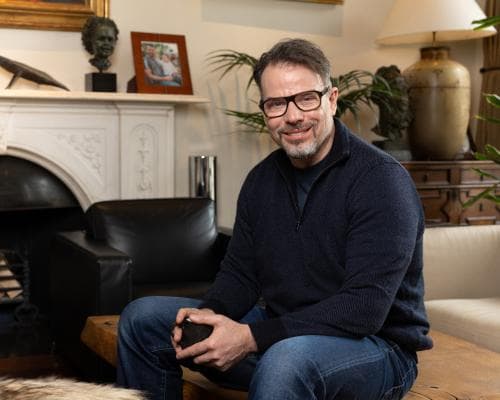
The Boy from the Council Estate Who Became a Cambridge Professor — and the Questions His Death Demands We Ask
Jason Arday, an autistic child from a council estate who rose to become Cambridge's youngest Black professor at 37, has died at 41 amid a storm of media scrutiny. His story is a tragedy that forces us to confront how we treat public figures, how race shapes allegations, and what we owe the people we turn into symbols.
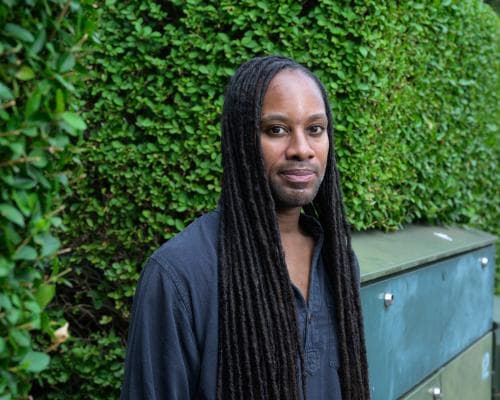
The news hit like a cold wave: Jason Arday, the Cambridge professor whose life story had been held up as a beacon of possibility, was found dead at his home. He was 41. His family lost a son, a brother, a friend. The rest of us lost something harder to name — a reminder that behind every headline, every symbol, every story of triumph, there is a human being who can be broken by the very attention that once celebrated him.
Arday's journey was the kind that makes you believe in the power of will. Born on a council estate, autistic, and told by teachers he would never achieve much, he defied every low expectation. He became a lecturer, then a professor, and at just 37, he was appointed to a professorship at the University of Cambridge — one of the youngest Black professors in the university's history. His appointment was hailed as a breakthrough, a sign that the academy was finally opening its doors to those who had been locked out for centuries. The university itself leaned into the symbolism: a young, Black, neurodivergent man ascending to the highest ranks of intellectual life.
But the fairy tale began to crack. In the months before his death, Arday faced a series of public allegations — accusations of plagiarism in his doctoral thesis, and questions about claims he had made about his own life. An earlier investigation at Liverpool John Moores University had not upheld the plagiarism claims, but new accusations, this time from Nathan Cofnas, a researcher whose own views have been widely condemned as racist, reignited the fire. The media circled. Social media amplified every charge, every insinuation. Arday said publicly that the scrutiny was taking a profound toll on him. Then, last week, he was gone.
The tragedy of Arday's death is not just personal — it is systemic. It forces us to ask uncomfortable questions about how we treat people who become symbols. When we elevate someone as a representative of a cause, do we give them the space to be imperfect? Or do we demand they carry the weight of every hope and every fear we project onto them? Arday's story was weaponised by the right in a broader argument about diversity and Black academic advancement. His alleged shortcomings became ammunition in a culture war, a way to argue that affirmative action and diversity initiatives are inherently flawed. But the real flaw, as Arday's death reveals, is in a society that sees people as pawns in a debate rather than as human beings with fragility.
His death also shines a harsh light on the academy itself. There are still pitifully few Black professors in British universities. Arday's rise was exceptional precisely because it was so rare. But exceptionalism comes with a price: the pressure to be perfect, to prove that you deserve your place, to represent an entire race and a neurotype and a class background, all while facing scrutiny that your white peers never endure. When a Black scholar stumbles, it is not seen as a personal failing — it is seen as evidence of a systemic mistake. That is a burden no one should have to carry.
Andy Burnham, the mayor of Greater Manchester, called this "a moment for reflection." He was right. But reflection cannot mean suppressing legitimate questions or shielding public figures from accountability. It must mean asking a different set of questions: How does proper scrutiny slide into character assassination? How does race change the meaning we attach to an individual's alleged failures? And how do separate, valid stories, when stitched together by social media algorithms, create an overwhelming narrative that destroys a person's will to live?
Arday's life was a gift to the world — a living proof that the system can be beaten. But his death is a warning. We must build a culture of giving that includes giving grace — to public figures, to strangers, to ourselves. We must create institutions that nurture excellence without demanding perfection. And we must remember that behind every profile, every headline, every viral moment, there is a human heart. Jason Arday's heart has stopped. The question is whether we will learn anything from its breaking.