The Billionaire Who Shops for Brands, Not Baubles
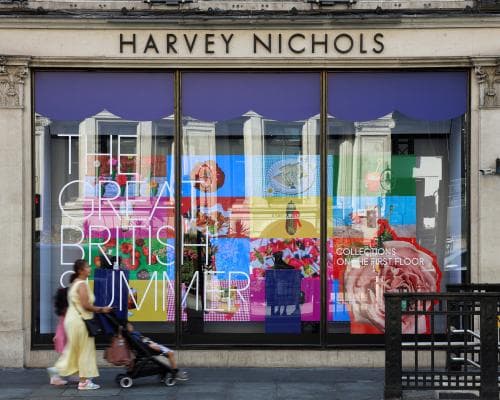
Most billionaires collect yachts, vineyards, or the odd Monet. Mike Ashley collects entire brands. The Sports Direct founder—now the quiet force behind Frasers Group—has just added Harvey Nichols to a portfolio that already reads like a distressed-luxury treasure map: a 48% stake in Hugo Boss, a meaningful slice of Mulberry, a whisper of Burberry, the remnants of Agent Provocateur, and the full keys to Flannels and House of Fraser. While the rest of the luxury world has spent the past few years wringing its hands over the cost-of-living crunch and the sudden shyness of Asian and Middle Eastern shoppers, Ashley has been shopping. Not for handbags. For the companies that make them.
This is not a hobby. It’s a strategy—one that’s been decades in the making. Ashley built his empire by rescuing struggling independent sports chains and snapping up UK rights to ailing sportswear labels like Head and Slazenger, then slapping their names on his own products. The luxury version began in 2012 with a single Flannels store in Knutsford, Cheshire. Today, Flannels has grown to roughly 75 doors, stocking everything from Gucci to Stone Island to Maison Margiela. The Harvey Nichols acquisition, bought out of administration this month, is the latest jewel in a crown that’s increasingly hard to ignore. It’s a classic Ashley move: buy when the seller is desperate, then use the asset to open doors that were previously bolted shut.
Here’s where it gets interesting for anyone who appreciates the art of the deal. Harvey Nichols isn’t just a department store; it’s a gateway. For years, certain designer houses—the kind that prefer to whisper rather than shout—have been reluctant to supply the king of discount trainers. But owning a Knightsbridge institution with a Middle East and Asian following changes the conversation. Ashley’s plan to convert at least some of the five UK Harvey Nichols outposts outside London to the Flannels brand is a clear signal: he’s not interested in preserving heritage for heritage’s sake. He’s interested in leverage. The Harvey Nichols name adds lustre; the Flannels network adds scale. Together, they form a bridge between the high street and the hyper-luxury world—a bridge that Ashley is now charging tolls on.
For the ultra-wealthy, this is a masterclass in contrarian investing. While others flee a sector in flux, Ashley doubles down—but not blindly. He’s pragmatic to the point of ruthlessness. Witness the cautionary tale of Matchesfashion: bought for £52 million in late 2023, placed into administration months later, leaving millions owed to designer brands. Or House of Fraser, once a 60-store chain, now just five stores trading under that name, with another fifteen rebadged as Frasers. Ashley’s vision of becoming “the Harrods of the high street” hasn’t quite materialized, but that’s beside the point. He’s not chasing prestige. He’s chasing control. And in the luxury market, control is the ultimate status symbol—more valuable than any limited-edition Birkin.
What does this signal about wealth and taste in 2025? That the new money is smarter than the old. The old guard bought yachts and private islands; the new guard buys the companies that sell to the yacht-owners. Ashley’s shopping spree is a bet that luxury will rebound—not because consumers will suddenly have more cash, but because the brands themselves will adapt to a world where aspiration is more important than heritage. Harvey Nichols, Hugo Boss, Mulberry—these are names with deep equity, but they’ve been bruised by changing shopping habits. Ashley’s approach is to strip away the sentimentality, keep the brand equity, and sell through every channel possible, from discount outlets to high-street flagships. It’s not pretty. It’s not traditional. But it works.
Looking forward, the question isn’t whether Ashley will succeed—it’s who he’ll buy next. With Hugo Boss at 48%, a full takeover is tantalizingly close. Burberry, which has seen its share price wobble, could be next. Or perhaps he’ll set his sights on the online players that are still bleeding cash. One thing is certain: the luxury landscape is being redrawn by a man who doesn’t care about velvet ropes or VIP lounges. He cares about volume, value, and the long game. For the rest of us, it’s a reminder that true wealth isn’t about what you wear—it’s about who owns the hanger.
The Experience
For a taste of this world, book a private styling session at Harvey Nichols Knightsbridge—or, if you’re feeling bolder, arrange a tour of Frasers Group’s flagship London properties through a luxury retail consultancy.