The Art of Never Losing Face: Mastering the Money Conversation Among the Ultra-Rich
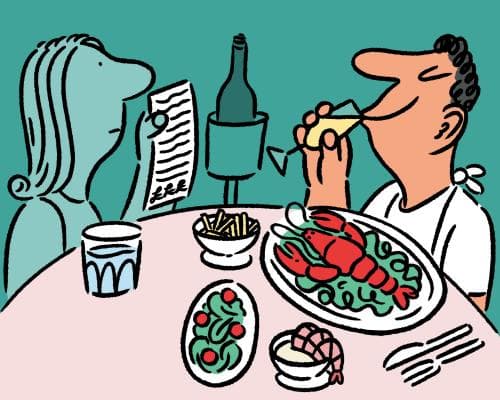
There is a moment every billionaire knows too well. You're at a private members' club in Mayfair, the champagne is flowing, and the conversation turns to who's next to buy the round. Suddenly, the room goes quiet. The man who just closed a nine-figure deal is suddenly fascinated by his watch. The woman who flew in on a Gulfstream is studying the wine list as if it were a sacred text. It's the great equalizer of wealth: the social expectation to pay, and the quiet dread of being seen as either cheap or careless. For the ultra-wealthy, money is rarely about the numbers. It's about the message. And nothing sends a louder signal than how you handle the bill when the spotlight is on you.
Summer is the season of exposure. Alfresco dinners in St. Tropez, yachts off Capri, wedding weekends in the Hamptons — every invitation is a financial stage. And it's here that the unspoken rules of the wealthy are tested. The British pub round, that quaint tradition of taking turns to buy a pint, has its high-stakes equivalent in a bottle of Pétrus at a private dinner. The problem is universal: someone always hesitates, someone always over-orders, and someone always ends up feeling slighted. Ellie Austin-Williams, the London-based author of Money Talks, suggests the simplest solution: address it head-on. "Have the conversation at the start," she says. "Do you want to do a round, or shall we pay our own way?" It sounds too easy, too blunt for a world of subtle signals. But the truly confident, she argues, are the ones who speak first. They set the terms, and they never lose face.
The real art, however, lies in the details. Matt Altmix, co-host of the How to Money podcast, recommends a pre-commitment strategy: decide your budget before you walk in, and then don't look back. This is the wealth equivalent of a trust fund — you know your limits, so you're free to enjoy the evening without calculation. "Skipping out sometimes is totally acceptable," he says. "Then when you do show up, make it count." That's a mantra for the elite: scarcity creates value. If you're not at every dinner, your presence becomes an event. And when you are there, you can afford to be generous — not because you're showing off, but because you've already decided what that evening is worth to you.
But what about the restaurant bill, that minefield of appetizers, wine lists, and the inevitable shortfall? Alex Holder, author of Open Up, takes a radical stance: reject the culture altogether. "It's presuming we're all going to drink the same amount," she says. "Rather than noticing that someone gets a cheap drink when they're paying and feeling enraged, exit the culture." For the ultra-wealthy, this is the ultimate power move. You don't split bills. You simply say, "I've got this," and let the gesture speak. It's not about the money; it's about the message. You're not counting cocktails. You're signaling that your time and your company are the real currency. The bill is just a formality.
This is where the luxury market steps in. The finest restaurants, the most exclusive clubs, and the most coveted yachts all understand one thing: the experience is the product. When you never have to look at a check, you're buying more than a meal — you're buying the freedom from awkwardness. That's why the world's wealthiest don't ask for separate checks. They ask for the chef's table. They don't split the wine. They order the rare vintage. And they do it with a smile that says, "I've been here before, and I'll be here again." It's a performance, yes, but it's also a philosophy: money is a tool for connection, not a source of anxiety. The moment you master that, you're not just rich. You're memorable.
Looking ahead, the future of social spending is about intentionality. The old rules of rounds and split bills are fading, replaced by a more self-aware approach. The wealthy are increasingly choosing experiences over obligations — a private dinner for four instead of a group of twenty, a weekend at a vineyard rather than a crowded festival. They're also embracing the power of saying no. No, I'll get my own. No, I'm not drinking tonight. No, let me host. Each refusal is a statement of self-possession. And in a world where everyone is watching, that's the rarest luxury of all. So the next time someone asks, "Why do you never buy a round?" — smile, raise your glass, and say, "I was just about to ask you the same thing." Then watch the magic happen.
The Experience
For a seamless summer of socializing, consider a private dining membership at a Michelin-starred venue or a hosted yacht charter where every detail is handled — so you never have to think about the bill again.