The $80 Odyssey: How a Secondhand Bicycle and a Smile Conquered 6,000 Miles for Love
In 1977, Indian street artist Pradyumna Kumar Mahanandia pedaled a battered Raleigh from New Delhi to Borås, Sweden, to reunite with Swedish tourist Lotta von Schedvin. Their story, now a Netflix documentary, is a reminder that the most extraordinary journeys are powered by nerve, not horsepower.
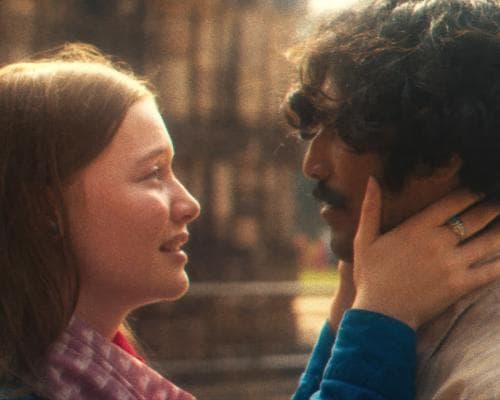
In the winter of 1975, a Swedish hippy named Lotta von Schedvin sat down in a New Delhi square to have her portrait sketched. The artist was Pradyumna Kumar Mahanandia — PK to everyone — a young man from a poor family in Odisha, in eastern India. The sitting took ten minutes. By the time he finished, both lives had quietly changed direction. She invited him to travel with her; he took her to meet his family. Then she climbed into her VW campervan and drove away with friends, back toward Europe. PK promised to follow. He had no money, no passport, and no realistic prospect of a plane ticket. What he did have was a secondhand Raleigh bicycle and $80 sewn into the waistband of his trousers. He knew the sun set in the west, so west he pedaled.
That decision turned into one of the great romantic road trips of the twentieth century. PK followed the old hippy trail — through India, Pakistan, Afghanistan, Iran, and Turkey — then across Europe. He slept in temples, police stations, and strangers' spare rooms. He ate what was offered. He kept moving. The journey took 123 days and covered roughly 6,000 miles. At one point a fellow backpacker had to gently explain that Switzerland and Sweden were two different countries; PK had been cheerfully heading for the wrong one. In the new Netflix documentary The Cycle of Love, he laughs about his shaky grasp of European geography. Watching him, you suspect his real superpower was his smile — warm, unguarded, impossible to refuse. In May 1977, he knocked on Lotta's door in Borås, Sweden. They have been together ever since.
The Raleigh itself was nothing special — a sturdy, unglamorous machine bought used for a few rupees. But that is precisely the point. In an age when collectors pay seven figures for limited-edition hypercars and hand-built grand tourers, PK's bicycle belongs to a different category of value entirely. It was not engineered for speed or status. It was engineered for endurance, and it carried a man across continents on nothing but willpower and the kindness of strangers. There is no carbon fiber, no bespoke leather, no numbered plaque. There is only the fact that it did the job. Sometimes the most collectible object in the room is the one that got someone where they needed to go.
In the collector world, provenance is everything — and this bicycle has provenance in spades. It sits at the intersection of two very modern appetites: the hunger for authentic stories, and the growing market for objects that carry a human narrative rather than a spec sheet. Think of the motorcycles that sold at auction for six figures because of who rode them, or the Land Rovers that fetch more than new ones because of where they've been. A machine with a story is worth more than a machine with a bigger engine. PK's Raleigh is not for sale, and that only makes it more valuable. It is the rare artifact that has never been priced, because it was never meant to be.
What does this story signal about luxury taste today? That the most aspirational thing you can own is not a thing at all — it is a decision. The decision to go. The decision to trust a stranger. The decision to point your front wheel west and keep pedaling. Ultra-wealthy collectors increasingly chase experiences that cannot be replicated: a private dinner in a temple town, a road trip with no itinerary, a love story that outlasts the vehicle that carried it. PK and Lotta's journey is the ultimate limited edition — one of one, never to be repeated, and utterly indifferent to the market.
Orlando von Einsiedel, the documentary's director, first heard the story when two young people handed him a book after a talk in Sweden. He was hooked, as anyone would be. The Cycle of Love is now streaming on Netflix, and it arrives at exactly the right moment — a time when we are surrounded by engineered luxury and hungry for something unengineered. PK never set out to become a symbol. He just wanted to see Lotta again. But that is what makes the story almost too good to be true: it is entirely true. And somewhere in a quiet corner of Sweden, a battered Raleigh still stands as proof that the best journeys are the ones you cannot afford — and take anyway.
More in LIFESTYLE