The $4 Billion Question: Why Washington's Beef Gambit Has the Cattle Elite Up in Arms
Inside the Beltway's most unexpected luxury commodity clash, where a presidential decree to flood the market with imported beef has the ranching aristocracy—the true tastemakers of American protein—circling the wagons. This is a story about terroir, tariffs, and the furious defense of a heritage product that the world's wealthiest carnivores refuse to compromise on.
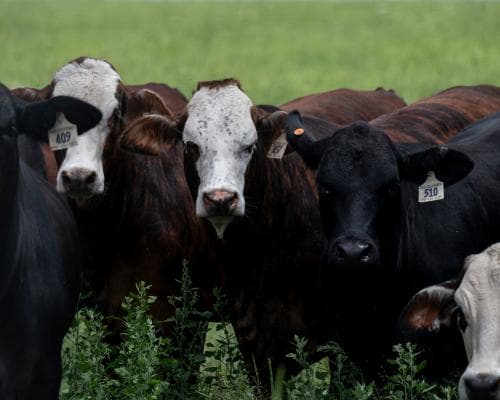
There is a particular cut of Wagyu that whispers, and a slab of dry-aged Prime that commands. But in the rarefied world of ultra-high-net-worth dining, there is nothing louder than the quiet insistence of a Wyoming rancher that his grass-fed ribeye is the only true currency. So, when the White House announced a temporary pause on tariffs to import up to 300,000 metric tons of foreign beef—a move pitched as a grocery-price palliative—the reaction from the American cattle aristocracy was not a murmur of concern. It was a declaration of war, delivered in the language of heritage and soil.
For the collectors who fill their lockers with half-carcasses from boutique Montana outfits and the hedge fund titans who fly their beef in from Kagoshima, this is not merely a trade policy squabble. It is a crisis of provenance. The proposal, which the president claims will land on shelves at 25% below current market rates, threatens to commoditize a product whose entire value proposition rests on its scarcity and geographic purity. The ultra-wealthy do not pay $300 for a steak because it is cheap; they pay because it is rare, because it tastes of a specific altitude, because the animal lived a life of pastoral privilege. Imported volume, regardless of origin, dilutes that narrative.
The pushback has been swift and unusually sharp from within the president's own party, with Senator John Barrasso of Wyoming—the majority whip, no less—issuing a rare public rebuke that reads like a sommelier defending a Grand Cru against a boxed wine importer. “Wyoming ranchers produce the highest quality beef in the world,” he wrote, dismissing the notion that foreign grass can replicate the mineral-rich forage of the high plains. This is the language of the Appellation d'Origine Contrôlée, applied to cattle. It is the same argument used by Champagne growers against bulk sparkling wine, or by Kobe breeders against imitation wagyu. The terroir is the product. The herd is the heritage.
What makes this moment particularly fascinating for the luxury market is the economic math of the elite palate. While the policy aims to soothe the average consumer’s receipt, the true cost lies in the signaling. For the collectors who view beef as an alternative asset—with auction lots of vintage A5 ribeyes fetching sums that rival first-growth Bordeaux—the idea of a 25% discount is anathema. It devalues the entire asset class. The craftsmanship of American beef is a slow art: a 24-month grain finish, a specific breed lineage, a dry-aging cellar that requires more square footage than most Manhattan apartments. You cannot scale that with a tariff waiver. You can only cheapen it.
Iowa Congresswoman Ashley Hinson, a Republican nominee for Senate in a state where corn-fed beef is practically a religion, articulated the collector’s dilemma perfectly: “I absolutely want to see those prices come down… but this isn't the way to do that.” She argues for letting market conditions allow the domestic herd to grow naturally—a slow, patient, capital-intensive approach that mirrors the philosophy of a fine watchmaker. The short-term policy shift, she warns, is a hack. The long-term solution is a legacy. For the buyers in this segment, that distinction is everything. They are not purchasing a commodity; they are purchasing a continuation of a lineage.
This is not the first time the government has tried to meddle with the luxury food chain, but it is the most overt assault on the American beef mystique in decades. The signal it sends to the global collecting community is troubling: that the White House views the nation’s most prized protein as a fungible good. In response, we are likely to see a surge in direct-from-ranch private procurement, bypassing retail entirely. The most discerning buyers will simply ignore the market, doubling down on exclusive contracts with family-owned operations in Texas and Nebraska, paying a premium for the assurance that their steak did not share a shipping container with a tariff-broken import. The price of authenticity, it seems, is about to go up.
As the summer grilling season approaches, the smart money is not on the grocery aisle. It is on the private airfield, where a shipment of American Prime is being flown in from a ranch that has never heard of a tariff. The policy may flood the stores, but it will never touch the tables of the true connoisseurs. They will simply pay more for the story, for the soil, for the stubborn refusal of a Wyoming senator to let his ranchers be undercut by a spreadsheet. In the end, this is a fight about whether beef remains a craft or becomes a utility. For the ultra-wealthy, the answer is already clear: they are not utilitarians. They are collectors. And they will not be told what to eat by a tariff schedule.