The $26 Billion Wardrobe Reset: What Shein’s Hong Kong Debut Says About the New Luxury of Speed
When the world’s most disruptive fast-fashion empire finally rang the Hong Kong bell, the market blinked — and the ultra-wealthy took note. Shein’s underwhelming debut is less a retail story than a barometer of how global trade, regulation, and taste are colliding at the highest altitudes of commerce.
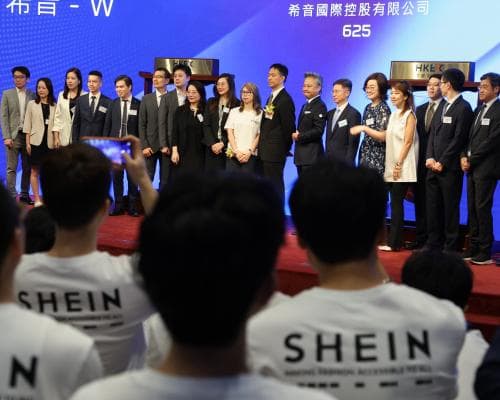
The gong was struck, the champagne flutes were poised, and the CFO spoke of letting the world “enjoy the sound of fashion.” But by the time the morning’s first trades had cleared, the sound was less a symphony than a sharp, collective gasp. Shein — the Singapore-headquartered behemoth that once wore a $100 billion private valuation like a couture cape — opened on the Hong Kong Stock Exchange at HK$48.56, valuing the company at just over $26 billion. Within minutes, shares slid 10%. By the closing bell, they had clawed back to a 4% loss, settling at HK$46.62. For a brand that taught the world to think in five-dollar tops and two-day delivery, the message was unmistakable: even the fastest horse can stumble at the starting gate.
For the patrons of The Curated Life, Shein is not a shopping destination. It is a phenomenon — a case study in how value is manufactured, perceived, and, increasingly, deconstructed. The company’s rise was built on a brutally elegant arbitrage: ship millions of small parcels from Chinese factories directly to Western doorsteps, exploiting “de minimis” tax exemptions on low-value goods. That loophole was the hidden zipper holding the whole garment together. When the United States abruptly removed the exemption earlier this year, Shein swung from a $395 million profit to a $99 million loss in a single quarter. The EU has since slapped a €3 duty on small parcels from outside the bloc, and the UK has pledged to follow by 2028. The era of frictionless, tax-subsidized fashion is ending — and the market knows it.
What makes this debut so fascinating is not the numbers alone, but the timing. Shein had spent years courting New York, only to be blocked by regulators citing forced-labor concerns in its supply chain. London was next, with a £50 billion float floated and then quietly shelved under similar scrutiny. Hong Kong, for all its geopolitical complexity, offered a path — but at a price. The company raised HK$13.6 billion, a figure that would make most founders weep with joy, yet it represented a fraction of the valuation that private investors had once promised. The gap between the $100 billion dream and the $26 billion reality is not just a correction; it is a confession. The market is no longer willing to pay for speed alone.
For collectors of rare whisky, vintage Porsches, or waterfront penthouses, there is a lesson here in the shifting grammar of value. Shein’s product was never the garment; it was the system. The company’s true innovation was logistical — a just-in-time supply chain that could turn a TikTok trend into a shipped package in under a week. That system, however, was subsidized by regulatory grace. When the grace evaporates, so does the margin. The ultra-wealthy, who have long understood that provenance and scarcity drive worth, now watch as the mass market’s equivalent — speed and volume — loses its magic. It is a reminder that any asset, whether a handbag or a hedge fund, is only as secure as the rules that protect it.
Yet there is a quieter, more aspirational signal in Shein’s stumble. The brand’s core audience — young, global, digitally native — has not abandoned it. The shares recovered some ground by day’s end, and the company still commands a valuation that would place it among Hong Kong’s largest listings. The question is not whether Shein survives, but what it becomes. Will it pivot to higher-quality, higher-priced goods, shedding its fast-fashion skin for something more durable? Or will it double down on the model that made it, betting that the world’s regulators will blink first? For the luxury observer, the answer will shape the next decade of retail — and not just at the bargain rack.
As the closing bell echoed across Victoria Harbour, one could almost hear the whisper of a new era. The days of infinite, tax-free, disposable fashion are numbered. The future belongs to brands that can marry speed with substance, and to consumers who understand that true luxury — like a well-tailored suit or a carefully aged Bordeaux — cannot be rushed. Shein’s debut was not a failure; it was a reality check. And for those who collect not just objects but insights, it was the most valuable garment in the room.