The 21-Year-Old Heavyweight Who Would Rather Hug Trees Than Trade Punches
As Moses Itauma prepares to challenge Filip Hrgovic for the IBF world heavyweight title at London's O2 Arena, the young contender's calm defiance—and his rival's taunts—turn a boxing match into a study in composure under pressure. For the ultra-wealthy ringside set, this is less about blood sport and more about witnessing the rare art of unshakable self-possession.
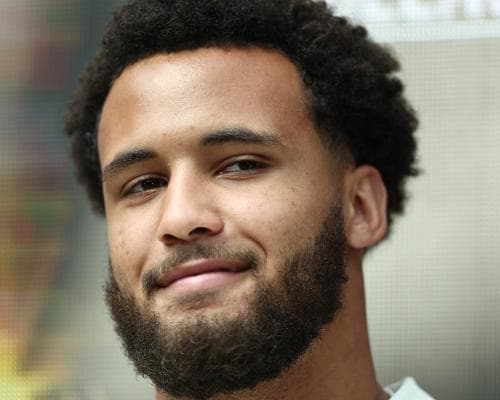
There is a particular thrill in watching someone who refuses to be rattled. Not the stoic silence of the trained diplomat, but the almost insolent ease of a man who has decided that the noise around him is simply not worth his energy. That is the scene unfolding this week at the O2 Arena in London, where 21-year-old Moses Itauma prepares to fight Filip Hrgovic for the IBF world heavyweight title. And the noise, this time, comes from Hrgovic, who has called Itauma a 'delusional kid' and suggested that winning the title now would 'ruin his soul.' Itauma’s response? A shrug, a smile, and a confession that, yes, the Croatian is 'starting to wind me up'—but only because Hrgovic claimed he 'wakes up and hugs trees.'
For the ringside crowd—the ones who fly in from Monaco and Mayfair, who order the vintage Krug before the undercard, who treat a Saturday night at the O2 like a private viewing of something rare—this fight is not just about leather and sweat. It is about the psychology of composure. Itauma, a prodigy from Kent, is on the cusp of becoming the second-youngest heavyweight champion in history, behind only Mike Tyson. That fact alone would be enough to draw the collectors of sporting immortality. But the way he handles Hrgovic’s mind games—the taunts about his age, his inexperience, his supposed naivety—is what makes this a masterclass in the kind of emotional discipline that money can’t buy and that the ultra-wealthy recognize instantly, whether in a boardroom or a boxing ring.
Hrgovic, a 32-year-old Croatian with a legitimate claim to the throne, has built a career on psychological warfare. He did it to Daniel Dubois, mocking his 'big muscles but not big balls,' and watched Dubois rage into a loss. He is trying the same with Itauma, and it is not landing. 'In my mind, if somebody’s trying to get one up on you, or trying to get in your head, it’s because they’re not confident in themselves,' Itauma said, with the kind of clarity that suggests he has read more Stoic philosophy than most hedge fund managers. His jab is verbal, but it lands with the precision of a trained puncher. He even dismisses Hrgovic’s trash talk as a language barrier issue: 'It’s just because English ain’t his first language that people don’t pay attention.' It is a devastatingly polite way of saying: he talks, but no one listens.
What makes this fight so compelling, beyond the title, is the collision of two philosophies of success. Hrgovic speaks of fame and money as corrosive forces that can 'ruin your soul'—a warning that sounds almost paternal, but drips with condescension. Itauma, by contrast, seems to have already internalized the lesson that the truly wealthy learn early: the only currency that matters is self-possession. He is not chasing the spotlight; he is stepping into it because it is his turn. The fact that he is 21, undefeated, and being touted as the next Tyson only adds to the allure. For the collectors at ringside, this is like spotting a rare first-edition before the auction house has even catalogued it.
The market for heavyweight boxing has always been about more than the fight. It is about the narrative, the myth, the possibility of witnessing a coronation. Tyson was 20 when he took the title. Itauma is 21. If he wins, he will not just be a champion; he will be a generational anomaly, a name that will be whispered in the same breath as the greats. And the smart money—the kind that buys yachts and private islands—is already on him. Hrgovic may be the more experienced, but experience is often just a fancy word for accumulated doubt. Itauma’s youth is not a weakness; it is a superpower. He has nothing to lose, and that is the most dangerous thing a fighter can bring into the ring.
As the bell approaches, the question is not whether Itauma can win—most expect he will—but how he will handle the aftermath. Hrgovic’s warning about fame and money is not entirely hollow; history is littered with champions who lost themselves in the gilded cage. But Itauma’s response to the taunts suggests he is already ahead of the game. He is not hugging trees; he is rooted, steady, and utterly unbothered. In a world where the ultra-wealthy pay fortunes for access to stillness—silent retreats, breathwork coaches, private meditation suites—Itauma is offering it for free, live from the O2. Saturday night is not just a fight. It is a preview of a new kind of champion: one who knows that the only crown worth wearing is the one you never let anyone place on your head.