The £1bn Battery Fire Crisis: How Discarded Vapes Are Burning Down the Circular Economy
Lithium-ion batteries tossed into household waste are sparking over 500 fires a year at UK recycling centres, costing £1bn annually. The crisis threatens the economics of recycling and demands urgent innovation in battery design, waste sorting, and fire suppression.
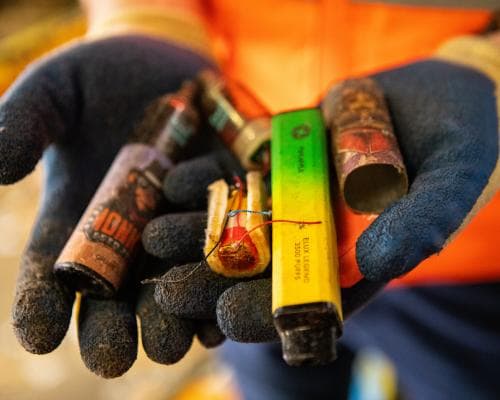
Every week, somewhere in Britain, a bin lorry or a recycling plant goes up in flames. Not from arson, not from a faulty wire, but from something as small as a discarded vape. The latest figures from the Environment Services Association (ESA) paint a stark picture: 1,518 fires at waste facilities in the year to March 2026, with at least 541 directly blamed on lithium-ion batteries. That's more than ten a week, and the real number is likely higher. In most incidents, the cause is impossible to determine because the evidence burns away. The trade body suspects batteries are behind 70% of these blazes, not the 40% they can prove.
This is not just a nuisance. It's a billion-pound problem that is endangering lives and undermining the economics of recycling. The ESA estimates the annual cost of battery fires has ballooned from £150m in 2021 to £1bn today. That's money spent on fire crews, damaged machinery, downtime, and higher insurance premiums — costs that ultimately hit every household and business that pays for waste collection. Fire chiefs are alarmed. In Ilford, east London, 25 firefighters needed to control a blaze caused by batteries. In Deptford, south-east London, another fire recently broke out, its cause yet to be confirmed. These are not isolated incidents; they are happening in Glasgow, Caerwent, Widnes, Norwich, and Dereham.
The root cause is a collision between two modern habits: our love of disposable technology and our failure to handle its waste. Vapes, e-bikes, laptops, and power tools all contain lithium-ion batteries, which are safe when used correctly but become dangerous when crushed, punctured, or exposed to moisture in a landfill or recycling plant. A single damaged cell can release enough heat to ignite surrounding materials. The result is a fire that is extremely difficult to extinguish and can reignite days later.
The technology to prevent these fires exists, but it's not being deployed fast enough. Smart sorting systems using AI and X-ray scanners can detect batteries on conveyor belts and remove them before they cause damage. Fire suppression systems with thermal cameras and inert gas can smother blazes in seconds. Yet many facilities are still relying on manual picking, which is slow, costly, and error-prone. The ESA is calling for better labelling, producer responsibility, and a national campaign to educate the public on how to dispose of batteries properly. But these are incremental measures. The real fix will come from innovation in battery chemistry itself — making lithium-ion cells inherently safer, or developing alternatives that don't pose the same fire risk.
This crisis is a wake-up call for the entire recycling industry. For years, the narrative has been about increasing recycling rates and reducing plastic waste. But if the infrastructure keeps catching fire, the whole system becomes untenable. Insurance premiums are rising, and some facilities are considering refusing certain waste streams altogether. That would be a disaster for the circular economy, as it would push more materials into landfill or incineration.
The good news is that the market is responding. Startups are developing fire-resistant battery designs, sensor systems that monitor temperature in real time, and robotic sorters that can identify batteries with 99% accuracy. Large waste management companies are investing in these technologies, driven by the rising cost of fires. There is also a growing push for extended producer responsibility — making vape and electronics manufacturers pay for the safe disposal of their products, which could fund better collection and sorting infrastructure.
But time is not on our side. The volume of disposable vapes sold in the UK has exploded, and with it, the risk of fires. The government has announced a ban on single-use vapes from June 2025, but that won't solve the problem of the batteries already in circulation, nor the batteries in other products. The next few years will be critical. If we don't act, the cost of fires will continue to climb, and public confidence in recycling will erode. If we do act, we have an opportunity to build a smarter, safer waste system that can handle the batteries of the future — from electric cars to grid storage. The choice is clear: innovate or burn.